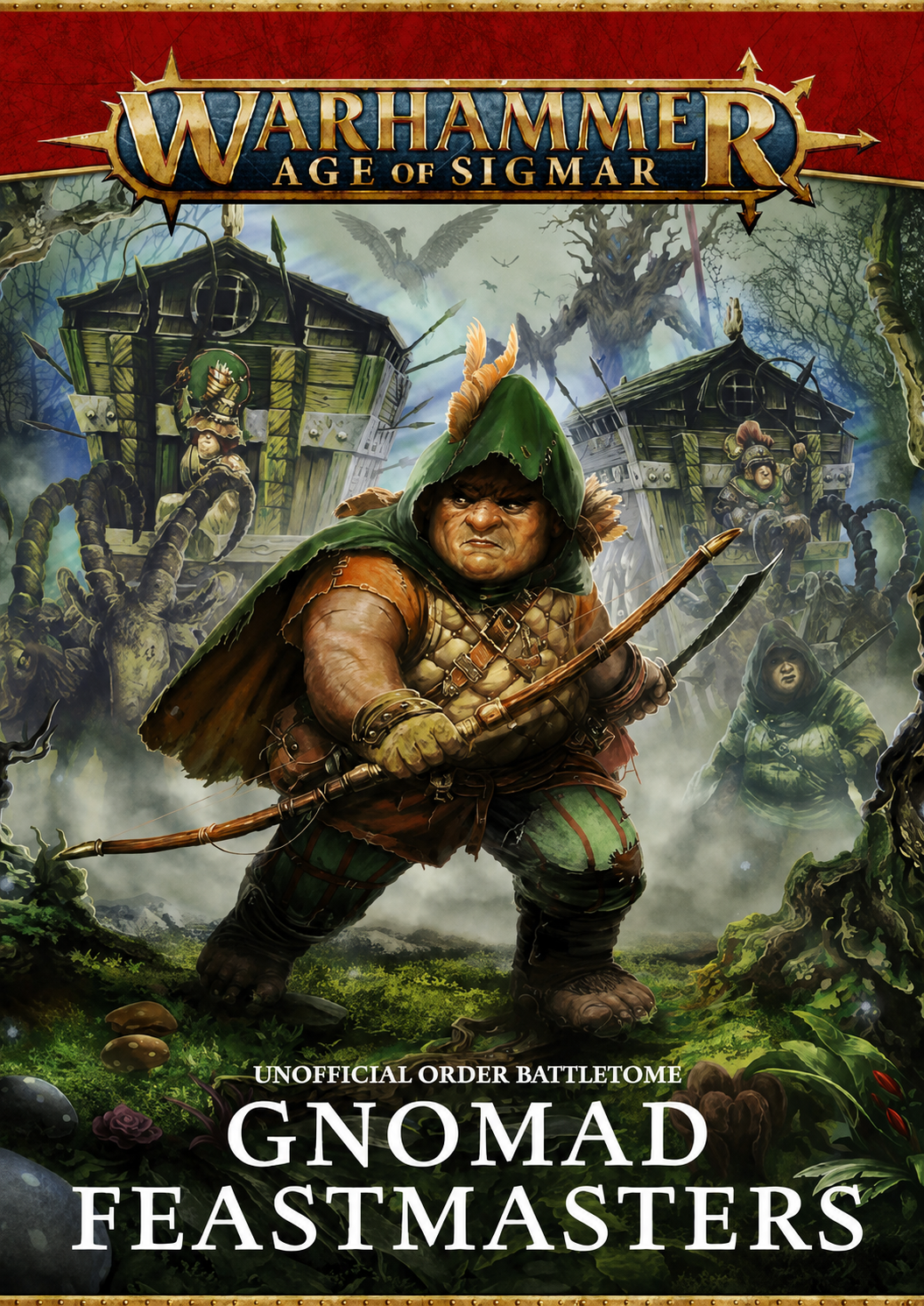


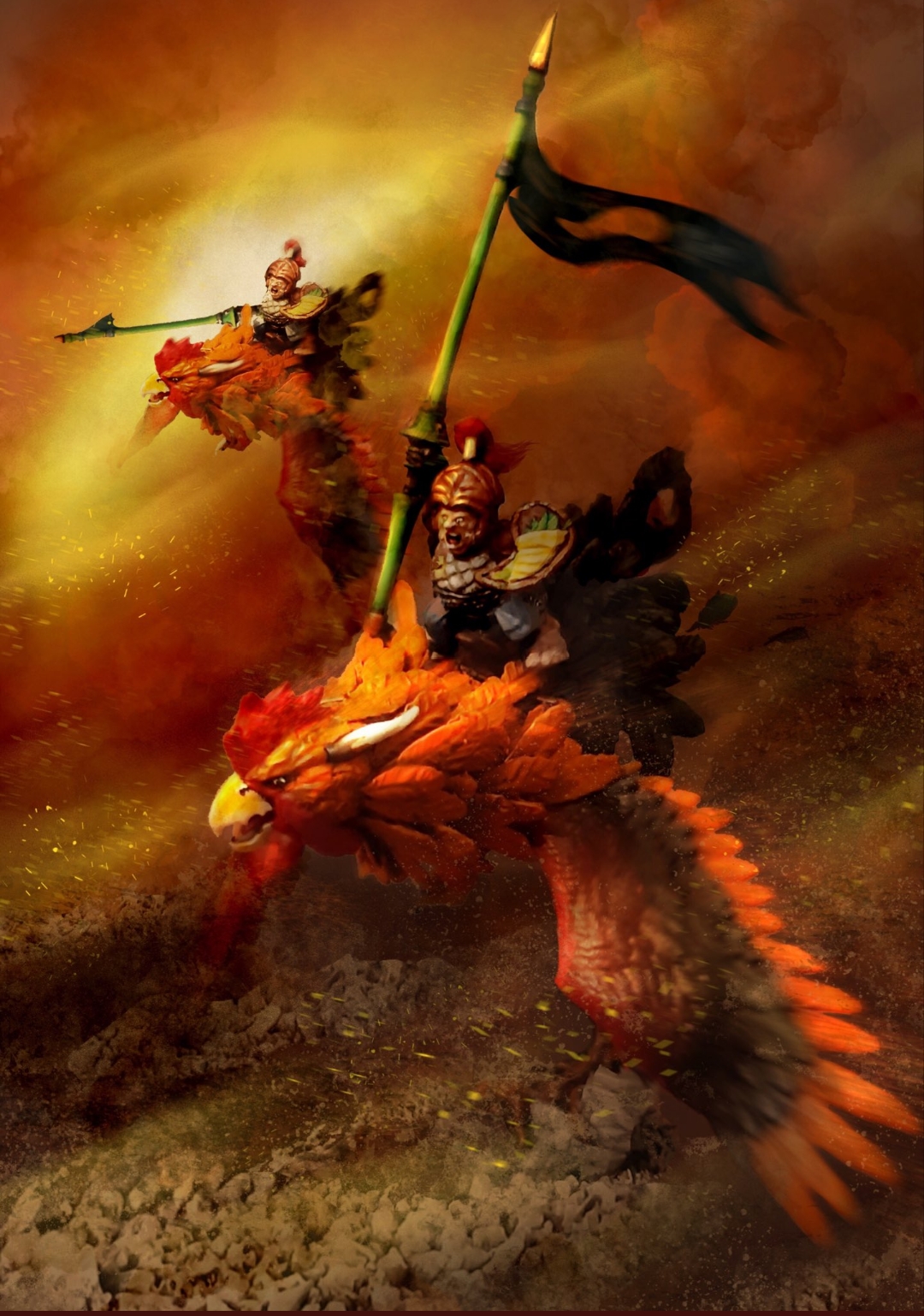
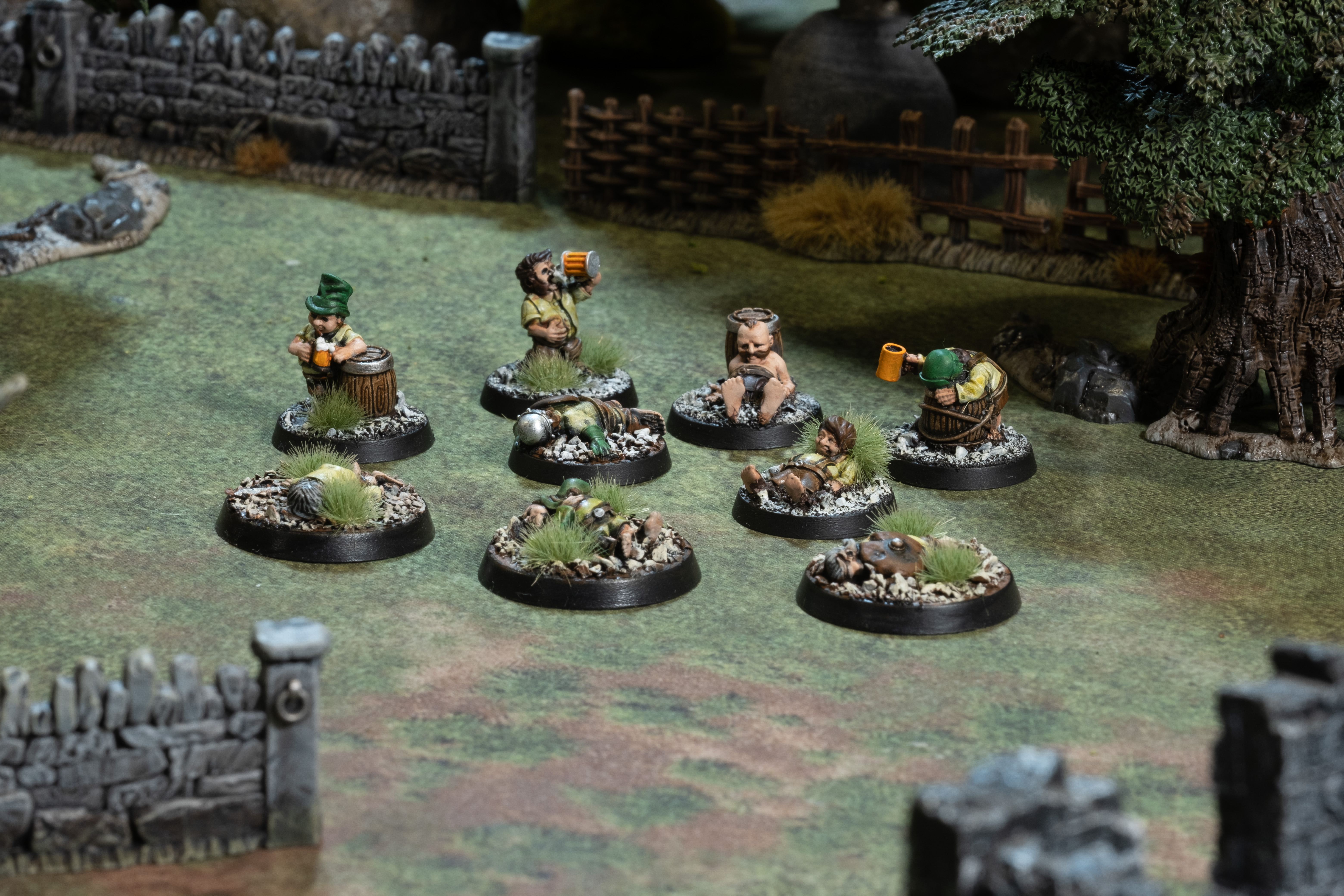
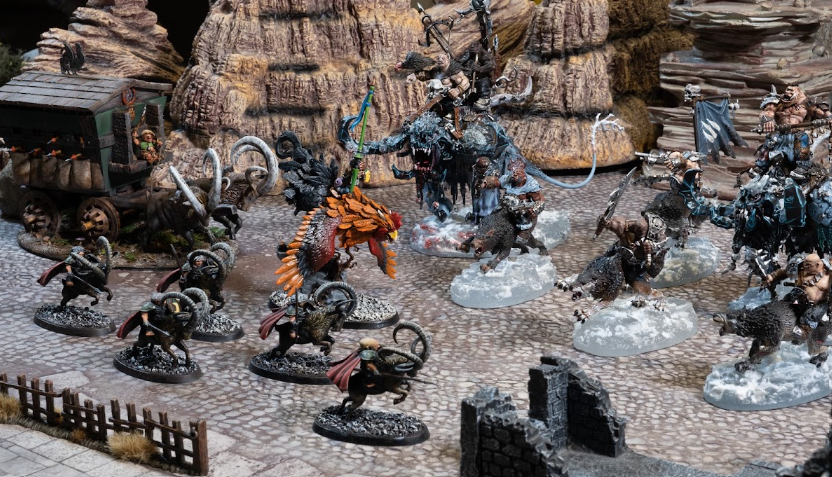
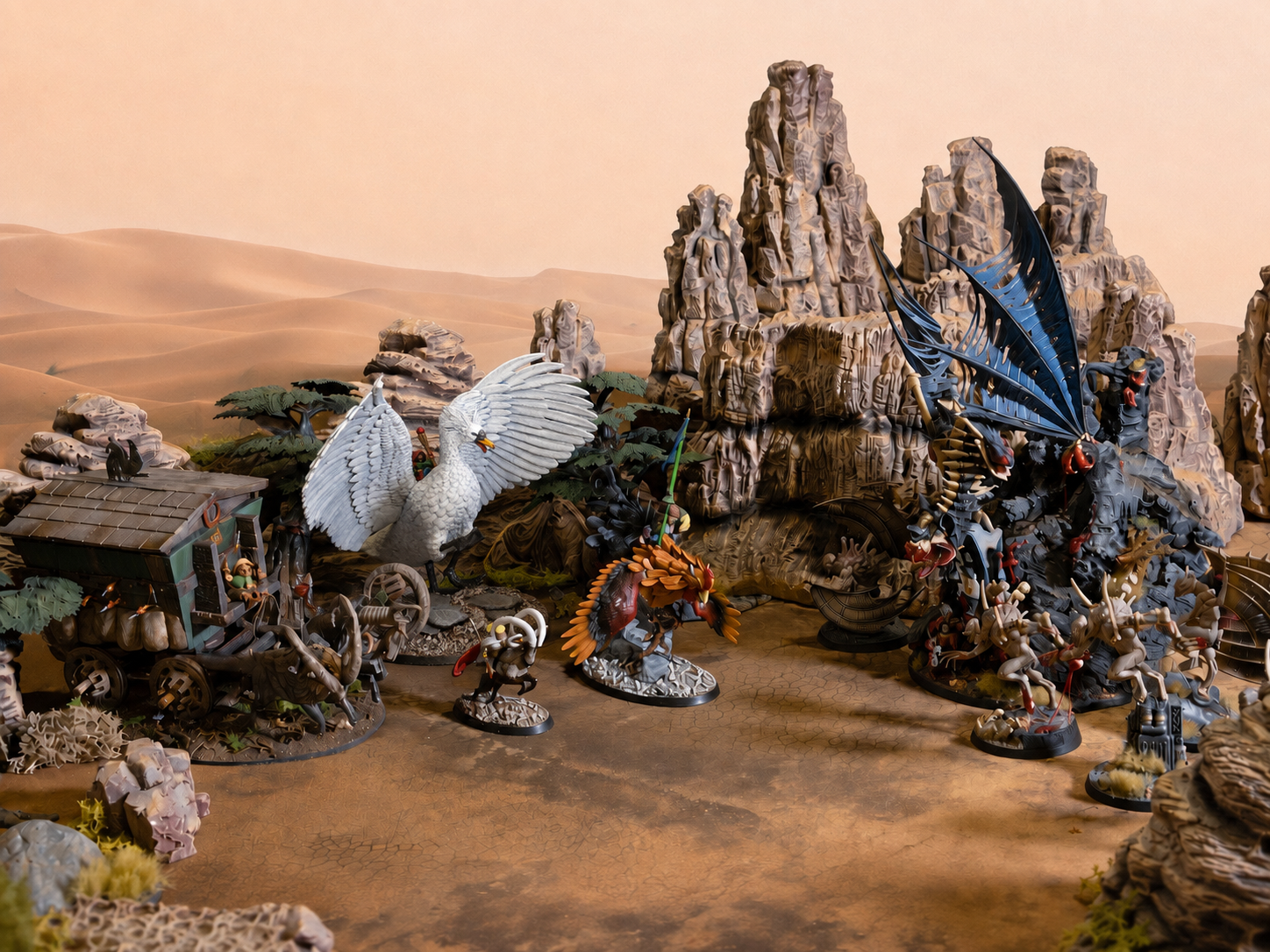
“Under blazing Aqshian skies a wing of Trail Masters swoops to dispense well-merited vengeance atop their berserk Dawnspur Wattlecrest mounts.”
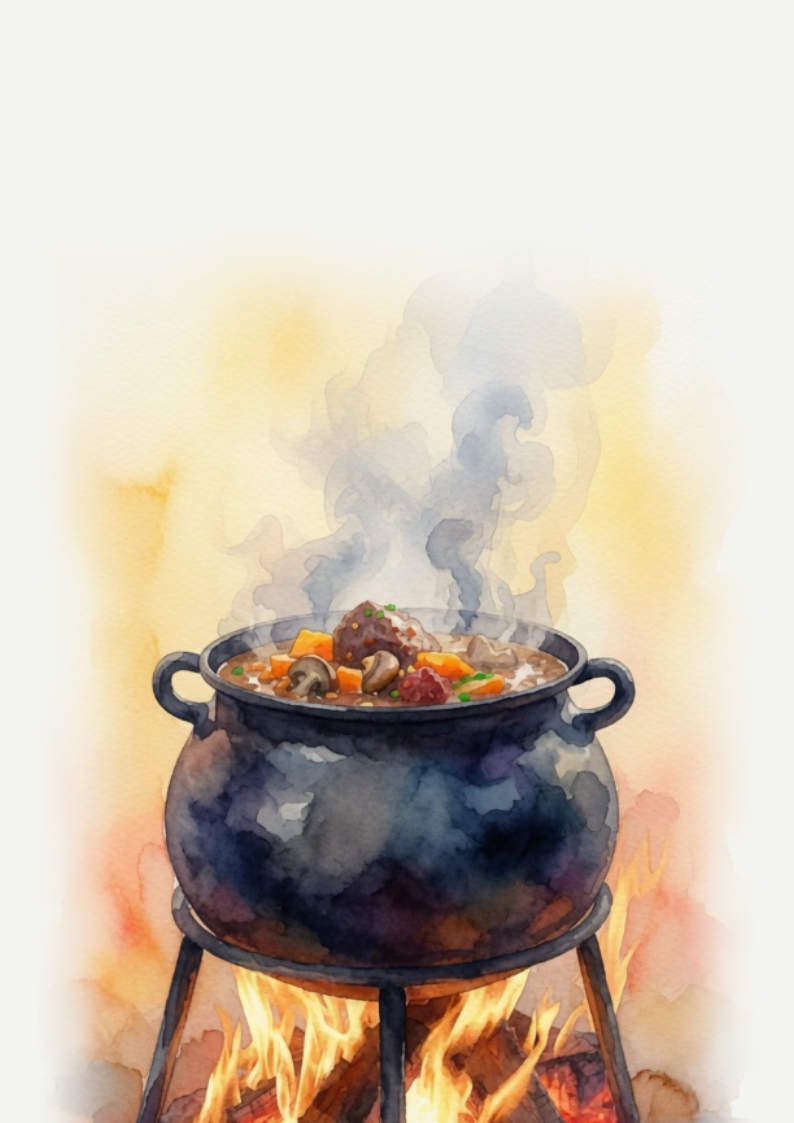

The Gnomad Feastmasters are a secretive people of the hidden Trails, custodians of the great herds and the quiet places between war. Long ago, they were cast from the World-That-Was into Ghyran, where merciful spirits and the land itself concealed them. They have wandered for so long that the memory of humankind has faded, but not their duty: to follow the migrations, tend the wounded earth and preserve the countless small lives that greater powers overlook.
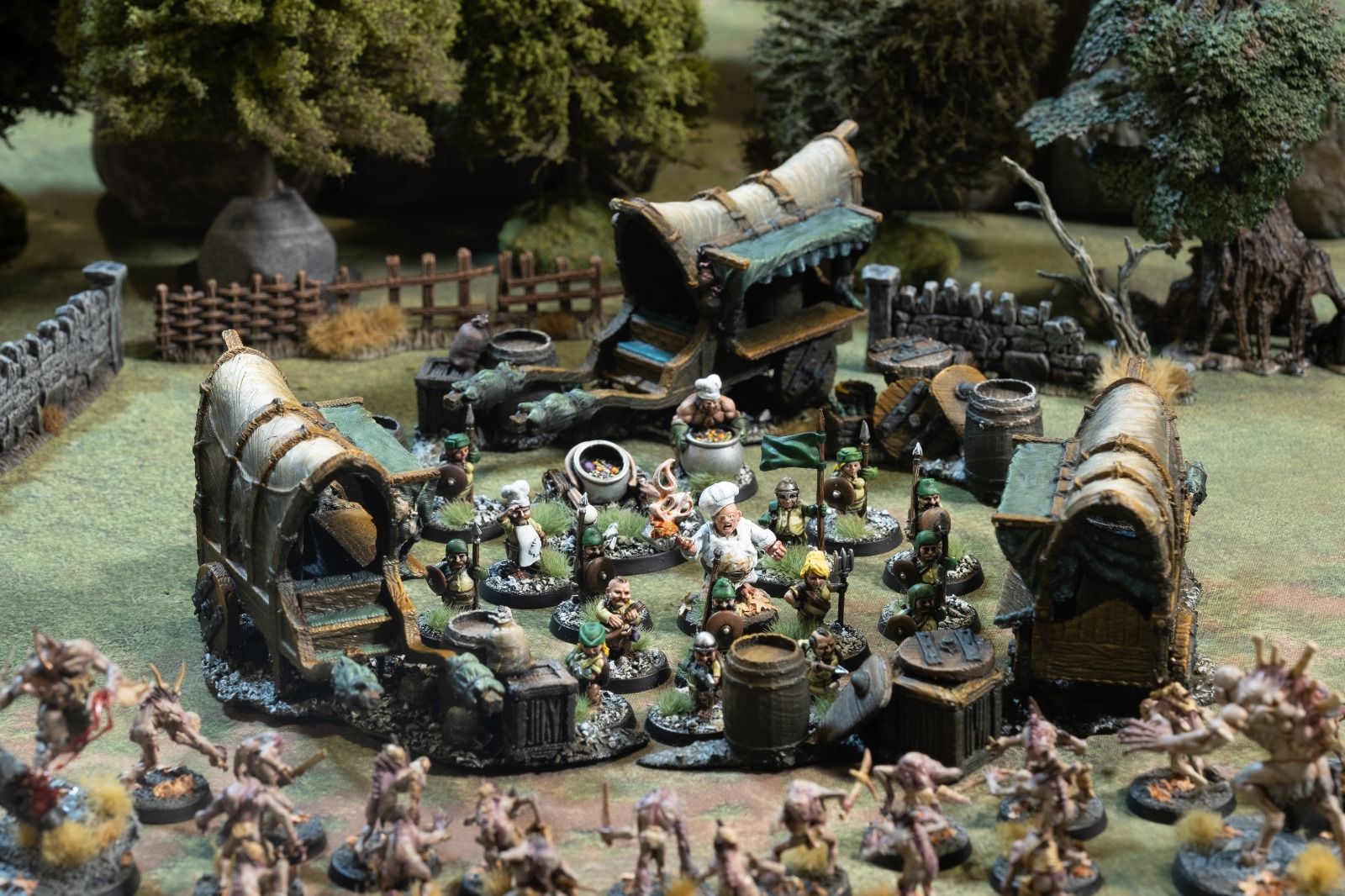
Gnomads seek neither dominion nor renown. Their caravans travel from Habbinkerr Grove to Habbinkerr Grove, guided by Trail Masters and borne upon Hollowain War-Wagons that renew the hidden ways beneath their wheels. When danger threatens, these wandering communities close into Gastrognome Encampments. Drove Kin and Drove Archers hold the line, Trencher Proudfeet and Canopy Riders strike from flank and sky, while Abstemious Scouts range far ahead. Head Chefs, Boscage Hermits, LeyLord Ancients and their Sylvaneth allies lend wisdom and strength. Every blade is raised in defence of the Trail, never for conquest.
For an age, the Gnomiad Trail and the other hidden Trails concealed the gnomads from the hungry eyes of the realms. The Necroquake changed everything. Cracks tore through the old protections, exposing fertile sanctuaries to marauders, monsters and those who see only bounty to be taken. Suspicious of outsiders and reluctant to surrender their secrecy, the gnomads nevertheless know that retreat alone will not save the herds. Stout defenders of all things pure, the gnomads now guard their hidden ways with a vigilance born of hard necessity.


Slice a Manchet very thin and lay it in the bottom of a dish, and wet them with Sack, Poyle Creame, with Eggs, three or foure blades of Mace, a pinch of Hanyas; season it with Rosewater and Sugar, stir it well together to prevent curdling; then pour it on the Bread and let it coole; then serve it up to the Table.
‘Jared Prisefault, you put that down this instant!’
Jared jerked his hand away from the copper tin as if it were red hot. ‘Sorry, Chef,’ he mumbled. ‘I just…’
Melton glared up at him, a grown man’s rage condensed into a figure no more than four feet high.
‘You thought what?’
‘Nothing, Chef.’ Jared hung his head.
Anger faded from the pudgy face. ‘Do you even know what you were toying with?’
‘No, Chef.’
‘That’s Hanyas, you young idiot. A tiny pinch adds a delicate sharpness to a dish. Two pinches will make you spew.’ The halfling wrinkled his nose. ‘From both ends.’
‘Sorry, Chef.’
‘You live and learn. That’s what apprentices are for. Now, where is that layabout Klaus? He should have had that jugged hare on the table ten minutes ago!’
Jared blanched. ‘He’s in the cold store, Chef. He’s… not well.’
The head cook pursed his lips. ‘Drunk?’
There was a pause.
‘Yes, Chef.’
Melton sighed. ‘Well, there’s nobody else.’ He stripped off his stained apron and hung it over a stool. ‘I’ll have to take it up myself.’
‘I can do it, Chef!’ Jared’s eyes were shining.
Melton looked him up and down, suppressing a smile. ‘It’s not for the likes of you to wait on the fine Lords and Ladies,’ he said, as kindly as he could. ‘But you know your way around a kitchen. No, you bring the Foole out from the cold store, then take a pot of coffee from the stove and ladle it into Klaus. I can’t be running up and down stairs all night!’
Two spiral flights separated the kitchen from the great hall. By the time he reached the top, the halfling was puffing hard. He rested the dish on the top step for a moment, took a deep breath and entered the hall.
‘I say, I say!’ A braying voice rose above the hubbub as Melton set the jugged hare down on the table. A young man, his face flushed with wine, addressed the figure in the high-backed chair at the centre of the feast. ‘I didn’t know your jester was serving us tonight, Lord Yelten. Are the kitchens a little short-handed, what?’
Laughter exploded around the hall. Melton bowed stiffly and made to withdraw.
A growl from the high-backed chair stopped him.
‘You aren’t Chaligny.’
‘No, my lord.’
‘Then who in the hells are you? What are you?’
Melton bowed again. ‘My name is Melton, Lord. A Gno…’ He swallowed. ‘A… mongrel creature, your worship. I have the honour to serve as your chef.’
‘And to serve at table, it seems. Well, I won’t have a fool interrupt my dinner without him giving us a little entertainment.’ He cupped his hands around his mouth and roared: ‘Chaligny!’
A hidden door in the wooden panelling sprang open, and a diminutive figure tumbled out.
A duardin, dressed in motley and clutching a mandolin, sporting an enormous ginger beard.
The company giggled expectantly. Looking closer, Melton realised that the duardin was clean-shaven, the beard false. He drew in his breath.
‘Chaligny,’ continued Lord Yelten, ‘you have competition for your place! I’ll warrant this fine fellow is a better dancer than you. Play him a tune, and let’s see him caper.’
Obediently the duardin struck a few notes on his mandolin. Dozens of eager faces turned to Melton. Scalding humiliation washed over him. He blushed scarlet.
A few laughs echoed in the awkward silence. Chaligny’s eyes met Melton’s, silently pleading as he hopped and jiggled with the music. Melton’s feet felt as if they were encased in lead. He wished the weight would break the floorboards under him and send him tumbling back to the kitchen below.
‘Come on,’ snarled Yelten, ‘let’s see a few steps. We haven’t got all night!’
Melton stared back, the choler rising within him. Yelten blinked. His nostrils flared.
Chaligny moved first. He snatched up the wooden serving spoon from the jugged hare and tossed it at Melton, who caught it instinctively.
‘A duel, my lord,’ he cried. ‘This cook has danced better than I. My honour will not stand it.’ He hefted the mandolin like a battleaxe. ‘I must fight him or lose face.’
The rising fury in Lord Yelten’s face vanished in a snort of amusement. ‘Quite right, Chaligny. Have at him!’
Chaligny took a tentative swipe at Melton, who blocked it without thinking. A second blow caught Melton on the backside, making him stagger forward. The crowd roared.
Furious, Melton lashed out at the duardin with his wooden spoon. It bounced off the mandolin with a musical twang, to howls of laughter from the crowd. He struck again, hitting the duardin on the cheek, spattering jugged hare across his face and beard. Chaligny somersaulted backwards, exaggerating the force of the blow to comic effect. He staggered in circles a few times and threw himself to his knees in front of Yelten.
‘I yield, my lord. Spare me from the halfling’s fury, I beg of thee.’
Melton found his tongue at last.
‘With my lord’s permission, I must withdraw to prepare the next dish.’
Yelten waved a hand dismissively. His attention was on his neighbour, who was wiping tears of mirth from her eyes. Melton fled for the cool darkness of the stairs.
Jared emerged from the cold store, Klaus unsteadily in tow. He saw Melton and frowned.
‘What are you doing, Chef? You aren’t trying to leave? Lord Yelten will be furious.’
Melton took the last pot chain off the hearth and linked it to its fellows.
‘Yes, Jared,’ he replied. ‘I’ve let them keep me here for longer than I should. The road is calling me.’ He linked one end of the long chain to a meat hook and tested the joint with a grunt.
‘But Chef…’ Jared’s voice cracked a little. ‘I don’t understand. How will we cope without you?’
The gnomad winked at him. ‘I daresay his lordship is used to hiring a new cook from time to time.’ He reached up and pinched Jared’s cheek. ‘And one day, it will be you. You’ve got the makings of a good cook in you. Farewell.’
Jared looked shell-shocked. ‘Can… can I help, Chef?’
Melton raised an eyebrow. ‘You can keep an eye out for the sentry while I’m going over the wall. If you see him, whistle. But no heroics.’ He turned to Klaus. ‘The Foole is on the sideboard by the door. Take it up, and don’t drop the damn thing.’
Jared watched the little figure disappear into the darkness. A clink of chain reached him as the makeshift grappling hook found its mark among the crenellations. He stared into the darkness for some minutes, but saw nothing more. Then he busied himself tidying up the kitchen, surreptitiously dabbing at his eyes from time to time. He opened a cupboard. His gaze fell upon the copper tin of Hanyas.
It was empty.
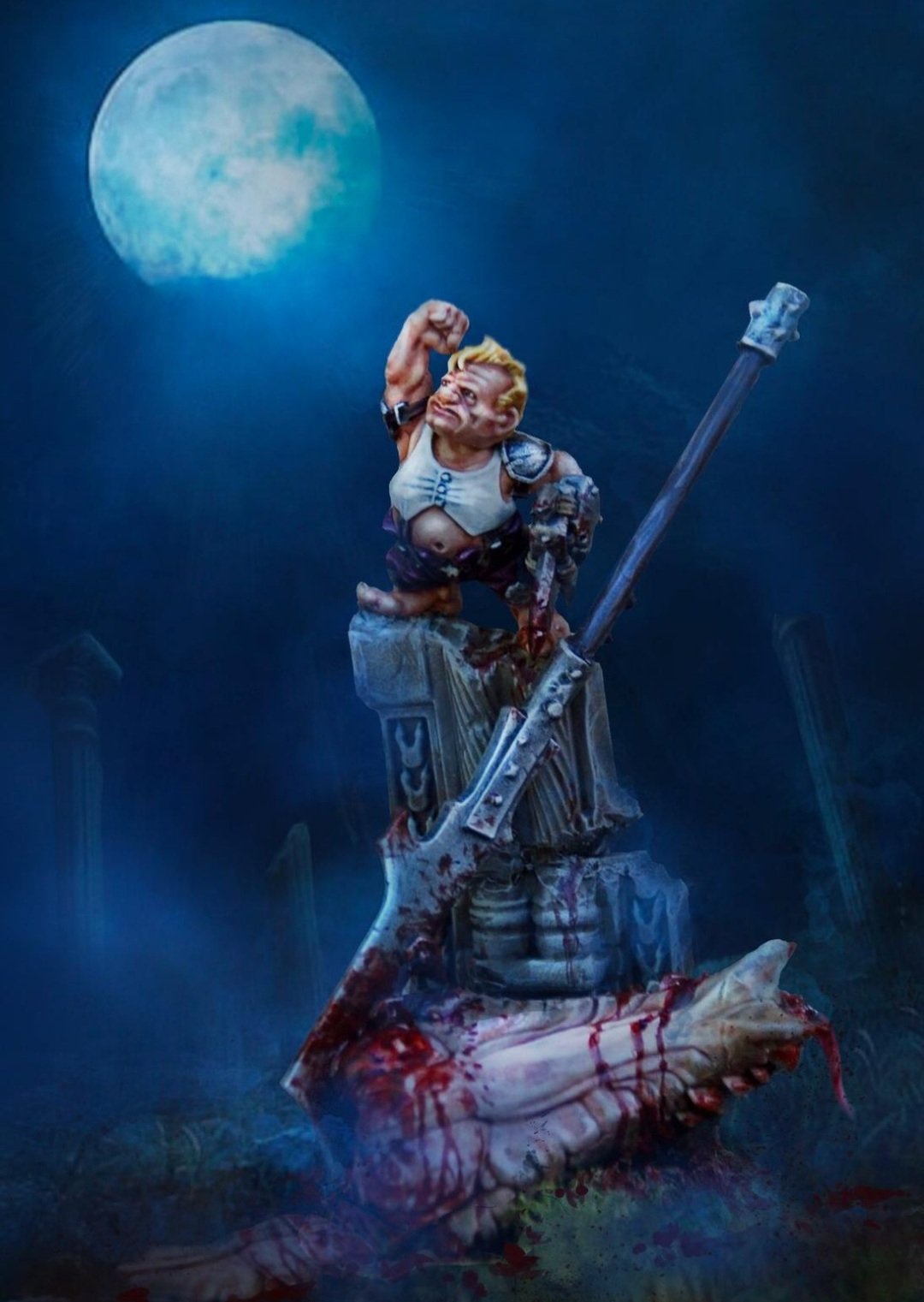
“Halfloaf Thieves may ‘acquire’ rare and outlandish accoutrements to better blend into the fantastical landscapes which they traverse.”
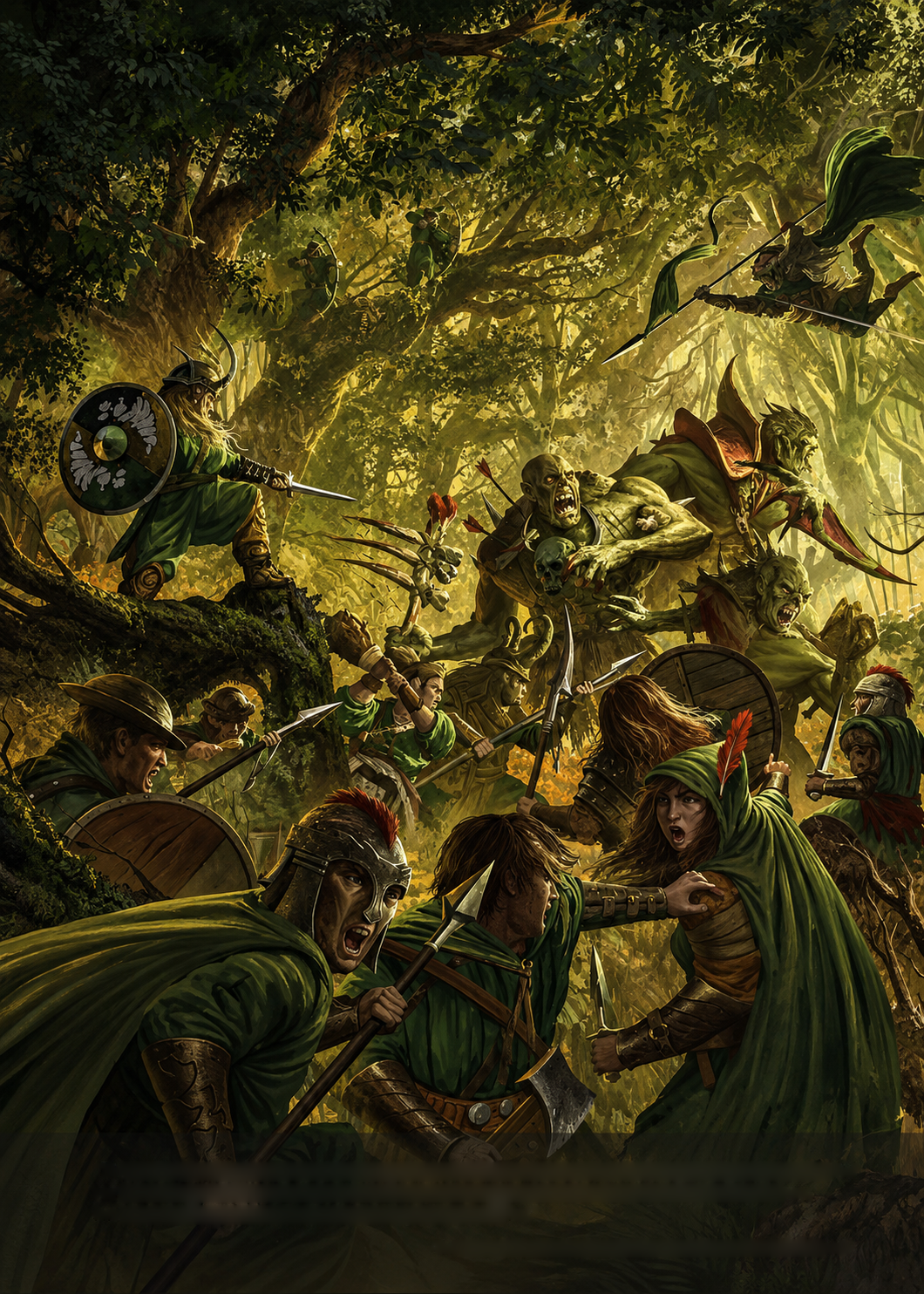

The sun that blessed the World-That-Was drowned within an ocean of tears as it was toppled from the sky. Howled lamentations accompanied bells pealing in desperation as the Three-Eyed King wrought the final apocalypse. Mallus lolls now in its place, a fiery, ruined thing, boiling in its fury, devoid of the once merry song of the Moot.
In the first apocalypse, entire civilisations perish and ruin’s flotsam is cast asunder. Paralysed Gods concern themselves only with their children, and any living thing left forsaken is cast into the pit.
In a time before myth, the progenitors are abandoned to inescapable doom. The Lesser Betrayer, Khaal Phranx, turns his back on the lamentations of his subjects. That Eicheschatten was burned and the Moot’s pastoral idyll desecrated is remembered still. Tales of melancholy and sorrow are immaculately commemorated, in this present era, in towering dishes dripping with metaphor. After the cataclysm of the End Times, the Greater Betrayer, Sigmar, augments the treachery of his corporeal embodiment and declines to find a place at the pantheon’s table for Nuffle, Deity of the Last Chance. Before the reality of the World-That-Was is forever snuffed out, the terrified refugees of the Moot are pursued by throngs of slavering Gors into the deep Alter Forest where they cling together and pray for deliverance. Their earnest pleas are heard by a despairing Nuffle and in a compact demanded of him by his thirsting cousins, his godhood is surrendered to the void in a fell exchange.
Eleven extended familial groups are spared, and two single digits are forever woven into the fabric of Chaos by myriad clawed hands.
Mallus’s survivors tumble from reality and are mercilessly tossed through the maelstrom of the black void. As they plummet, the halflings’ piteous squeals attract predators of the aether. Several are snatched as playthings and are consigned to an eternity of unbearable agonies. Disorientation and abject despair grip the survivors of this ordeal in the seasons that follow. They are lonely, in an alien heaven stripped of civilisation. Depression sinks its hungry teeth into the remnants of Nuffle’s ark. The fearful newcomers soothe their trauma with their undiscriminating dedication to the little things of the new forest, gradually adopting the role of guardians. Though the Jade Kingdoms are their new true home, they do not learn of it and cling to the rocks of former culture. These halflings make not a ripple upon the surface of the known realms in the golden days of yore. They are busy and conscientious in their labours – nurturing the burgeoning flora and fauna, the small things: the pollinators, the primary producers, the mellow and the mild. For that long era, though Alarielle traverses the Jade Kingdoms, the inconsequential and quiet communities remain in their ignorant and harmonious seclusion, shrouded from her explorations within their unremarkable enclave. Tiring of solitude, the Queen of the Radiant Wood sows the soulpods to reunite her with her children from the World-That-Was. Sacred groves and glades blossom and the sleeping Sylvaneth wake from their dormancy.
In this pompous age of vainglorious godhood, mighty empires are built, and brutish races ascend to hold dominion over vast swathes of land. With grim inevitability, these mortal kings succumb to base instincts. Alliances crumble and treaties are wrecked. The rich tapestry of peace begins to irrevocably unravel and is consumed within the raging fires of turmoil that follow. It is the lowly Seedlingkin who first stumble upon these newcomers, as the taint of Chaos begins to infect the realms. The Seedlingkin have no word for halflings, knowing only the small folk of root and burrow long vanished from the old world, and they name these survivors after them. The little folk never thought themselves half of anything, and none cares to correct a friendly giant. Majesty is unknown to this quietly indignant grove, divorced from the glorious deeds of its kin. They are never set to battle by their mother but rather bound to the soil, to the seething masses of crawling bugs, the dark-forest fungi, the unknotting of weeds and other unvaunted labours. Upon witnessing the gnomes’ devotion to the same, and sensitive to Ghyran’s own innate counsel, they tell their brother-groves not of their discovery, and the existence of this community within the Jade Kingdoms remains veiled. Mother-Alarielle remains absent, making parley at the court of the Greater Betrayer or else brooding upon his decrees and machinations within the Verdant Palace.
The diaspora finds purpose in exile, their eyes cast low so that their people may rise, unseen and unobserved. Purposefully blind to the wicked horrors haunting Sigmar’s accursed realms, the new custodians become vessels for Ghyran’s survival.
Far from the gaze of a distant Goddess, and with the soft song barely audible in the low places, the Seedlingkin form close bonds with the genial stowaways. The gnomes are set to honest labour in a hidden corner of Ghyran’s garden known as the Root Holme. They prove exemplary custodians of the meek and the mundane. As countless seasons pass, the gnomes’ memories of Mallus blur and literal history becomes lost to fable and proverb.
The gnomes remain wholly ignorant of godly schemes and of the precipice of Chaos until the realms are fair set ablaze. The Jade Kingdoms are ravaged by blight, their crystal waters tainted, and the blood of their children saturates the soil. Untold billions of their denizens are slaughtered or afflicted with cankerous plagues. Entire species are consigned to the stygian depths. As Chaos threatens to overwhelm Ghyran, Trails are fabricated by the Seedlingkin in metaphysical tandem with the immaterial will of the Realm itself. Arteries of sanctuary burst across the war-torn surface of Ghyran, hidden in plain sight within the grim fabric of reality. Lest the dull beasts stumble from light to darkness, the Seedlingkin burden the gnomes with a vital task. Soon to lay down the hoes of the Root Holme forever, the gnomes will become gnomads.
Uninvited guests have set the realms burning. The gnomads turn the other cheek to the unimaginable horrors and focus only on the safe custody of their new charges. Solemnly and resolutely, they strive not to interfere in the furious maelstrom that howls across a ravaged land. Rather, they ensure that the Trails flourish regardless and patiently await an end to the centuries of war. As desperate battles are fought the length and breadth of Ghyran, the gnomads think only of the litany of sweet pasture and the dutiful task of rebirth. Favourable auguries are celebrated with elaborate feasts. Regard for Ghyran’s plentiful bounty passes from mere consumption to veneration and eulogy. Gateways between realms are discovered and new networks of Trails are pioneered. The increasingly doughty and weather-beaten communities of the gnomads surrender any lingering amenities of the World-That-Was to the rigours of perpetual migration.
DISAMBIGUATION
As the Greater Betrayer’s crusade plunges the realms into endless war, the hidden ones emerge from their long concealment.
Whether by the withering of the Trails’ magicks, or by confidence and curiosity both, gnomads inexorably join the tumult of races contesting for Ghyran’s spoils. Sigmar’s reckless immortals descend to Ghyran to wage bitter war against Nurgle’s foetid legions. Cacophonous thunder peals through the leaves of the Jade Kingdoms and the ruin of Mallus is illuminated a brilliant gold by storms of astral lightning. Alarielle emerges from the besieged Athelwyrd, and together the allied forces of Order scour the blight of Nurgle’s New Garden. The Everqueen reigns supreme over a much-cleansed dominion as the pestilent tide begins to ebb. The Seedlingkin, deprived of glory and already quiet for an aeon, are wary of the resurgent Goddess’s wrath, choosing instead to maintain their dissimulation. The Trails continue to thrive and the gnomads follow them to every corner of the Jade Kingdoms, and beyond.
Generations of gnomads happen upon the Realmgates, and via those conduits the migrations begin to span realms. The Shimmerfalls of the Genesis Gate are first discovered by the legendary Smorgan Petakcraic, who, it is said, lost near half his bodyweight in those wakeful days after first glimpsing Shyish beyond its threshold; no caravan followed him towards that deathly realm. In the Verdant Bay, the first among Trail Masters, Caan Hadriel, reconquers the Sargasso-Citadel and emancipates the Orca-Maesi from the yoke of Scourge Privateer slavery. Upon him is bestowed the honorific Tyromancer Nautilius, and upon his descendants the name Nautilae.
Caravans return from the Realm of Aqshy, through the Hammerhalian Stormrift Realmgate, laden with spice, everflame and desiccated berries, quite under the noses of the Betrayer’s dead-eyed giants. In this golden age of exploration the gnomads thrive. The mycelial networks impel regrowth, herds and flocks boom, and the gnomad communities grow bold with them. Tzeentch relearns of Nuffle’s children and ten thousand Azyrite Swallows career into the side of the Jade Temple in a grisly riot of feather and gore. Nagashizzar, hitherto unknown to gnomads, implodes, sending a radial shockwave of death pulsating through the realms. In an instant, the deep roots of Ghyran’s Trails are destabilised. Weakness corrupts them and some begin to decay. Others are lost to the reawakening of long-buried tombs, and ancient barrows stir to the drone of the restless dead. Their occupants, so very, very hungry, blissfully gorge themselves on the herds before horrified gnomads can react. Swathes of mycelium perish and Trails that pass over such lands become infertile and barren. New terrors – sentient invocations – blaze across the realms unchained. Magicks become known to the gnomads and through the Boscage Hermits the Lore of Terraforma is honed. Trinkets and articles of ancestry glitter with amplified significance and begin to channel lost enchantments. The relationship between the Trails, the mycelial networks and Ghyran’s cycle of birth and rebirth becomes demystified.
The powerful tremors of the Necroquake rupture the delicate fabric of the Trails’ shroud. Through these tears in Ghyran’s protective magic come spilling the many-varied horrors of the realms. Hundreds of migration routes become entirely unveiled, naked to the legions of predators that descend to feast on the vital lifeblood. Like never before, the gnomads bear arms and call upon their phlegmatic forest allies for aid. Warped pans are beaten into spear-tips by sweating smiths and ducks plucked furiously by overworked fletchers. In this new Age of Sigmar, the forces that sucked the halflings of yore from the World-That-Was seek now to renege on Nuffle’s deal, and to bring about a reimagining of the horrors of Eicheschatten.
Gorgon’s Bight Detachment
The Adjudicator glared at the defendant with barely concealed derision. Like others on campaign in these leanest of times, he had a grumbling belly and sallow, greying cheeks. He nodded to the accompanying warden who promptly gave the judged man a tap – a lusty tap, mind – with the butt of his pike.
‘Rise!’ the officer commanded, with splendid theatre, and labouring with a glacial inertia, the wide-eyed trooper managed to obey.
‘Best-of-Fellows Tarafis, we shall hear what Spearman Nhort, Sub-Exemplar, has to say for himself. I am given to understand it is quite the tale.’ The Adjudicator exchanged a mocking glance with the Best-of-Fellows whose lip curled proudly in reply. Spearman Nhort’s tongue wobbled but no words fell forth. With a pudgy hand he flicked at a bead of sweat that had formed, somewhat incongruously, on his plump forehead.
‘Out with it, Sub-Exemplar,’ the Adjudicator chided sharply. ‘Don’t keep the Best-of-Fellows and I from our dinner!’ Spearman Nhort’s heart sank, and tears of injustice began to well up in his eyes. He took a quavering breath, regarded his betters, and began.
‘I swear, Sirs, that one of Sigmar’s own bolts may strike me if I utter a false word, for everything I say is true. Sirs will note that after the battalion’s last action against the Beast Drove territories the battalion was compelled to fall back in disorder… eh, that is to say withdraw from the fighting, Sirs. As you can see from my missing ear, I suffered a mighty grievous blow and was knocked senseless. I knew not of where I was and all recollection of the retreat, eh, that is to say the withdrawal, is lost to me.
‘I remember nothing of how I came to be in that wagon. In and out I came, Sirs, of this world and that of slumber – the only memory being the fair hand of the tiny one spooning that porridge into me. Sirs, I cannot do it justice. Thick and creamy and uncommonly good, sweetened with molasses and dotted gaily with soft fruits. For it is that, that I thank for my recovery, I’m certain. Over many days these quiet, little people would fill me so full of the stuff that my stomach groaned. On no account would they tell me where they came from, nor where they were headed. A queer folk, all told, Sirs. I partook of a great banquet, a Great Feast they called it, the likes of which no man has seen. Three days it lasted, dish after glorious dish. Crispy pies brimming with honeyed damsons, great wobbling platters of steaming buns.
‘Pungent cheeses that set my mouth fit to drool. Each dish was met with a chorus of song, and stories too; though I do admit, Sirs, to not recollect them as cup was a’plenty. “Shir-betz” they called them, unworldly drinks that popped and spat, cooled with virgin ice, fine meads also and powerfully thick porters. I confess I was three shades giddy and merry as a wet pig. The final dish, Sirs…’
Sub-Exemplar Nhort wiped the saliva from his chin before continuing.
‘’Twas a whole she-ox rubbed with salt and dressed with rare herbs, warmed-through with spice. Its own butter basted it, jewelled with fat and meat that fell from the bone and…’
‘Enough!’ bellowed the Adjudicator. He held his head in his hands until his composure was regained. ‘Enough,’ he repeated quietly in a hungry whisper. He regarded the man before him with disgust as he contemplated what punishment he might mete out.
‘Sub-Exemplar Nhort, first-hand accounts of your disappearance cannot be found. Stores were looted in the withdrawal and though I may suspect you of making free with their contents, I cannot sentence you for it. The regimental physician concurs that your wound would have knocked you senseless and that, I suppose, accounts for your absence from camp.’
The Adjudicator rested his chin atop his pressed palms as he scrutinised the trooper before him.
‘Sub-Exemplar Nhort, you might have escaped punishment if not for your fantastical tales. A race of travelling, beardless dwarfs! Do you think our scouts would not have encountered such careless merriment?’
The Spearman took an involuntary half step forward, but his protestations were met by the Adjudicator’s staying palm.
‘For conduct unbecoming a Sub-Exemplar, I dock three-quarters campaign pay. For untruths uttered in the company of officers I sentence you to a half-season in penal ranks.’
In an instant, Spearman Nhort’s healthy glow blanched of all colour.
‘Tomorrow you will join the diversionary vanguard detachment at Gorgon’s Bight. I would advise you to abstain from next day’s rations entirely, Sub-Exemplar Nhort, that you may become fleeter of foot. Good day, Spearman!’

For the gnomads, food is not mere sustenance and its consumption no idle habit. In each delicious mouthful, a remembrance; in each delectable quaff, a promise. Gastrognomic traditions bind distant and diverse communities together as one table, and with one true purpose.
Rare indeed is it for an outsider to witness a gnomad Great Feast. Incredible tales do escape the large gatherings of this diminutive folk, though they are scarcely believed by the listener. But be it a wandering minstrel or a desperate outcast, a Sigmarite lost or a Sigmarite found, uncommon is the long-leg who is witness to such an occasion. Sigmarites, for all their avowed promises of silence at the cost of a groaning belly, are a weak race, and once returned to their lands burn so hot with desire to unburden themselves upon their brethren that fantastical whispers fall from their lips, waxing lyrical about their incredible experiences in the temporary company of this migratory people.
Of these implausible reminiscences are legends made.
Gnomads traverse vast distances to attend such feasts. Great caravans meander along the trampled arteries of the realms, drovers at the fore, leading a vanguard of the great herds. Titanic Crag Ibexes laden with the accoutrements of entire encampments heave like colossal land-ships, winding a steady course towards the prospect of festivities. Their dwellings – fine yurts of impeccable manufacture – their families and stores, their animals and livestock, even their communal kitchens are broken down and hitched to these powerful beasts when a gathering of communities is called. But this is no hardship for the gnomad folk, much used as they are to roving through the lands, carrying with them their lives, their loves and their traditions.
A book is a heavy thing to carry, and easily spoiled. Its ink does fade, and its pages grow green with rot. That a recipe may be enshrined in such a precarious curio is unthinkable for a Feastmaster. They keep their recipes in the one place that cannot rot: a Feastmaster’s memory. The culinary maestros are no mere cooks, rather custodians of gnomad heritage – which is passed from master to novice through generations and told in the medium of food. A dish would be nought if not for the story it embodies, and a gnomad learns much with each spoonful or lick of greasy fingers. Master orators too, these elders; tales accompany the food, and music also – whether it be the strum of the banjo or the joyous caterwaul of the pipes.
The biggest of gatherings – those that herald the coming of seasons, a new birth or the passing of a venerable chef – last for days. When gnomad betrothals are called, little will stop the wanderers’ attendance. Such occasions put to shame dreary Sigmarite carnivals, for such merriment is made as could wake the restless dead. Dressed in their gayest finery of dazzling colours, feet freshly combed and waxed, bachelors seek to catch the eye of discerning maidens.
Cheerful ordeals are set, and a proud young buck might return ahead of his peers, thoroughly wasp-pricked with the freshest honeycomb. A bride-to-be may choose from her suitors and, by necessity, need not limit herself to one handsome fellow. Life on the Trails is precarious, and sweltering savannah might turn to frozen tundra before lovers are reacquainted. Gnomads leave Great Feasts red-faced and glassy-eyed.
Only once every morsel of food is enjoyed, every drop drunk, every lip smacked and every belly groaning, does the collective part, to seek again fresh pasture along the hidden pathways of the realms.
Much can be made of a gnomad’s prodigious appetite, but it is folly to imagine them as simple gluttons. To merely consume would be anathema to their ritualistic relationship with food. When gnomads stuff their faces, it is not born of base greed nor primal instinct, but is rather a joyous and intentional act, paying homage to both the origin of nourishment and the fabled culinary talents of the Feastmaster. The fayre is magnificent in spectacle and trouser-bursting in quantity. To compare gnomad chefs to their long-leg cousins is to grossly understate their skills. They are artisans of pastry, doyens of dumplings, masons of pie and loaf, and high priests of the syrup pudding. From their bulging larders to their immaculate kitchens, the feasts play host to towering creations and huge, bubbling, communal pots of delicious stews and broths. Honeyed, many-layered sweets and wondrous designs sculpted from ripe fruits might prelude the end of such an occasion – usually the ninth or tenth course – and are followed by merriment of cup and weed and of melody, long into the night.
Such is the bond between gnomads and their cloven companions that the many-varied beasts which they follow are said to gladly offer them their bounty. The richest milk is used to craft radiant butter, coloured sunburst. Pots of the stuff are carefully sealed and their vintage captured on labels as coming from this prize nanny or that. A dedicated wagon carries the cheese and none can bear to walk alongside it for long lest they be driven wild with hunger by its humming aroma. Of meat, they eat little outside of such feasts, slaughtering only the old or infirm and by necessity the outcasts or rogues amongst the cattle.
Sanctity enshrouds these processes and immense care is given to the rituals. Suffering is minimal and nothing is wasted. The consumption of this precious resource is always accompanied by odes to its progenitor and fond memories of how well it might have lived amongst tall grasses and the dancing blossoms of the prairies. Some say elements of metamorphosis occur during digestion and the diner is imbued with the finest characteristics of the provider; emboldening or strengthening, or making fleeter of foot. By contrast, Sigmarite banquets are debased affairs that pompously proclaim man’s dominion over nature – and to witness one is a rum do for any gnomad.
The flesh of many beasts is squished and squeezed, animals squashed into one another in a grisly celebration of wealth. The brightest-eyed lambs might be sliced asunder and their cavities filled with all manner of foul thing, or else hares may be dressed, stitched together with the wings of birds that they be crude effigies of more highly regarded fauna. Gnomads are a congenial folk and are hard pushed to anger… but nothing stokes the rage of ruddy-cheeked Halfloaf Thieves more than the spit and pop of long-leg sausage. All manner of befoulment can be found in them: the butcher’s sweepings, a careless rat, rheumy-eyed hounds… even, it is whispered, unwanted children. Beastly!

The Necroquake tore open the hidden Trails and exposed their tender bounty to the slavering appetites of Sigmar’s realms. Yet wounds, though cruelly given, may crust and close. Through patient husbandry, solemn labour and the alchemic ministrations of the Hollowain War-Wagons, the gnomads set themselves to darning Ghyran’s ruptured tapestry. New growth crawled over the scars. Habbinkerr Groves flourished anew beside mended pathways, and the first timid migrations returned to lands abandoned in the wake of death’s great upheaval. The gnomads believed the worst had passed. Beneath their calloused feet, something laughed.
The first warnings were small enough to be dismissed. Barley ripened grey upon its stalk. Wheel-ruts filled overnight with greasy water though no rain had fallen. Milk soured in the udder and fresh butter sweated a viridescent oil. At several Habbinkerr Groves, mushrooms erupted in obscene profusion, their pallid caps marked by curious rents resembling gnawing mouths.
Boscage Hermits pressed their ears to root and bole and heard only confusion. Messages travelling along the mycelial networks arrived knotted and incomplete. A warning sent from the Root Holme might emerge three valleys distant as a shriek of hunger. Tidings of a Great Feast became instructions to bury the ovens. In some places, the whisper of Ghyran was crowded out entirely by an incessant scratching.
The herds knew before their custodians. Ancient migrations faltered. Dromedhari refused the familiar turns of the Blazed Trail and spat foaming abuse at their Drovers. Hirvi scattered from quiet pasture and stampeded into winter storms. Even the steadfast Crag Ibexes baulked at empty ground, iron-hard horns lowered towards foes no gnomad eye could perceive.
Abstemious Scouts ranged ahead and returned with thin lips and troubled stares. Some spoke of tracks that began in the middle of untouched paths. One scout, fevered and trembling, emptied his pack before the elders of the caravan. Every ration within had been eaten, yet its wrapping remained perfectly tied. The old ones muttered of capricious Trails and the lingering spite of the Necroquake. The younger ones reached for their bows. The scratching grew louder.
Far across the Realm of Fire, the heavens convulsed. The proud garrisons of the long-legs looked to their walls, their engines and their golden immortals. Instead, the ground split its grin from horizon to horizon. Mountains buckled. Cities sagged into chasms. The firmament was stained by a sickly brilliance, as though some monstrous lantern had been lit beneath the skin of reality.
From that impossible wound came vermin beyond counting. The ratmen did not march so much as spill. They poured through the broken lands in shrieking multitudes. Bells pealed with such malignancy that unborn creatures twisted in the womb. Every vile clan of that treacherous race hurried forth to claim dominion over the ruins.
The self-proclaimed greater peoples named this catastrophe the Vermindoom. They declared an hour of ruin and made ready for magnificent wars, for desperate crusades and all the other pageantries by which the mighty disguise their failures. The gnomads knew it by another name. To them it was the Seasons of Spoiling.
The Blazed Trail suffered first. Its already-thin concealments blistered and tore as the Realm of Fire lurched beneath the Skaven assault. Trails which had once meandered through the Great Parch buckled into impossible geometries. Caravans might pass a scorched acacia at dawn and find the same tree awaiting them at every mile until nightfall. Hollowain War-Wagons laboured to renew the wounded routes, but the land no longer answered with gratitude.
Something else had entered the conversation. Warpstone lodged within the Trail’s metaphysical roots, and its corruption crept along the hidden arteries, borne through soil, water and mycelium. Sickly light pulsed beneath pathways in Ghyran. Feral Trails in Ghur developed cankerous offshoots which led only to lightless warrens. The waters of the Shimmering Trail reflected moons that did not exist. Along the Fallow Trail, graves opened not to release their dead, but to admit living things from below. The Necroquake had fractured the shroud. The Vermindoom entered through the cracks.
The first Habbinkerr to fall was Bollen’s Rest, a generous grove at the meeting of three major Trails. For eleven generations its orchards had provided ruby apples, sweet roots and a particularly celebrated blue-veined cheese. Caravans timed their circuits to arrive at its pressing-season, and more than one Symposium had been convened beneath its boughs. The Trail Masters counted it a waypoint of the first rank; the Drove Kin simply called it good ground.
The grove was preparing for a feast when the ground opened beneath the kitchens. The ovens vanished first, swallowed whole with three bakers and the entire winter store of candied plums. From the steaming gulf erupted a tide of clawed bodies. Clanrats spilled into the grove while hulking brutes tore apart larders and gobbled anything they could seize – grain, candles, harness leather and one another. Panic overtook the gathered herds. Oxen thundered through tents. Terrified woolbeasts tangled themselves in guy ropes, dragging whole family yurts into the mud.
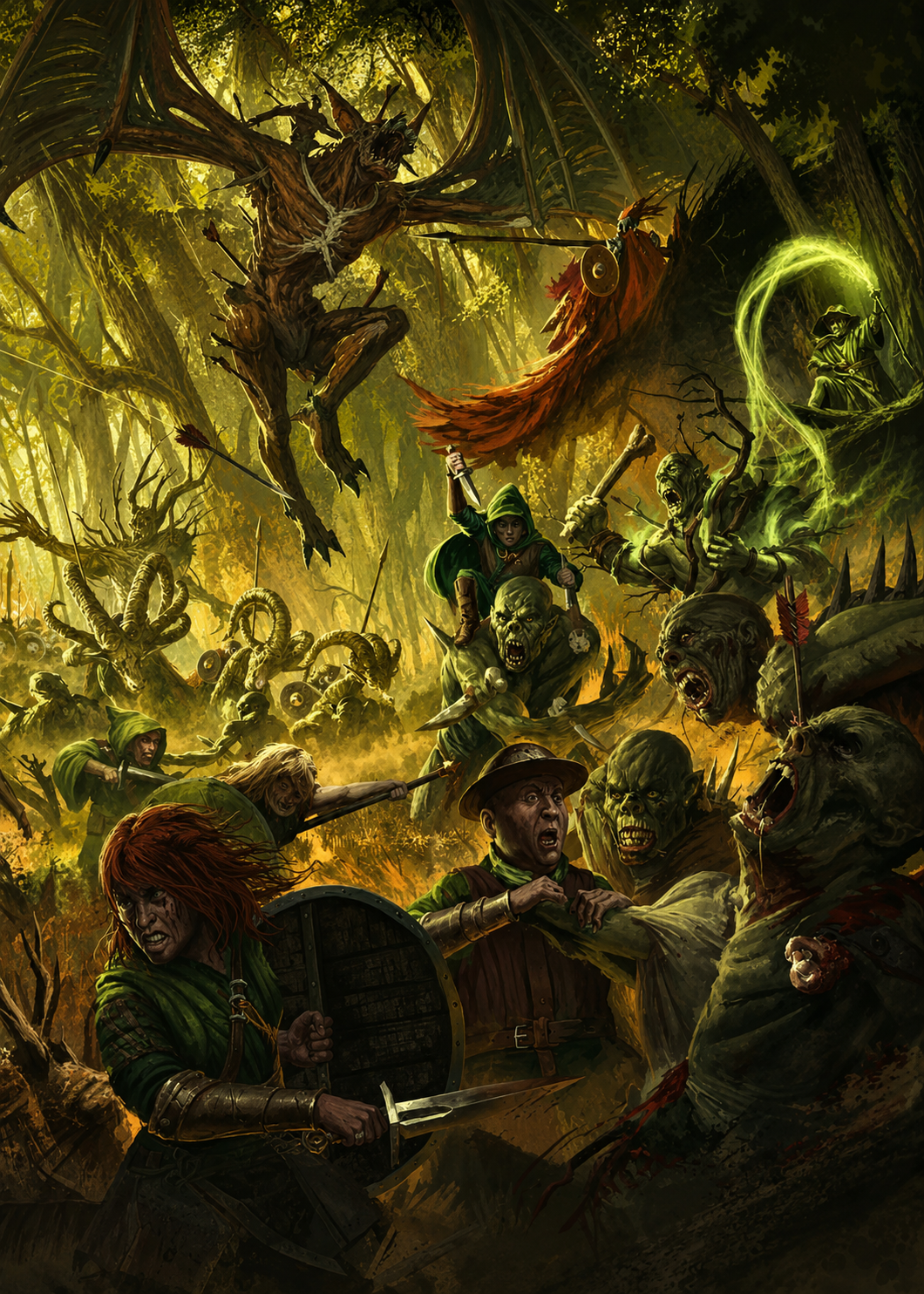
The gnomads rallied with admirable speed. Drove Archers climbed onto overturned wagons and loosed feathered wrath into the heaving swarm. Drove Kin formed around the youngest and oldest, cleavers and crooks rising and falling in bloody rhythm. Trencher Proudfeet plunged through the orchards in a storm of horn and steel, their Crag Ibexes trampling armoured ratmen into the mashed fruit beneath. Above them swept the Canopy Riders. Crownwing Eagles shrieked as their riders drove keen-tipped lances into the press. A Trail Master on a Dawnspur Wattlecrest charged along the grove’s collapsing terraces, his furious mount reducing every foe before it to a haze of red ruin, feathers and broken teeth.
Yet for every Skaven slain, another crawled from the pit. Hawthorn Hotpots were rolled to the breach and fired until their barrels glowed. Scalding stews burst amongst the invaders – meat, marrow and caustic herbs clinging to fur and flesh. The enemy squealed, maddened by smells they could not decide whether to fear or devour. Still they came.
Only when Brindlecap Mossroot, the Boscage Hermit of Bollen’s Rest, staggered from the grove’s deepest hollow did the elders understand. Warpstone growths had infested the root-heart. The Habbinkerr was not merely under attack; it had become a mouth through which the Skaven could pass.
No axe was raised and no torch brought near. Instead, every surviving hand was turned to the grove’s salvation. Hollowain War-Wagons were drawn wheel-to-wheel around the breach. Their Glamour Shrouds unfurled in overlapping waves, coaxing thorn, root and living stone across the gnawhole. Brindlecap Mossroot sank his hands into the poisoned soil and begged the grove to sleep.
For nine days the gnomads laboured. The infected roots were gently separated from the healthy whole, not hewn but persuaded apart through patient sorcery. The oldest trees withdrew their sap from blackened limbs and surrendered those branches willingly to the earth. Beneath the grove, roots knotted themselves into a living seal, layer upon layer, until the gnawhole’s green glare was smothered. Bollen’s Rest did not die. It slept.
The surviving caravans departed with its seeds, saplings and the precious cultures from its cheese stores. Behind them remained a silent grove wrapped tightly within its own roots, guarded by Brindlecap Mossroot, who swore to remain until the first clean bud opened – or until Ghyran called him elsewhere.
No Great Feast marked the victory. Yet before leaving, every gnomad placed a morsel of food upon the sleeping earth. The scratching continued below.
Thereafter, no Trail was assumed safe. Abstemious Scouts were sent not only ahead of the caravans but beneath them, squeezing through root-tunnels in search of warpstone spoor. Some did not return. Others emerged with their hair turned white and their ration bags mysteriously full of meat they refused to name.
Halfloaf Thieves accepted darker labours still. They crept through gnawholes to silence Skaven mapmakers and steal warpstone instruments. The enemy had begun to understand their worth.
To the Skaven, the hidden pathways were roads unseen by rival armies. Grey Seers dreamed of seizing them whole; Master Moulders coveted the beasts
that travelled their courses. Hollowain War-Wagons travelled in close companies, their Glamour Shrouds woven together over wounded pathways while Boscage Hermits worked to draw the corruption from root, soil and mycelium. Where a Trail could not yet be cleansed, it was coaxed instead into dormancy, its entrances folded beneath fern and thorn, and the migrations turned towards longer and more perilous routes. Some Trail Masters ordered entire branches hidden from use, so that caravans woke to find the road behind them sunk into dreamless slumber, cutting them off from kin with whom they had shared fires only days before. Such Trails were not abandoned but entrusted to Ghyran’s keeping until healing might begin.
There were arguments. There was sorrow. There were even empty places at the dinner cloth. But there was no surrender. Owain’jax, Son of the Jade Forest, strode to war wherever the corruption bit deepest, his ancient roots crushing warpstone growths to glittering powder; yet even he could not cleanse every wound, and the venerable LeyLord Ancient’s sorrow could be heard in the creak of his limbs whenever another Trail was lulled into dormancy. Still the pact remained. Ghyran’s progeny must migrate, and the meek creatures of the world must be shepherded, however loudly gods war or vermin scratch beneath the soil. The Necroquake taught the gnomads to bear arms; the Vermindoom taught them that not every wound can be healed at once.
Across the Mortal Realms the caravans move still, Drove Kin marching beside the wheels, Drove Archers watching every ridge, Hawthorn Hotpots bubbling ominously in the vanguard. At night the gnomads gather close about their fires. They eat, for tomorrow may bring hunger. They sing, lest the scratching drown all merriment. They recount the names of sleeping groves through dishes whose ingredients they carry in hope of planting anew. Far behind them Bollen’s Rest sleeps on, its first clean bud still unopened, its Hermit still waiting. Beneath them the enemy gnaws at the roots of the world. Above, the caravans roll onward.
OPPORTUNITY

The mysteries and wonderment of the realms have long been witnessed through the sanctuary of the Gnomad Trails. Through invigorating migrations the gnomads plough life-bringing courses across the breadth of Ghyran and beyond. In savage times these arteries may split, spasm and falter, exposing the Gnomad Feastmasters to the true horrors of Sigmar’s lands.
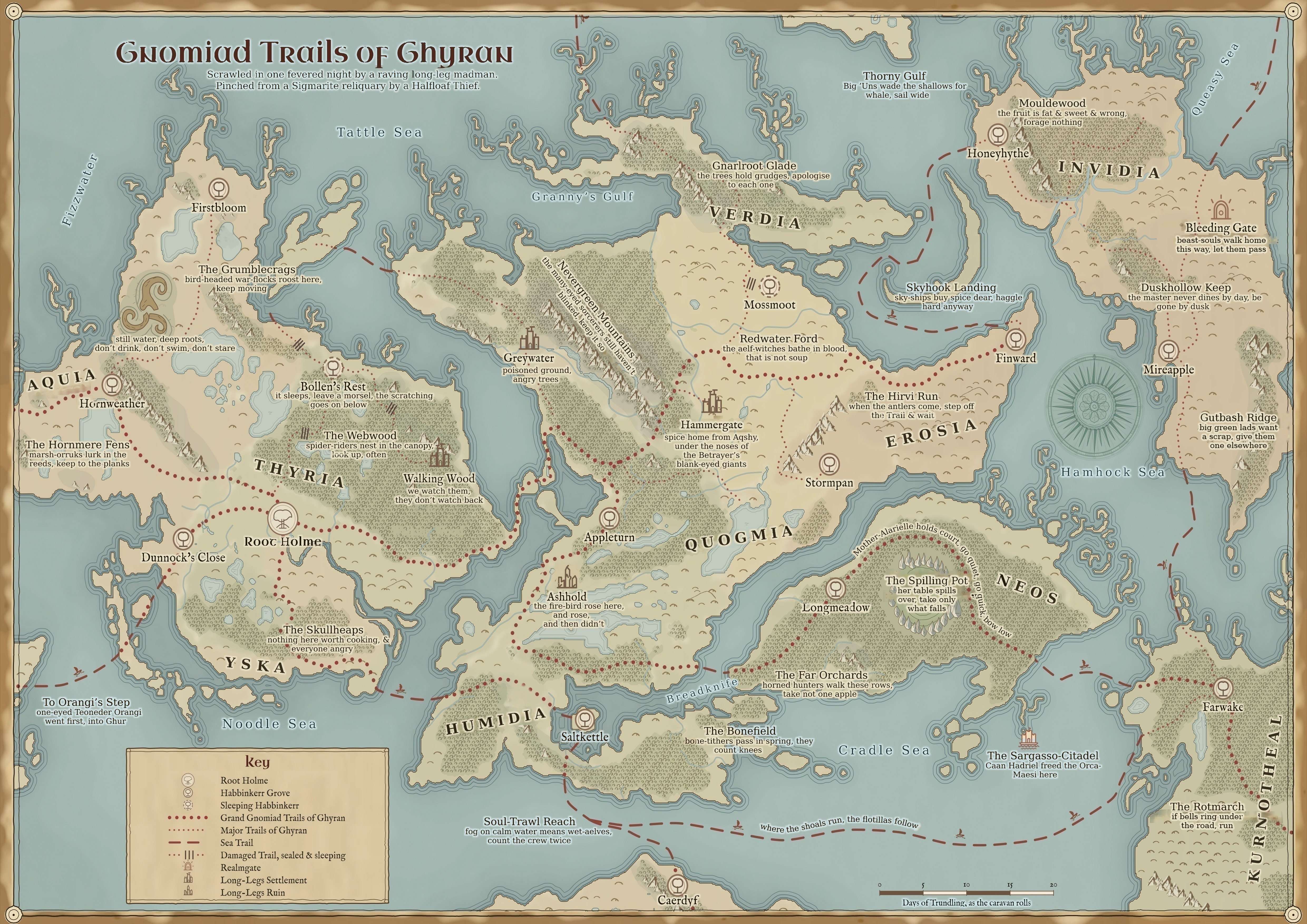
The Gnomiad Trail is the root from which all others stray. The Feral and Blazed Trails were pioneered through Realmgates by bold caravans following living migrations beyond Ghyran. The Necroquake opened a stranger course: one wounded branch bled unbidden into Shyish, where the gnomads discovered the beast-souls of every realm hunted and claimed by Nagash. The Fallow Trail grew from their resolve to guide those dead charges home or onwards to peace. Only thereafter did the gnomads deliberately seek Hysh, cultivating the Shimmering Trail so its pitiless light might reveal the origins and proper destinations of spirits made lost. These later Trails carry fainter protections than their Gnomiad parent, but duty does not lessen merely because concealment does.


Wheezing final breaths upon their deathbeds, few living things can reflect upon a life of near-unbridled contentment, their eyes wet with happiness. Striking memories of sweeping emerald valleys and of towering, cloud-wreathed peaks. Reminiscence of times spent following their peaceful charges through luxurious carpets of dazzling wildflowers. Dancing pollen lit gold by burnished sunsets. A life of comradeship, of merriment, of duty and of fulfilment. To begin and end one’s days renewing the bountiful Gnomad Trails is to touch fortune indeed.
The Gnomad Trails have neither true beginning nor end, for such distinctions are anathema to these rejuvenating arteries which weave a secret path through the realms. The oldest of them burst from the Root Holme like lightning bolts at the dawn of the Age of Chaos, before the apocalypse, engineered in collaboration between the Sylvaneth Seedlingkin and merciful Ghyran herself. From spiralling spurs, tributary paths form passage through many-varied landscapes. Major Trails may proliferate into deltas of untrodden, twisting routes, or else set an arrow-like course for hundreds of leagues. Though the ancestral lands of the Root Holme are remembered still, in dishes devoted to them by the Head Chefs, gnomads in the Age of Sigmar have long submitted to the intuitive will of the beasts they follow.
Hidden in plain sight, concealed by Ghyran’s own ambient magic, the Gnomad Trails tenderly crisscross her surface and traverse her oceans, routes of sanctuary for her many docile children. They exist as antediluvian idylls, and along them the great flocks, herds and schools migrate. Under their hooves the scarred lands are renewed, withered roots blink with life and dormant seeds gasp at existence. The essential nourishment from the natural cycle of life and death is the body and blood of Ghyran’s black soil, and the gnomad caravans are the ploughs which sow a newly fertile landscape. In their wake, ruined ground which has slumbered a nightmare of aeons rises proudly, its leaves reaching up to the sun and richly drinking of Ghyran’s torrents. Upon sparkling cobalt waters, flotillas of tiny vessels pursue playful marine life, and following behind them, tendrils of kaleidoscopic coral burst from sterile sea-beds.
The Trails are fantastic constructs – at once veiled by sorcery and yet corporeal in nature. The gnomads tread lightly where they go, following migrations that span continents and holding custody of their droves and the Trails, both. Though a storm
of Chaos howled across the realms, the gnomads turned their eyes from the defilement, content enough to pursue their secretive odysseys and single-minded enough to maintain this steadfast course. At the confluence of larger, more stable Trails, Habbinkerr Groves are tended by reclusive Boscage Hermits. At these waystations gnomad caravans converge in numbers to share news and goods… in unhurried fashion and over many necessary courses. No matter is settled before the third pot is emptied, nor any farewell made without leftovers. Though solitary and distinct from their convivial brethren, the Boscage Hermits are in constant commune with their Seedlingkin confederates, and latterly the secretive aelven Wanderers and the sagacious LeyLord Ancients.
Such was the strength of these vital arteries that passengers moved along them unmolested throughout the Age of Chaos. The many-eyed sorcerers of the Nevergreen Mountains have not blinked in the concealed presence of them, nor have the reality-shifting daemons of the Scabrous Sprawl attained insights from beyond the rift. Millions of hooves bite, unbeknown, into the ground beneath the gloomy edifice of Greywater Fastness, rejuvenating the soot-blown orchards and leaving their bleary-eyed smallholders perplexed at the sudden bounty they proffer. The Phoenicium and the Living City are known to the gnomads in a one-sided relationship of distrustful observance.
It is also known, to a privileged few, that some Trails intersect in capricious union with other planes of existence. Veillotron’s Trail famously led that celebrated Head Chef to the threshold of the Genesis Gate… and beyond. The Necroquake catastrophe changed everything. Its decrepifying shockwave pulsated through the very core of the Jade Kingdoms, stunting new growth, curling leaves and leaving swathes of forest ashen, bitter and spiteful. Some Trails were twisted and deformed, some were snuffed out entirely – terminating abruptly into stygian voids of fathomless depth. The ground beneath many Trails ruptured, exposing the herds to monstrosities beyond the splintered façade – and through these slim fractures, fell creatures slunk to gorge themselves on Ghyran’s progeny. Violence knocked loudly at the door to gnomad communities and they were driven to respond.
At first they were reluctant, turning their eyes from the true horror of Sigmar’s dominions, but once witness to rolling tableaux of unbridled slaughter, their herds’ carcasses bloated and blackened, they responded keenly. The rapid adaptation from carefree travellers to determined guardians was remarkable. Shepherds’ crooks and short-bows assumed dual roles, and Halfloaf Thieves were born, to pilfer articles of war from those long steeped in its misery. Still, the gnomads’ joie de vivre has not been entirely forgotten; for there is a time and a place for everything, and for merriment and feasting that place is just over that next hill, yonder. The faltering Gnomad Trails are the lifeblood of the verdant realm – but for how long can their vital denizens remain veiled from Sigmar’s tumultuous machinations?

Wanderlust bit hard on the more inquisitive gnomad communities once the timeless presence of the Realmgates was discovered. Bold and weatherworn Trail Masters looked long into their unfathomable, shimmering majesty as Ghyran’s Trails disappeared into the beyond. It is said the one-eyed Teoneder Orangi was the first pioneer to set a tentative gnomad foot past the threshold and the first to witness Ghur’s teeming primordial jungles and soaring, storm-crowned peaks. Legendary dishes tell that he was the first to lead a caravan through the toppled, weed-choked monuments of long-dead empires that dotted the gouged earth of its bone-blighted canyons.
For some creatures of the nine realms, as for their guardians, the vital lure of Ghur is intoxicating. Though the threat of natural death is more palpable, more urgent in Ghur than in other realms, humble beasts submit themselves to its irresistible grasp in incalculable numbers. Autochthonous predators, never dethroned from the natural apex by ceaseless incursions, stalk the dark places. Colossal herbivores, rugged carpets of impenetrable fur or calcified latticeworks of gleaming scales, lumber over the ever-changing topography.
Where the droves lead, the gnomad caravans follow, safeguarding their herds, discovering rare ingredients and conducting furtive trade and illicit skulduggery. The fertile contours of the Realm of
Beasts are initially responsive to the caress of Ghyran’s lingering touch, bursting into an abundance of flora in the wake of the caravans… but this is short-lived. Ghurish Trails are mere footsteps in the rain – insubstantial and temporary, destined to swiftly disappear as the restless lands devour the feeble wards of lesser realms and force submission to Ghur’s irrepressible will.
Providence was it that augured the intersection of Trail and Mawpath? An unlikely and uneasy alliance of gnomad and ogor was founded following decades of bitter bloodshed, retaliation and recrimination. Battles were fought over continents between the Sovanheng and the Splintergut mawtribe. From the ashes of sorrow, a slow-dawning relationship quelled the violence. The peacemaker – their mutual devotion to food – was anointed with best-brewed grog.
Outcast or uncommonly inquisitive ogors – with ideas above their station – began to throw their lot in with the funny little pixies. These exiles found little competition for the choicest cuts from the caravan butcher-shops and were quickly dumbstruck at the free availability of juicy spine-marrow and
luscious mating organs. Their uncomplicated tastes were irrevocably twisted with the addition of szalt, phiperi, Ambermani and popzing-shurbitz. Their palates became so posh and queer that they were shunned by their Mawtribes, none of them able to muster the willpower to turn their backs on rich gnomad cuisine.
It is whispered that some deep-country Halfloaf Thieves have gone native in the other, blood-curdling direction, succumbing to the Glutthold, seduced by the carnivorous ecstasy of the glistening Mawpot.
It was in Ghur that the gnomads first encountered the Crag Ibex. These noble beasts haunted the misty scree escarpments and reigned supreme over precipices of fool’s footing. Over generations, gnomads and Crag Ibexes formed bonds of trust still evident to this day. Domesticated specimens are much valued for their temperament and fortitude, and not least for their ferocious loyalty and iron-hard horns. They shoulder many a burden, hauling the community’s trappings along the meandering
Trails. Ghurish gnomads have seen the Mountains of Maraz and the Sea of Bones. They have traversed the ruined sky bridges following colonies of Moon Apes on their great diaspora. The Solar Guard of Jercho have been met, and well met. Glimmerlings and Torope Gold have been located, and traded, and… borrowed.
The incongruous partnership of the hidden and the hefty has endured in this treacherous realm. The most pliant and well-adjusted of the brutish ogor guardians may accompany, and even lead, communities for many a season. Their bough-clubs, studded with cruel pig-iron spikes, make merry music alongside the fizz of draw-strings and the screeching swoops of Crownwing Eagles, perplexing enemies with a variety of opponents rarely encountered.

Ghyran’s benign influence is attenuated once the threshold of reality is breached. Protections which shield the Trails from maleficence are scant in this realm of fiery tempest. On some Trails salivating predators might catch glimpses of meek folds through a porous mesh of faltering magic, whilst on others the bounty within might be on naked display and entirely unprotected save by the spear tips of lusty drovers.
The gnomad communities who ply the channels of Aqshy have been quick to set aside the memory of Sigmar’s betrayal. Here they freely consort with his children, the honourless long-legs, in the pursuit of mercantile trade and acquisition. Caravans have become newly wealthy, returning to Ghyran laden with exotic ingredients: daggerbite, dawnspice and heaving bunches of flammaberry.
To their dutiful brethren of Ghyran, returnees from the Realm of Fire can appear brash and reckless, given to uncharacteristic outbursts of temper and dangerous passion, such is the influence of time spent in a landscape of quick-blood and urgency. Still, they are admired and rightly lauded for their bravery. Their Trail Masters are duly respected by
their more cautious peers and the Head Chefs of Aqshy Trails are held in high regard; their marvellous creations reddening the cheeks and sweating the brow of intoxicated and awestruck partakers.
The emboldened caravans bravely follow their tentative charges from the Aqua Ghyranis out into the arid lands, irrigating those lands with the lifeblood of renewal as far as the lip of the Great Parch, to the ruined gates of Bataar and Aspiria. The arts of war have been quickly adopted and ruthlessly implemented by ambitious Trail Masters, who, in the reflection of Aqshy’s fury, have stooped to pre-emptive attacks on those they consider future threats.
The Brimstone Peninsula has witnessed the first tense exchanges between gnomads and the Stormcast Eternals, the blank-eyed vessels of Sigmar’s wrath. Upon the barren Flamescar Plateau, the Hollowain War-Wagons have fought pitched battles against apoplectic Doombulls and thundering Bloodcrushers, forever in ruinous limbo following Korghos Khul’s bitter defeat. Beyond their benefactors’ guiding hand, the drovers of the Blazed Trails face dangers like no others and reap rewards in kind.
Gnomads of this scorched land are among the most courageous of their kinfolk, invigorated and fiercely determined to discharge their duties. The fauna which inhabits Aqshy is of hardy stock and can be lethal when roused to anger. The preternatural understanding between the gnomads and Aqshy’s denizens is one of mutual respect, though always subject to natural instinct. A whole cornucopia of creatures is led along the desiccated Trails. Swaying columns of Dromedhari move languidly over sizzling dune seas. Congregations of Cancii – immense crab-like creatures – scuttle across the cracked earth of the Fyretines on their curious exodus to spawn, and to die, in the sulphurous waters of the Shatterglass Archipelago. Hardy amphibious caravans, clad in otherworldly attire of obsidian-glass visors and suits of woven ignaxia, follow Nampharine Krokodilae along magmasmic tributaries.
Petty empires rise and fall in these lands of bravado and confidence. Riotous bloodshed is a constant companion to the long nights under Evigaine’s burnished moonlight. In the blistering days its inhabitants toil and stew and scheme. Though the gnomad caravans are encountered by outriders whose ancestors tumbled from the World-That-Was, little heed is paid to them. Constantly warring chieftains are wholly preoccupied by ambition and lust, driven by the heat of battle and the urgent conquest of myriad thorns left in the ebbing, crimson tide of Chaos’s reverse. They care little for a tiny people with modest aspirations and pitiful goals, wasting their existences tending to the mundane needs of dull beasts best suited to a hook in the slaughterhouse.
Scorn is a gnomad’s shield and underestimation their sword, and both are kept keen upon the long road. Though unrequited pride beats like a drum in their hearts, they deign not to rise to the disdain aimed at them by Sigmar’s lackeys, though should they falter… they will earnestly endeavour, with cauldron and scalding stew and a quiet word to the patient beasts that bear them, that the agitator does not live to tell the tale.
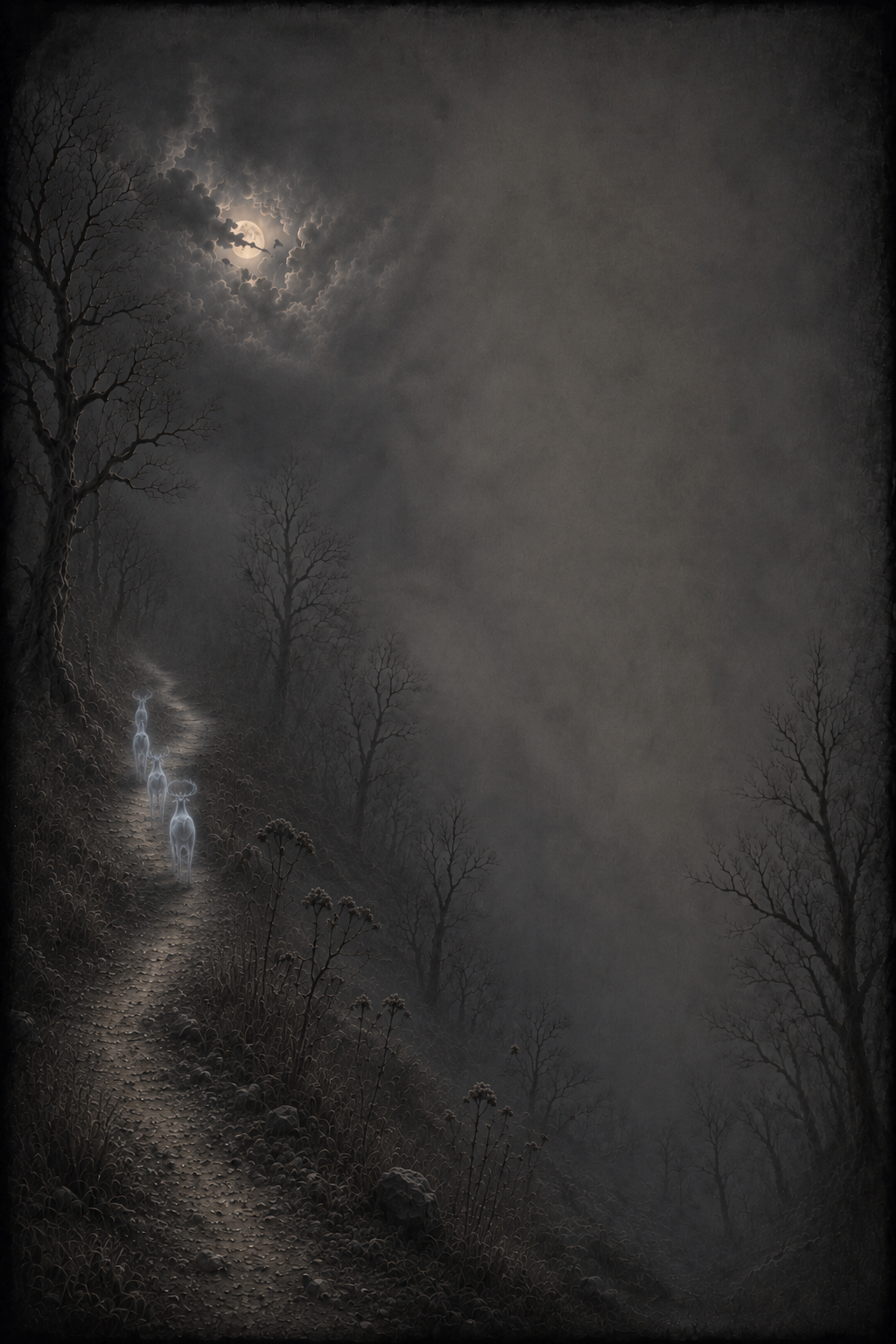

The Necroquake did not merely split the hidden Trails. In places, it pulled them loose from the realms through which they had been so carefully threaded.
One such wound opened beneath a caravan travelling the Gnomiad Trail. No Realmgate marked the crossing. No shimmer of sorcery announced a threshold. The grasses simply paled beneath the wheels, their seed-heads bowing though no wind passed over them. Birdsong thinned to a single distant note. Cooking fires gave heat but cast no light, and the shadows of the droves lengthened in directions contrary to the failing sun.
The gnomads travelled on, believing the Trail merely sick. Only when a calf long dead appeared beside its grieving dam did they understand that they had passed into Shyish. At first the apparition was mistaken for some cruelty of memory. It walked with neither sound nor weight, its milk-white form visible only where the evening gloom gathered thickest. Yet the living cow knew it. She lowed until her throat was raw and pressed her muzzle against the empty air where her lost young trotted beside her. Other spirits soon emerged. Pale Hirvi moved through copses of bone-white trees. Flights of translucent birds crossed skies without stars. Herds long vanished from Ghyran wandered beneath dead moons, repeating migrations remembered only by the land. Some passed peacefully and paid no heed to the living caravan. Others crowded close to its wheels, fearful and bewildered, as though the scent of beasts and hearth-smoke offered the first familiar comfort they had known since death. Even the wariest spirits drew near the fires.
The gnomads discovered that these were no simple memories. The beast-souls were being drawn away. To Nagash, all that had died was his by right. The gnomads considered this self-evidently absurd. No beast had bent knee to the Lord of Undeath in life. No migrating herd had acknowledged his borders, nor had any humble pollinator entered into compact with his morbid empire. Death did not make them chattel. The body returned to soil, water, flame or tooth. The spirit, too, must be permitted its natural course.
Thus did the gnomads’ ancient duty widen. A migration did not necessarily end when the heart grew still. The wounded Trail became a place of refuge. Living herds and spectral ones travelled side by side beneath the protection of the caravans. The presence of mortal beasts soothed their dead kin, while the familiar sounds of bells, whistles and rattling cookware drew lost spirits from the wastelands. Drove Kin guarded the wheels from the revenant hunters that followed. The dead, at last, had shepherds too.
Drove Archers loosed polished shafts into shrieking corporeal shapes that swooped from the darkness above. Abstemious Scouts ranged ahead through ruined afterlives, marking routes with crumbs that never mouldered and strings of tiny bells whose chimes could be heard by the dead alone.
Across the underworlds of Shyish, the imperious will of Nagash reached for all that death surrendered. Spirits were swept from ancient grazing grounds and dragged from quiet resting places.
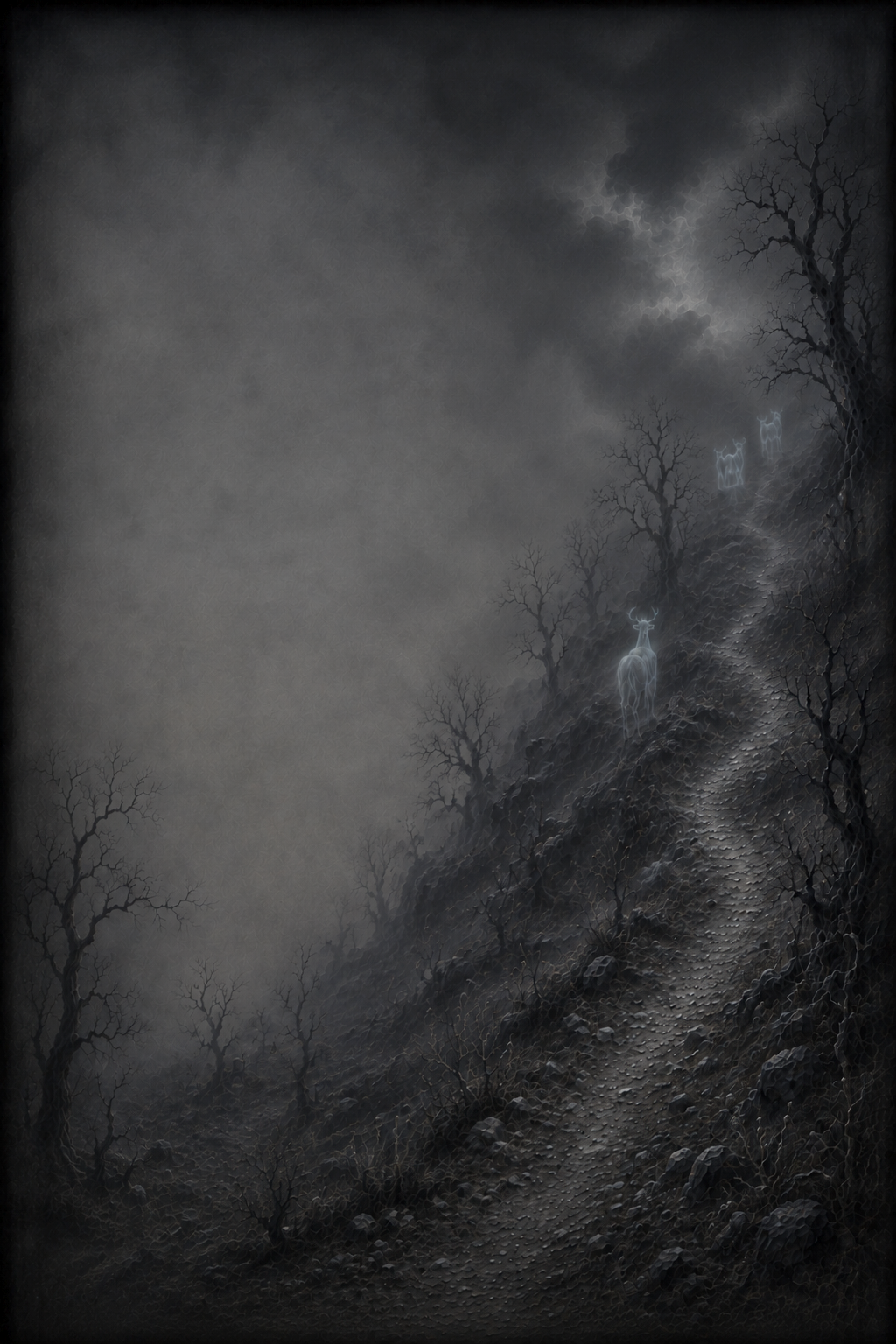
Predatory gheists harried them through the gloom, and necromancers came to fasten spectral harnesses around once-noble creatures. The servants of the Great Necromancer gathered the dead as other tyrants might levy coin, grain or blood. The first passage was precarious. Some beast-souls remembered the scent of their native realm and eagerly followed it home. Others had died far from the lands of their birth or had wandered Shyish for so long that memory had thinned to instinct. A Ghurish predator might recoil from a gate into Ghur, having forgotten that fear and hunger were the twin songs of its homeland. An Aqshian herd-beast might seek the cold tranquillity of an underworld rather than return to the fiery plains where it first drew breath.
The gnomads did not force them. They walked beside the lost, observed their habits and waited for recognition. A spirit was offered water it could not drink, food it could not eat and the steady companionship of creatures still living. Head Chefs prepared remembrance dishes from whatever scraps of the beast’s former life could be understood. The smell of charred dawnspice might awaken an Aqshian memory. A bowl of sweet meadow roots could turn a Ghyranite soul towards green horizons. Sometimes a tune played upon the pipes proved more useful than all the counsel of Hermits. Those who remembered were guided onwards. Some returned to their native realms, where their spirits dispersed peacefully into the magic that had first shaped them. Others belonged properly to quiet animal afterlives hidden within Shyish, untouched until Nagash’s growing dominion intruded upon them. There the gnomads left them beneath dreamless trees or beside endless rivers, giving thanks before withdrawing.
The Trail came to be known as the Fallow Trail. It was no barren way. It was a path of rest. Along its course, growth did not burst riotously from the earth as it did upon the Gnomiad Trail. Its gifts were quieter. Bones settled gently into soil. Grieving spirits ceased their wandering. Seeds preserved within dead fruits remained whole through centuries of darkness. Groves stood leafless but not lifeless, their roots sleeping beneath the dust until some distant spring should call them awake.
Habbinkerr Groves upon the Fallow Trail are rare and strange places. Their Boscage Hermits tend pale orchards and gardens of dormant bulbs, preserving species thought lost in the living realms.
Cheese matures there without spoiling, fruit dries upon the branch and sealed jars hold flavours belonging to seasons that the living realms have long since forgotten.
Great Feasts are muted affairs, rich in remembrance rather than lamentation, and quieter still for the guests who cannot eat. Each dish recalls not only dead kin but lost herds, extinct flowers and creatures whose names survive nowhere else.
Nagash’s servants pursue these caravans with tireless malice. Nighthaunt hunters descend upon the spectral droves, their chains and hooks fashioned to seize spirits from the path. Ossiarch collectors seek the strongest beast-souls, deeming courage, endurance and predatory instinct useful matter for their obscene artifice. Soulblight nobles hunt the dead as they once hunted the living, considering incorporeal quarry a diverting novelty.
Yet the Fallow Trail endures. It appears as an empty road, an abandoned pasture or a faint depression across fields of dust. Its concealment lies in stillness. Those who seek power overlook what seems dormant, while the patient gnomads know that rest is not surrender and silence is not absence. The living caravans tread softly. Beside them walk the dead.
For this Old Drover the worries are over.
Ghyran – a song she sings of meadows and clover.
Lay down in sweet grasses and drink your fill.
Lord Nuffle rolls his bones; your shade be at his will.
In your death, fair-one, be not vexed.
Whisper it; Eleven! Eleven! And good luck in the next.

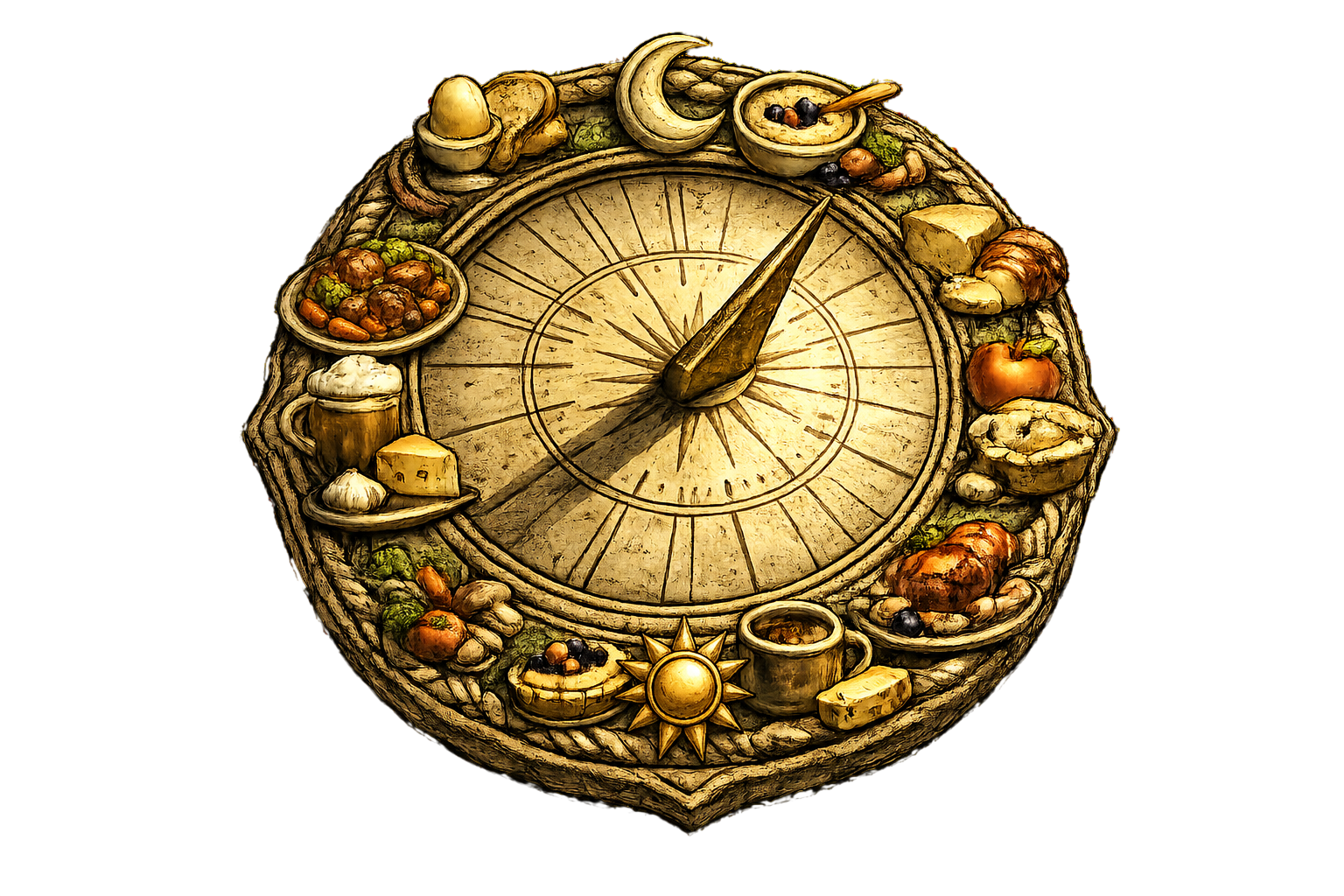
The Fallow Trail revealed a duty for which the gnomads were ill-prepared. They could defend beast-souls from Nagash’s hunters, calm the frightened and shelter the weary. Yet many had wandered too long to remember where peace might be found.
Death had confused them. The Necroquake had torn old pathways apart, while Nagash’s grasp dragged spirits far from their proper course. Creatures born in one realm and slain in another carried memories of both. Ancient migratory beasts remembered routes that no longer existed; some belonged to species extinct before the Age of Myth, their homelands altered beyond all recognition. Instinct alone could not guide every soul.
The gnomads therefore turned their eyes towards Hysh. This was no accidental wandering. For the first time, Trail Masters deliberately sought a realm not to follow living migrations, but to gain knowledge essential to their sacred charge. Boscage Hermits communed through mycelial networks. Abstemious Scouts studied skies and reflections, while Halfloaf Thieves acquired maps, lenses and astronomical instruments from those with no pressing need to retain them.
At length, a caravan passed through a Realmgate into the Realm of Light. Hysh received them without kindness. The first plains were so bright that colour seemed stripped from the world. Distances folded beneath the glare. Mountains appeared close enough to touch yet remained a month away. Shadows pointed wrongly. Pools reflected caravans that had not arrived, and the shadows of passing creatures persisted long after their owners had disappeared. The gnomads quickly understood that revelation and comprehension were not the same.
Hysh exposed much, but explained little. Here the impressions carried by beast-souls became visible. Spirits from the Fallow Trail cast strange radiances across the mirrored earth. Ghyranite creatures trailed green-gold light like pollen. Aqshian souls glowed with banked heat, leaving brief embers in the dust. The dead of Ghur bore shifting outlines of predators, prey and rivals remembered in life. Those touched by Nagash cast two shadows. One followed the light. The other stretched towards Shyish.
With patient observation, the gnomads learned to read these signs. They followed coloured threads across salt plains, through crystalline forests and over mountain passes sharp with brilliance. The expedition became a route, and the route was slowly coaxed into a Trail. Thus was the Shimmering Trail deliberately made.
It was unlike the Gnomiad Trail. Ghyran’s paths concealed themselves beneath root and abundance. The Shimmering Trail hid by excess of perception. A pursuing host might see a caravan crossing an open plain, yet march for days and nights together
without ever drawing nearer. Droves appeared doubled upon opposing horizons. Reflections moved where no water lay, while true paths could be followed only by looking away. At noon the Trail vanished beneath perfect illumination; at dawn it multiplied into a thousand equally convincing routes. Even those within it were not always certain which image was real. Hollowain War-Wagons moved cautiously, their Glamour Shrouds softening the pitiless radiance and gathering stray light into protective veils. Polished panels hung beneath their canopies, fine beadwork broke dangerous reflections, and coloured glass distinguished true wheels from mirrored counterparts.
Gnomads of the Shimmering Trail became patient interpreters of pattern. They charted celestial alignments, studied shadows and learned which colours marked each realm’s spiritual signature. Head Chefs devised dishes whose flavours revealed themselves in sequence: translucent broths with herbs suspended at precise depths, crystal sugars layered by lunar conjunction and mirrored pastries served in pairs so diners might debate which was the original. Such debates could last several courses. Aqshian visitors seldom allowed them to.
Hysh’s living migrations soon drew gnomad attention. Prism-shelled tortoises crossed white deserts in pursuit of a sun visible only through their carapaces. Mirror-plumed birds turned valleys to sudden daylight as their wings caught the dawn. Transparent grazers wandered salt flats, betrayed only by the shadows of bones and organs within their crystal flesh. Many Hyshians regarded these creatures as symbols, resources or philosophical puzzles. The gnomads recognised them as animals. This distinction caused friction. Before the Trail was made, no glamour could hide a caravan beneath that pitiless light, and so the gnomads were found. Hyshian sages wished to classify spectral herds and measure the traces of their passage. Some proposed containing rare souls for study. Others insisted migrations conform to geomantic principles established in lengthy treatises. The gnomads endured all of it, ate what was pressed upon them and continued doing what the beasts required. To their frustration, some of Hysh’s greatest minds could not understand why a creature might know its destination without explaining it. They learned much from such company nevertheless, and rather more from watching it.
They learned to distinguish true spiritual memory from necromantic corruption, how light revealed connections between realms, and how a beast-soul retained traces of every land through which it had migrated. They learned that extinct creatures might be guided not to their birthplace, but to where the last memory of their kind endured. Yet light alone could not complete the task. A path might be perfectly illuminated and still be wrong. The Shimmering Trail became a place where reason and instinct were forced into uneasy companionship. Boscage Hermits interpreted radiant patterns. Abstemious Scouts tested each route. Living beasts made the final choice, for their senses perceived truths beyond any lens or theorem. Through Hysh, lost spirits were sorted from the spectral migrations of the Fallow Trail. Some returned to Ghyran, others to Ghur or Aqshy. Those whose resting places lay within Shyish were guided towards underworlds beyond Nagash’s immediate grasp.
In time, living herds also used the Shimmering Trail. Their passage renewed sterile places more quietly than it did in Ghyran, without any of the riotous green. Crystal flowers opened beneath their hooves, salt plains bloomed with geometric gardens and hidden springs rose in perfect circles before sinking again.
The Trail remains dangerous. False routes offer beautiful certainties. Reflections whisper of easier journeys. Travellers glimpse idealised selves and abandon the true path for lives never lived. Even seasoned Trail Masters may pursue a distant destination that forever retreats before them. The gnomads endure through humility. They do not presume that illumination grants wisdom, nor that a thing clearly seen is understood. When lost, they watch the beasts. When confused, they wait. When sages proclaim the correct road, they check whether the herd agrees. Hysh itself taught the gnomads how to see the path. The beasts taught them which way to walk.

Harodin breathed deeply, savouring the scent of crushed mint fresh from his garden. He gave the stalks a final blow with the flat of his cleaver and scattered them liberally over the dish before him. A dash of vinegar, and it was done.
The grove that he tended had not seen a visitor for three moons, nor did Harodin expect another for some time. But that was no excuse for sloppy cuisine.
This was the moment of the day Harodin loved most. The delicious anticipation, with just a hint of nerves. Would the dish be exquisite? Or merely edible? He tucked the cleaver back into the leather pocket of his apron and reached for the silver tasting spoon at his belt.
The dish… would do. The salted tongues were a little past their best, but that was to be expected. No visitor to a Habbinkerr Grove would dream of seeking sanctuary there without presenting a suitable gift. But no visitors meant no fresh supplies, and Harodin’s stock was dwindling.
Still, he had certainly got the best out of what he had, and that was the true art, in Harodin’s mind. Head Chefs might compete on who could deliver transcendence on a silver platter, garnished with truffles and flavoured with rare spices. But could they turn a handful of grass and a pail of swampwater into a passable stew? Harodin thought not.
He was about to sit down to his solitary meal when a tap at the window made him drop his dining spoon. Sitting on the frame was a tiny brown bird, smaller than a sparrow. It tapped again on the glass. As if in a dream, Harodin opened the casement. The bird hopped inside. Clutched in its beak were half a dozen red-gold strands, which it deposited gently on the counter.
Harodin’s eyes widened.
‘Is that… saffron?’ he murmured. ‘Then tha’ art an honoured guest indeed! Come in, come in.’
It amused him to see the tiny creature flutter onto the back of a chair, as if it really were a guest. Perhaps, he thought, it had been too long since he last had company. Solitude was often the lot of a Boscage Hermit, of course, but good companions were the greatest garnish, as his grandsire used to say.
‘Bide thee there,’ he said aloud, ‘and I’ll fetch thee out some grain.’
The bird, it seemed, had other ideas. It flapped over to the edge of the dish of tongues, and made as if to eat. ‘Now, now,’ said Harodin, shooing it back to its chair. ‘If that’s thy wish, I’ll fetch a bowl for thy own.’
The bird pecked at the dish, plucking out the slivers of chopped tongue with every appearance of relish.
‘Tha’ art a strange little bird, to have such a taste for meat,’ mused Harodin, as he cleared away the plates. ‘But,’ he added, as the bird gave a bob, quite like a bow, and fluttered back to the window, ‘tha’ hast manners, I’ll grant.’ He opened the window and the bird flew out, disappearing among the trees of the grove without a backward glance.
The following day, Harodin was less surprised, and more than a little pleased, to hear a tap at the window. The bird perched there was a little fatter than the day before, and the brown feathers had a bluish tinge, but Harodin would have sworn it was the same animal.
It brought him half a truffle, and Harodin returned the favour with a tiny bowl of saffron rice.
The day after that, it came again. A fraction bigger, a little more brightly coloured, carrying a ripe vanilla pod. Harodin fed it a broth made from the last of his hens, seethed into tenderness and flavoured with grated truffle. After that, it became a regular guest at his table.
On the bird’s ninth visit, it spoke.
‘Hello,’ it squawked, in a passable imitation of the Azyrite tongue. By now it was about the size and shape of a parrot, with a beautiful blue-gold plumage.
Harodin nodded and smiled, but did not reply.
He understood, of course, but did not like to speak the language if he could avoid it. Instead he passed the bird a roast dormouse, which it ate with relish.
The next day, the bird tried Khazalid. Harodin stroked his smooth chin, to show he was no duardin, and fed it his last scraps of cheese, beautifully toasted.
A few days after that, the bird landed with a thump, carrying the body of a hare in its talons. Harodin accepted the gift gratefully, even though the animal had clearly been dead a few days.
‘Hello,’ croaked the bird, trying the Sylvan tongue. Harodin shook his head, and passed the bird a bowl of lobscouse, made with the last of his salt beef.
By the eighteenth day, the bird had tried most of the languages of the Mortal Realms, including a few that Harodin did not recognise, and one he could have sworn was Queekish. But today was different.
‘Hello,’ said the bird. Harodin smiled and put down his forkful of jugged hare.
‘How do tha’ come to speak the Habbish?’ he asked.
‘I speak many tongues,’ said the bird, preening its multicoloured feathers. ‘It is a gift from the gods.’
‘A fine gift indeed,’ said Harodin, politely.
‘You are a gnomad, then?’ the bird asked, with a tilt of its head. Harodin bowed. ‘What is your name?’
‘Harodin,’ replied the Boscage Hermit. ‘What is thine?’
‘Some call me Kairos,’ replied the bird. ‘I have never met a gnomad. Will you tell me about them?’
Over the weeks and months that followed, Harodin told Kairos of the stories recited by the Feastmasters, of the great gnomad caravans and of the solitary life of a Boscage Hermit. In return, Kairos described his travels to faraway places; he spoke of the strange sights he had seen, and the strange people he had met. Travel was in Harodin’s blood, and if there was one thing he found harder than the solitude of a Boscage Hermit, it was being tied to one place. Kairos’s companionship made both of these burdens far easier to bear.
By the time winter had begun to fade, Harodin’s supplies were exhausted. He was feeding them both on root vegetables from his garden, and whatever game Kairos could pluck from the air or snatch up from the ground. By now he was the size of an eagle, almost as tall as Harodin. He could quite easily carry a mountain goat or a wild boar piglet back to their table.
Today, however, he arrived far earlier than usual, in a flurry of wings, his talons empty. He rapped furiously on the window.
‘Quick,’ he said, ‘I must warn you. A hunter is coming.’
Harodin, who had been enjoying a quiet smoke between finishing lunch and starting to make dinner, took his pipe from his mouth. ‘I know many hunters,’ he said. ‘Why art tha’ feart of this one?’
‘He is trying to kill me,’ said Kairos. He shivered, making his feathers sparkle. ‘He has always tried to kill me. Will you keep me safe?’
‘The Lore of Hospitality keeps thee safe here, my friend,’ said Harodin, placidly.
‘You don’t understand,’ quavered Kairos. ‘He’s a monster. A fiend. You have to help me. Please, take this.’ He dug in the feathers covering his breast, brought out a small, dull green rock, and dropped it into Harodin’s hand. It caught the light in funny ways, making it hard to look at for long. ‘Crumble a little of that into his food. Just a little, and I will be free of fear for the rest of my days.’
Harodin looked shocked. ‘Come, Kairos, that’s no way to treat a guest.’
‘It won’t harm him,’ insisted the bird. ‘Just make him change his ways. Change him for the better.’
The jangling of a bell announced the presence of a visitor at the outer gate.
‘Please,’ begged Kairos. ‘He’s here. You have to help me. You have to hide me!’
Harodin unhooked his chef’s apron from behind the door, tying the straps around his waist with all the deliberation of a knight donning his armour. He checked his cleaver was still in its leather pocket. ‘I ain’t afraid,’ he said. ‘Come along with me, into the larder.’ He led the bird inside and shut the door behind them.
The bell jangled again. And again. At last, Harodin emerged from the larder. Stony-faced, he made his way to the gate, and threw back the bolts.
Outside stood a tall figure. Over one shoulder was slung a hunting bow, and over the other a quiver of arrows. At its feet lay a stag, fresh blood seeping from a wound above its heart.
Harodin bowed. ‘My Lord Rhandir,’ he said. ‘Tha’ art most welcome here. As is yer gift. The grove has not seen visitors for many months now.’
The aelf placed a hand over his heart. ‘Harodin, my dearest, stoutest friend. It gives me joy to see you.’ He smiled, and went on: ‘I hope your supplies are not so low you cannot feed a hungry traveller?’
‘I confess the shelves are almost bare,’ Harodin replied. ‘But never fear. For you, my Lord, I have just the thing.’
He winked.
‘A fresh roast fowl.’

Weather-beaten and worn, a gnomad’s life on the hard trail reaps rich rewards and vast experience. The revitalised earth is abundant in its gratitude and this conspiracy, in tandem with the Mortal Realms, ensures the Feastmasters’ flame burns brightly. Lucky is the denizen of Sigmar’s tumultuous kingdoms for whom purpose rings so clear.
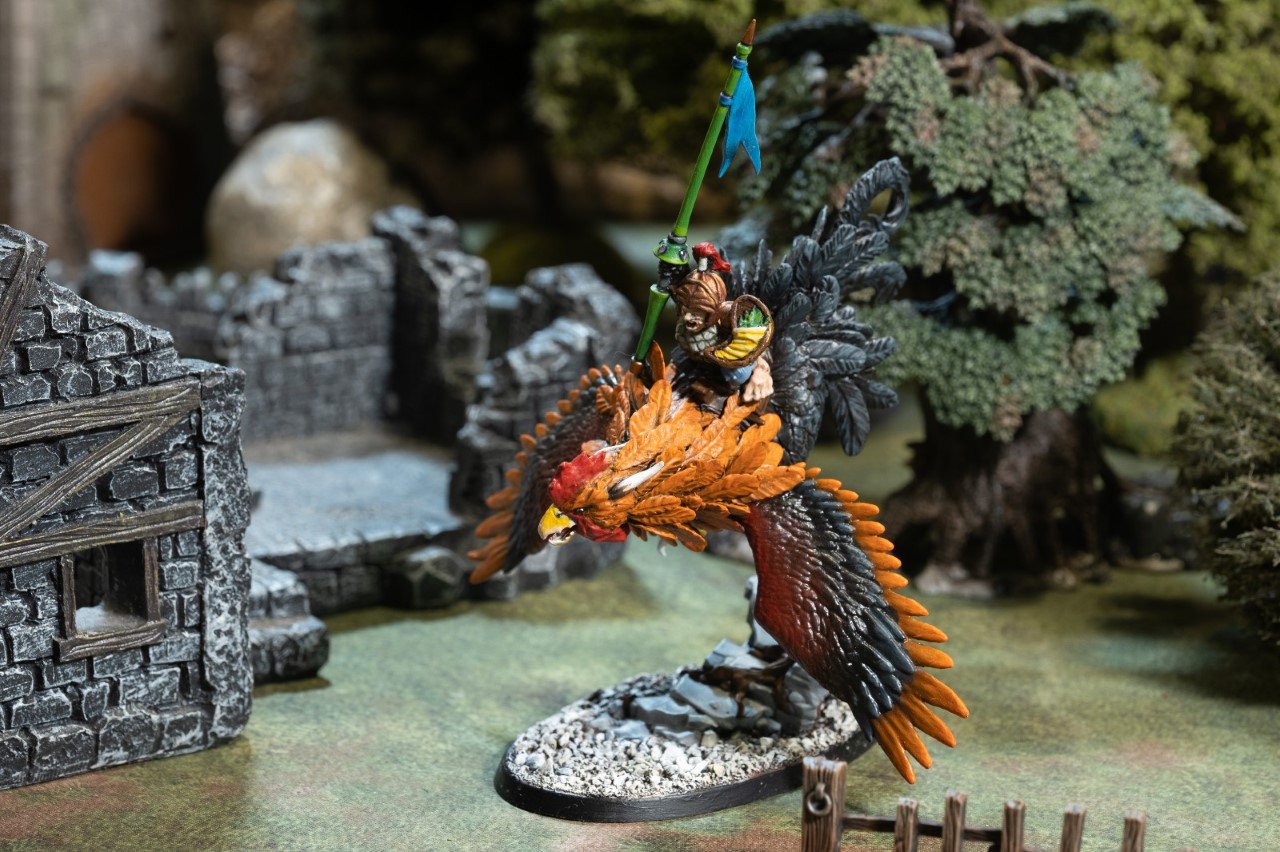
In the wake of the Necroquake’s malignant ruptures, the Trails changed forever. At a stroke, untold legions of depraved and ravenous beasts slipped through tears in the Trail’s fabric to stalk and to devour. Myriad new dangers demanded that the safety of the caravans be entrusted only to the most practical and clear-thinking gnomads.
These perpetually burdened leaders carry the weight of their kin upon their muscular shoulders. Often flanked by stout adjutants, they can be found uttering orders to windburnt Canopy Riders or in intense discourse with seasoned Trencher Proudfeet. A Gastrognome Trail Master’s labours are unending, from immense decisions about migratory routes to petty arbitration of caravan squabbles. Truly, these stoic and determined characters are never more content than when free of temporal mundanities and mounted upon their berserk Dawnspur Wattlecrests.
Descended from the domesticated fowl of the World-That-Was, these colossal avians are bred for their boggle-eyed ferocity, their territorial rage ripping interlopers limb from limb in a feathered blur of beak and talon.
The cacophonous dawn chorus sung by these wildly dangerous steeds is music to a gnomad’s downy ears. For they not only serve as a warning to predators, but they also tell a hungry belly that breakfast is near!
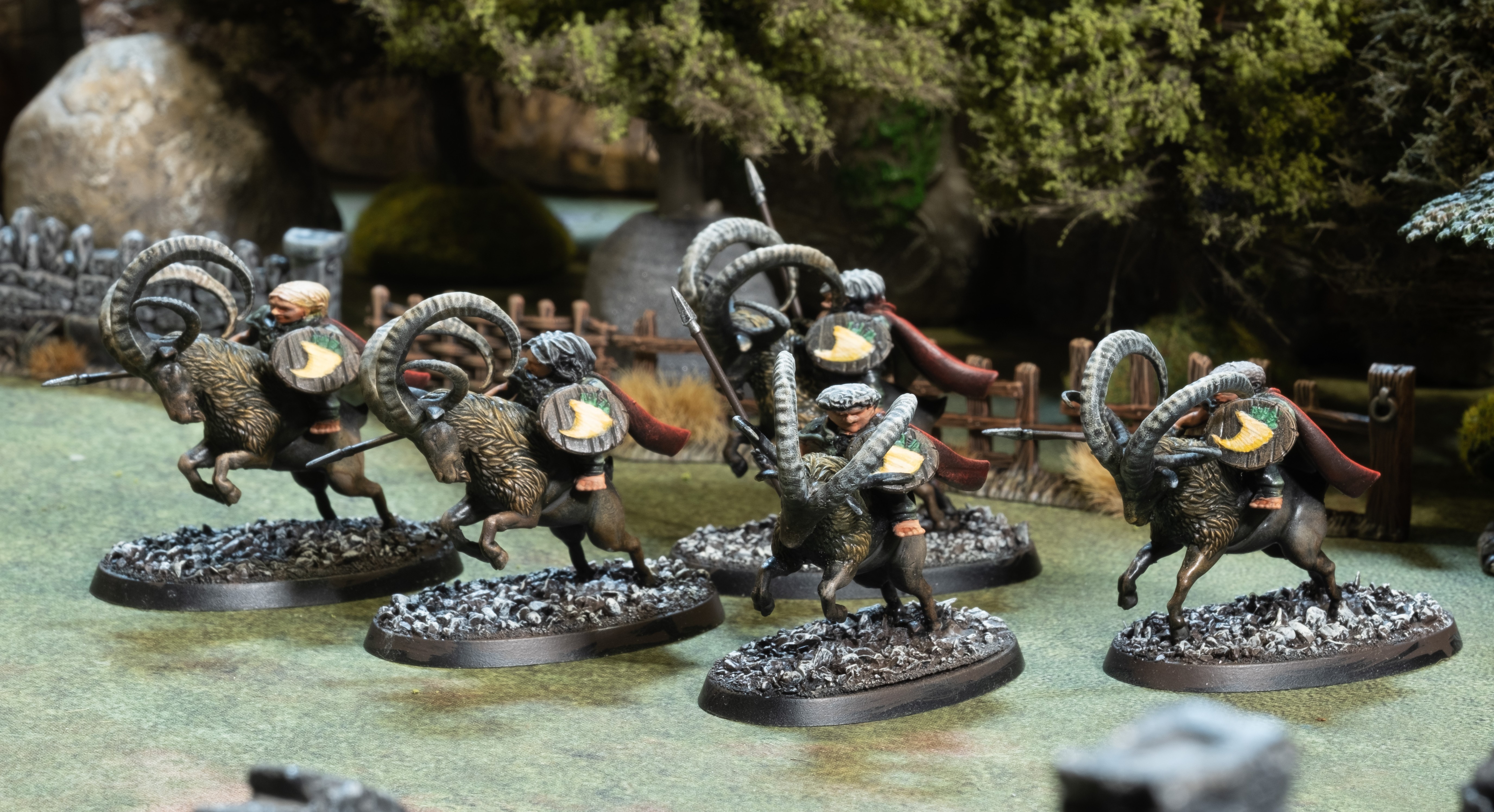
Those same ruptures demanded defences of a harder kind, and in the times that followed, the elite Trencher Proudfeet were born. Though no loftier than others of their kin, their arms are thicker and their hearts stouter still. Only these battle-hardened gauchos are entrusted with the insanely dangerous task of breaking the immature Crag Ibexes, to partner their doughty steeds in protecting the caravans. To ascend to such heights – metaphorically speaking – is the dream of young ’uns, and these swaggering lads catch the eye of many a blushing maid. The scarce metals of the caravans are used to fashion their finely plumed tin hats and forge the keen edges of their lances. Their hapless foes suffer a twin deliverance – that of calcified horn and lethal steel, as the Trencher Proudfeet hurtle down sheer cliff faces in an avalanche of vengeance.
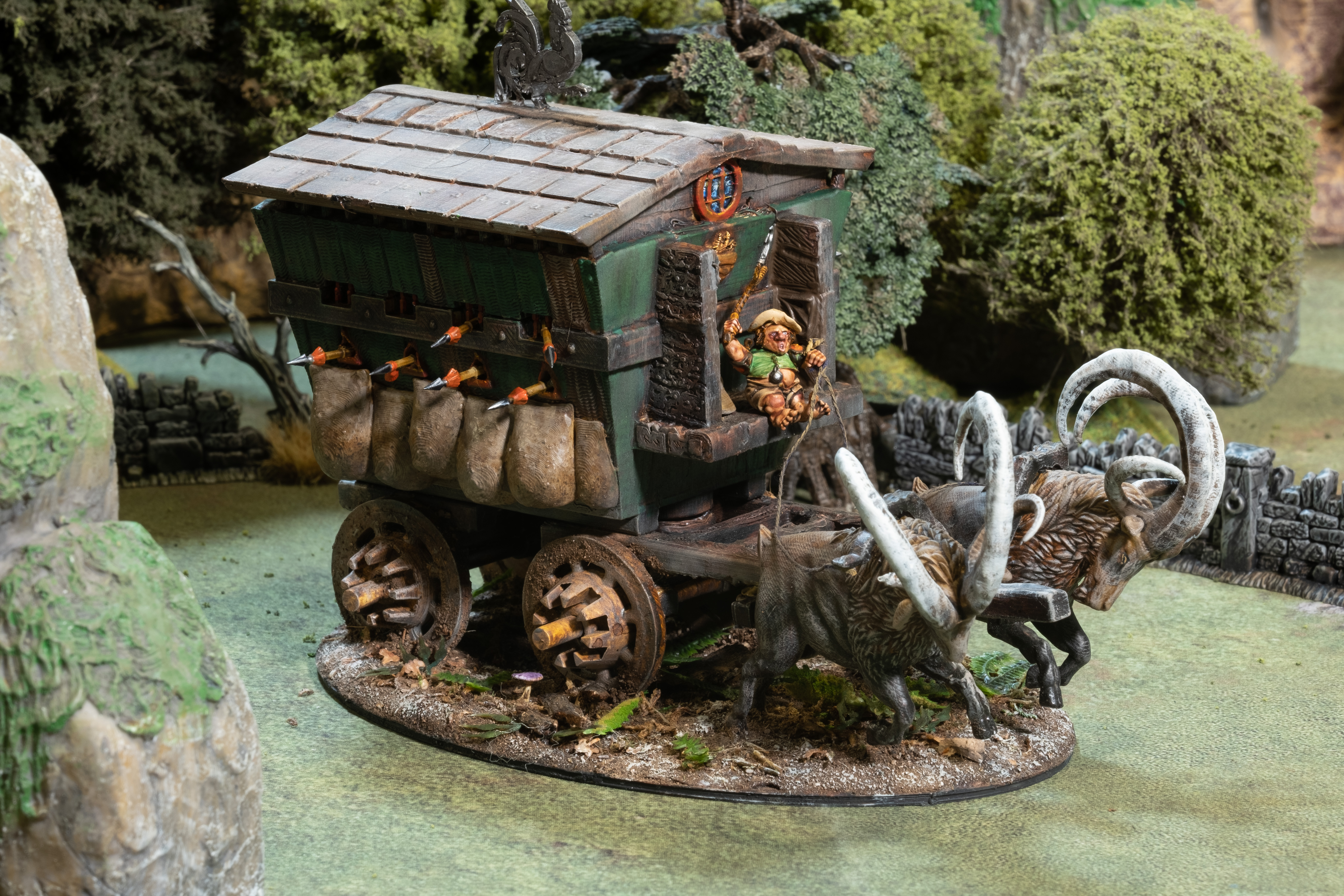
The gnomad caravan is the lifeblood both of the wandering communities and of the realm’s fauna. These great, serpentine armadas wind slowly over dusty savannah and through mountain passes, or else glide over fathomless oceanic trenches. In their wake the Trails are fertilised, exposed to the rejuvenating cycle of life and death. Natural barriers provide no obstacle: thorny brambles curl away, capricious waters calm and part, and granite boulders crack and splinter to forge a traversable pathway. The Hollowain War-Wagons plough their life-bringing furrows the length and breadth of Ghyran, their Glamour Shrouds forming a living conduit between the sterile earth and the vital cycle of birth and rebirth.
Steadfast oaken wheels carry whole populations, veritable mobile townscapes, self-sufficient in every particular. Bakers and smiths, tailors and carpenters, apothecaries and nurse-maids all. Lusty bachelor Drovers may bunk together in armoured wagons – ostensibly at the ready… when gaps in grub and japery allow. These stouter vessels withstand dark storms of arrows and are heavy enough to rebuff a headlong Mournfang charge, their beams of hardest lignum vitae bound with high-tensile mycelial fibres into nigh-on impenetrable mobile redoubts.
When surrounded, their Glamour Shrouds unfurl across the land; thorn, root and yielding earth rise to shelter nearby gnomads while every hiding place is stripped from trespassers. When the great warning drum is banged, the Crag Ibexes draw such vessels into a defensive laager, restless and eager to assail intruders with their calcified skulls. In dire straits – or when tempers rise – gnomad Drovers pop hatches beneath the belly to sally forth and clout a fleeing enemy senseless.
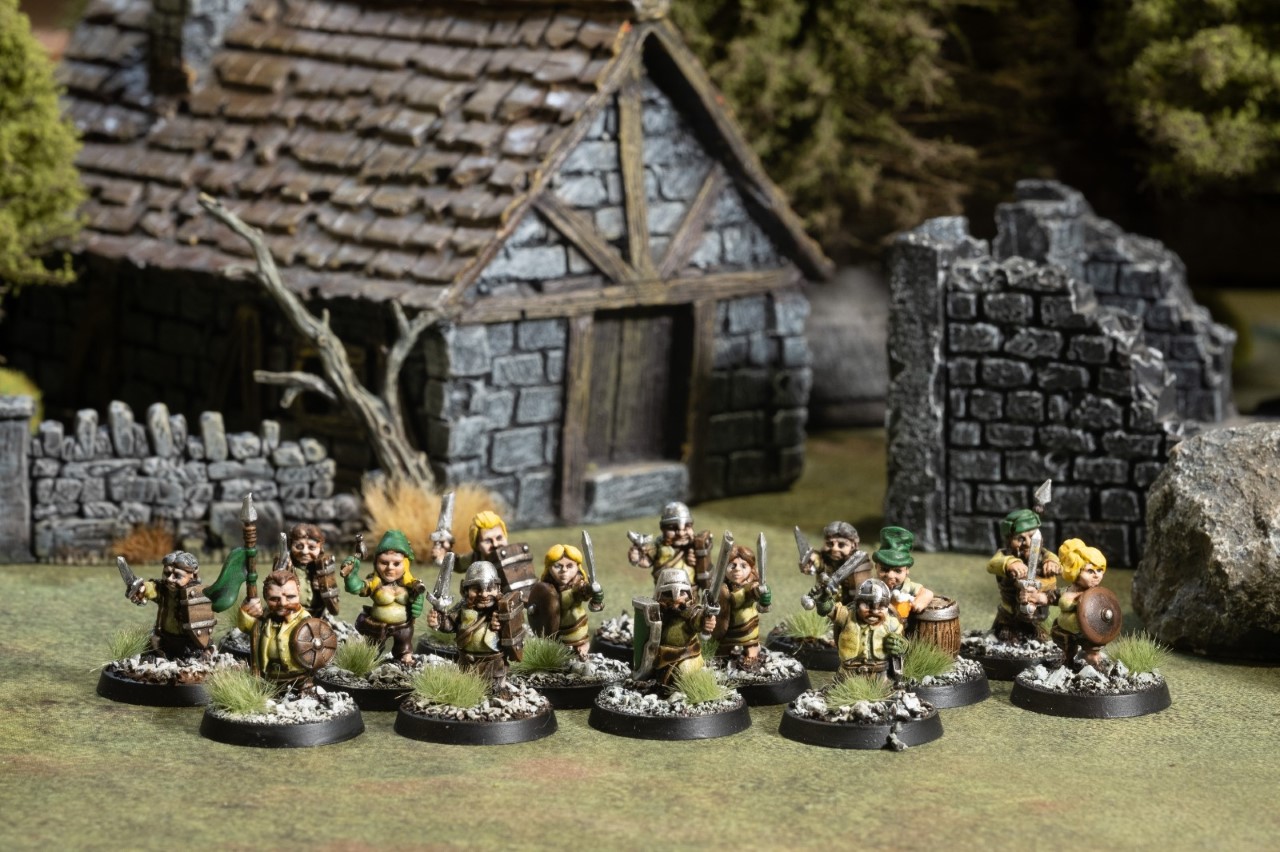
The most-many gnomads are Drove Kin, guiding their docile charges along fertile routes and protecting them from all manner of ravenous beasts. Experts in bushcraft and never more comfortable than when ensconced in the wilderness, these doughty guardians bear calloused feet that attest to their eternal migrations. It’s hungry work – like all work, mind – and a gnomad’s formidable metabolism demands near-constant satisfaction.
Fair told, the pastoral life of the Drove Kin is an idyll that few in the roiling realms can best. It is not an existence free of peril, however. An errant lamb may give cause for a missed breakfast. In the direst of circumstances, when the kettle’s fire may invite lurking predators, dinner may be substituted with dry rations and lunch-pudding leftovers.
Drove Kin are genial folk, but denial of sustenance may drive them into brooding funks or else into furious rages. When this lack of grub is caused by the necessities of protecting the caravan and kin, woe betide the enemy fool enough to incur a hungry gnomad’s wrath.
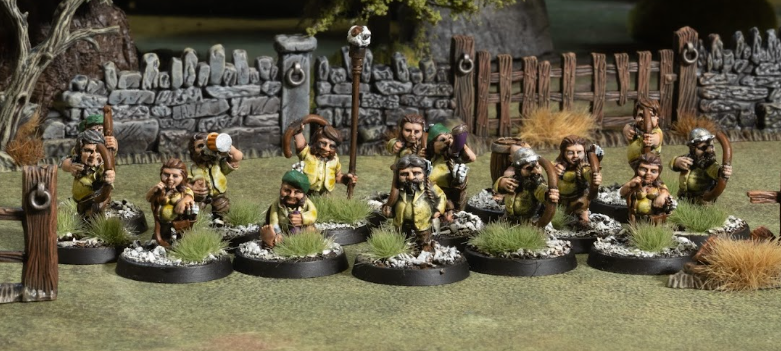
Where the Drove Kin hold the line, the Drove Archers keep the ridges. Every caravan trains its keenest eyes to the bow, for a beast brought down at distance is a beast that never reaches the herd – and one that may yet be dressed, hung and stewed before dusk. Their staves are cut from best Ghyranite hickory and strung with braided mycelial fibre, and their arrows are fletched with duck-down from the mess wagons.
They shoot in ranks from behind wagon, wall and thorn, loosing in flights on the Trail Master’s whistle. Volleys are counted in mouthfuls: a hungry archer looses faster, so the Head Chefs see them fed last and first both, that their tempers stay as sharp as their broadheads.
A Drove Archer is chosen young, picked out for a steady hand and a patient stomach, and set to loose at gourds hung from the tail-gate of a moving wagon until the shot needs no thought at all. Thereafter they walk the flanks of the herd, one ear cocked for the Trail Master’s whistle, the other for the supper bell.
They take no glory from the kill. A ridge held without a single arrow loosed is reckoned the finer day’s work, for the caravan rolls on unmolested and the pot is filled by honest droving instead. When the loosing is done, the archers walk out to gather what they have felled – and every shaft besides, for good hickory is scarcer on the Trails than courage.

Dusty codices and desiccated scrolls are anathema to these chroniclers. These cuisiniers of the communities are living vessels of the sacrament of consumption. Lore is preserved in sustenance, and their dishes are essential components both of merriment and song, and of mourning and war.
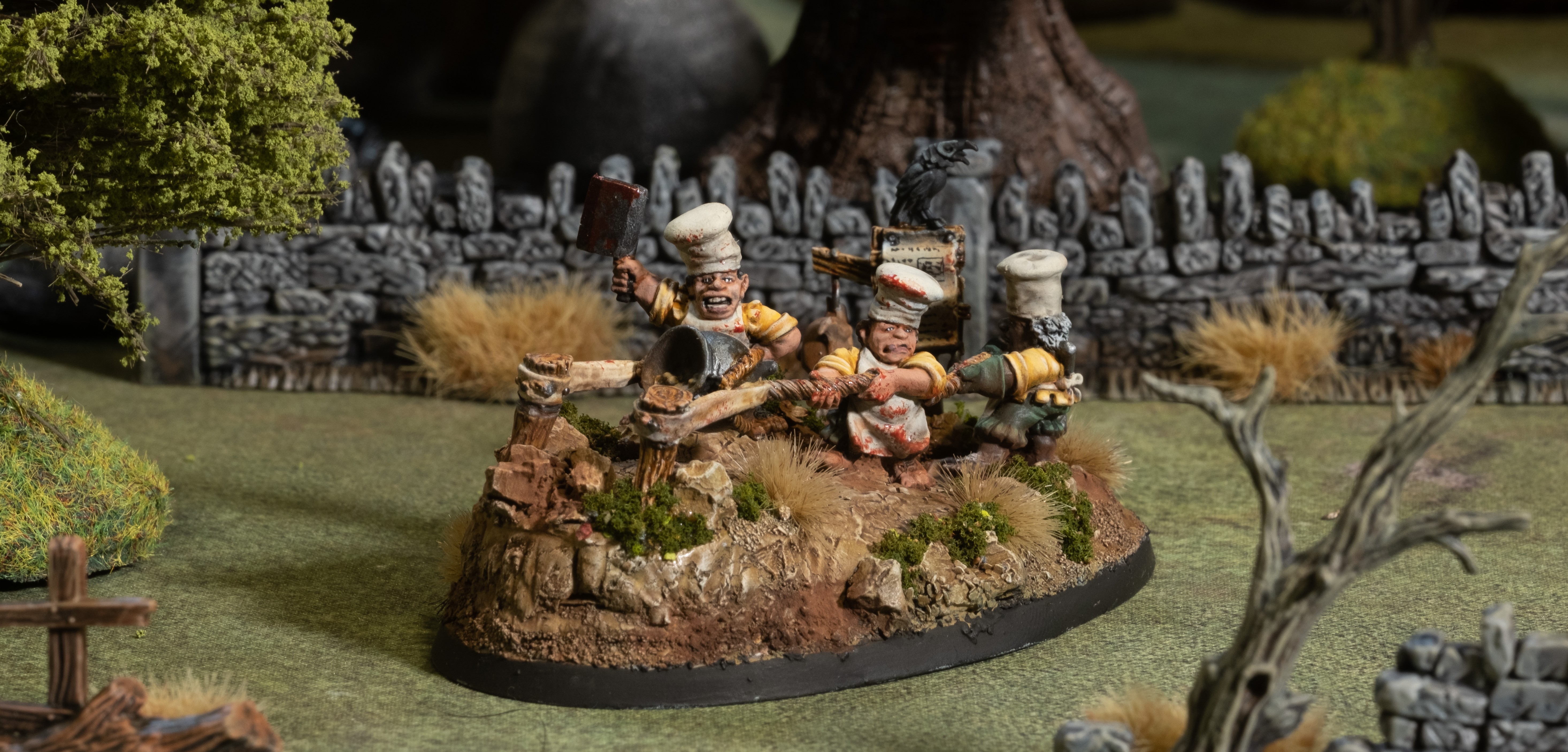
The foremost of contemporary Head Chefs, Mephistio Hartstock is the maestro atop the very pinnacle of culinary artistry. Peers from all across the Trails will eagerly seek his counsel should the opportunity present itself, and often leave his genial company dazzled and thunderstruck, their wobbling vessels renewed with gastrognomic zeal.
Mephistio is equally immense in body and character, and is rarely seen without an expansive smile adorning his ruddy-cheeked chops. The greatest of his kind is no stranger to the battlefield, directing elite cadres of Hawthorn Hotpot crews with an infectious charisma and untroubled confidence. The clarion call of his baritone war cries whips lesser chefs into a boiling fervour, and they will hurry to the vanguard, eager to catch the eye of this living legend. He uses his hulking girth to inspire gnomad drovers along the line, putting invigorating nourishment in their bellies and roaring fires in their hearts. An enemy shall know pain when it buckles under the weight of Mephistio Hartstock’s Community Cleaver.
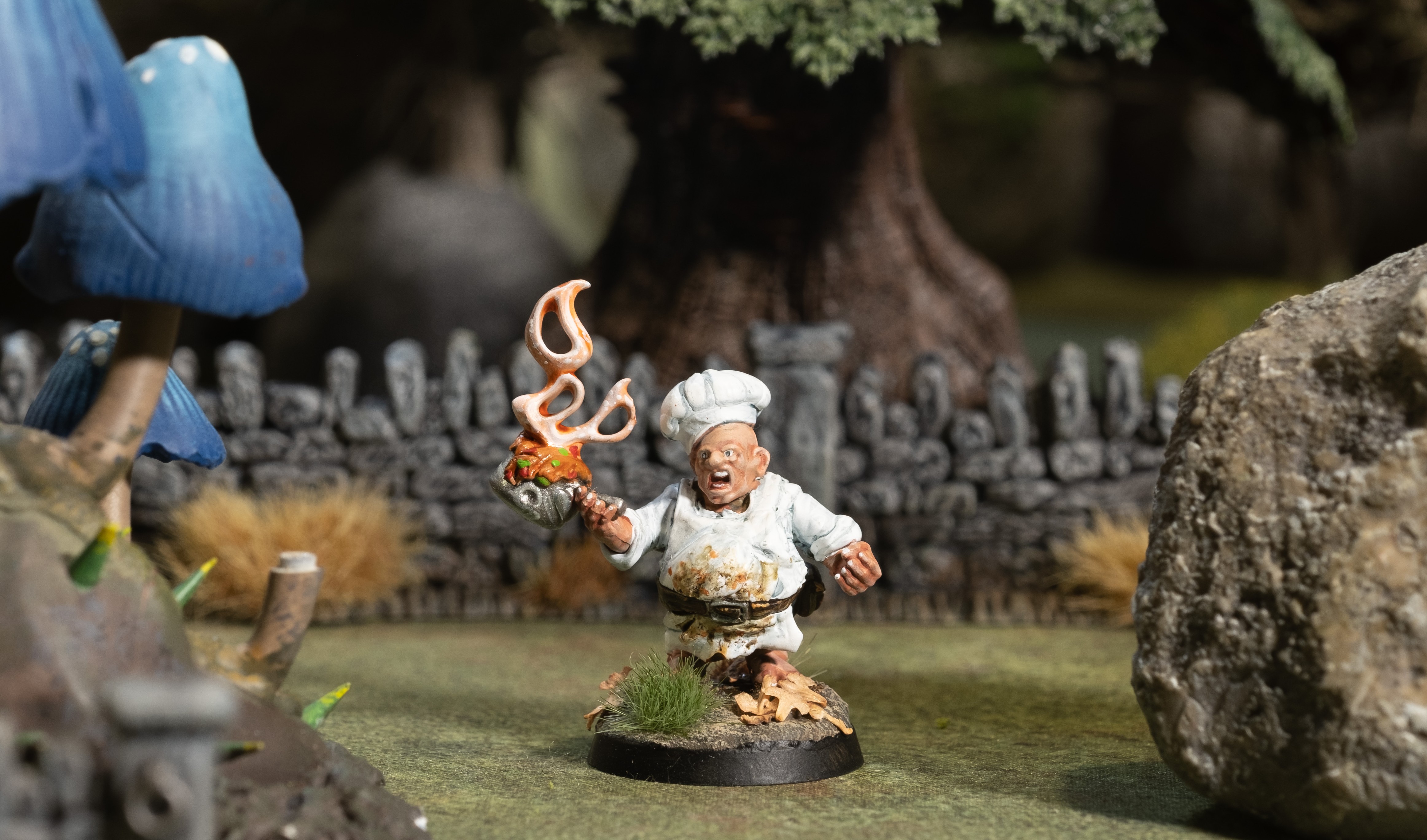
Gnomadic secrets pass from mouth to ear and from pot to plate, never through the eyes. The Head Chef is the prime conservator of these traditions and reigns supreme in the caravan’s kitchens, reciting with perfect clarity the extensive recipes to hard-pressed cooks, through the clang of pans and the whistle of kettles.
Such a duty is of grave significance. Keeping the stamina of their charges fuelled is a constant task, and the fires of the kitchens never die, even on the road. If deprived of nourishment, the gnomads may grumble, or else become listless and fitful, spelling danger for a folk for whom readiness is paramount. Head Chefs provide inspiration, recounting tales of brave deeds past, or motivating the caravan for what tomorrow may bring – each tale revealed in a dish, each course its own chapter.
The scrutinising gaze of a Head Chef can cause rivulets of sweat to pour down the neck of a trembling junior chef, for an apprenticeship in the kitchens is much coveted and the demands intense. Head Chefs may become revered, and their presence on the field of battle galvanises gnomad fighters, inspiring stout steadfastness in even the greenest of braves. Wielding formidable Community Cleavers, Head Chefs do not shy from the thickest of frays, be it hewing foes or filling the complaining bellies of weary troops.
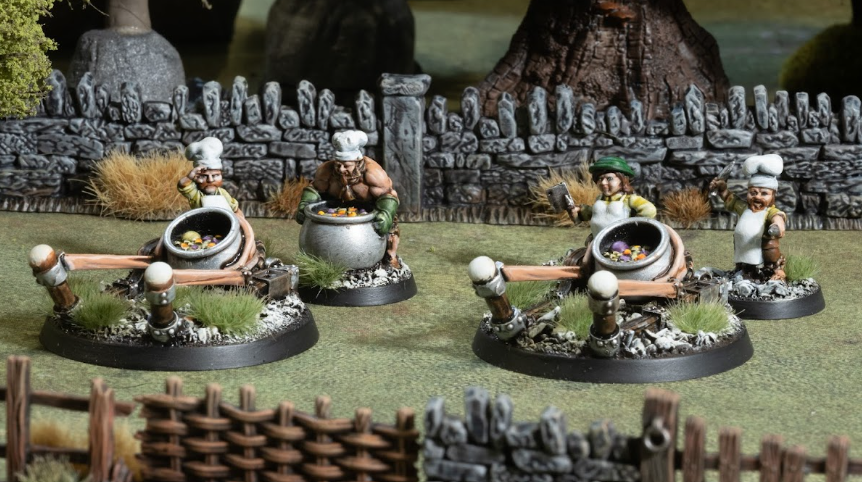
To waste food, as any honest gnomad knows, not only offends the great Nuffle’s ever-rumbling belly, it is plainly daft. True said, some ingredients are not for eating – whether it be long-boiled bones, iron-hard shells of gargant whelks or the stubborn roots of Ghurish razor palms. Such leftovers are condensed into gelatinous concoctions of fearsome potency. Some are blended with liquidised offal, others infused with mycelial spores or the saliva of Ibex gut snakes. In dangerous times, Head Chefs may even carefully preserve those ingredients so psychotropic or lethal that they can only be handled when clad in basilisk-scale mittens. Stored in sealed, tin-bottomed casks, these specially brewed onager rounds travel in padded wagons lest they ooze their powerful contents along the trail. Such sensory confluences would surely attract the attention of the ravenous and the repelled in equal measure.
Though these foaming feasts are varied in their composition, one thing is common throughout – they’re always served piping hot. Sent heavenward by junior chefs to rain down through fizzing, scum-streaked skies, the casks explode on impact, disgorging their boiling contents upon a stupefied and scalded enemy.

Accompanied only by their reluctant shadows, the solitary amongst the Gnomad Feastmasters creep softly upon untrodden pathways. They bring nothing but inquisitiveness and acumen and leave nothing but memories and cadavers – of those who seek to infiltrate the Trails. Touched by madness and blessed by Nuffle’s watchful tutelage, the reclusive ones are destined for a life of exhilaration and jeopardy.
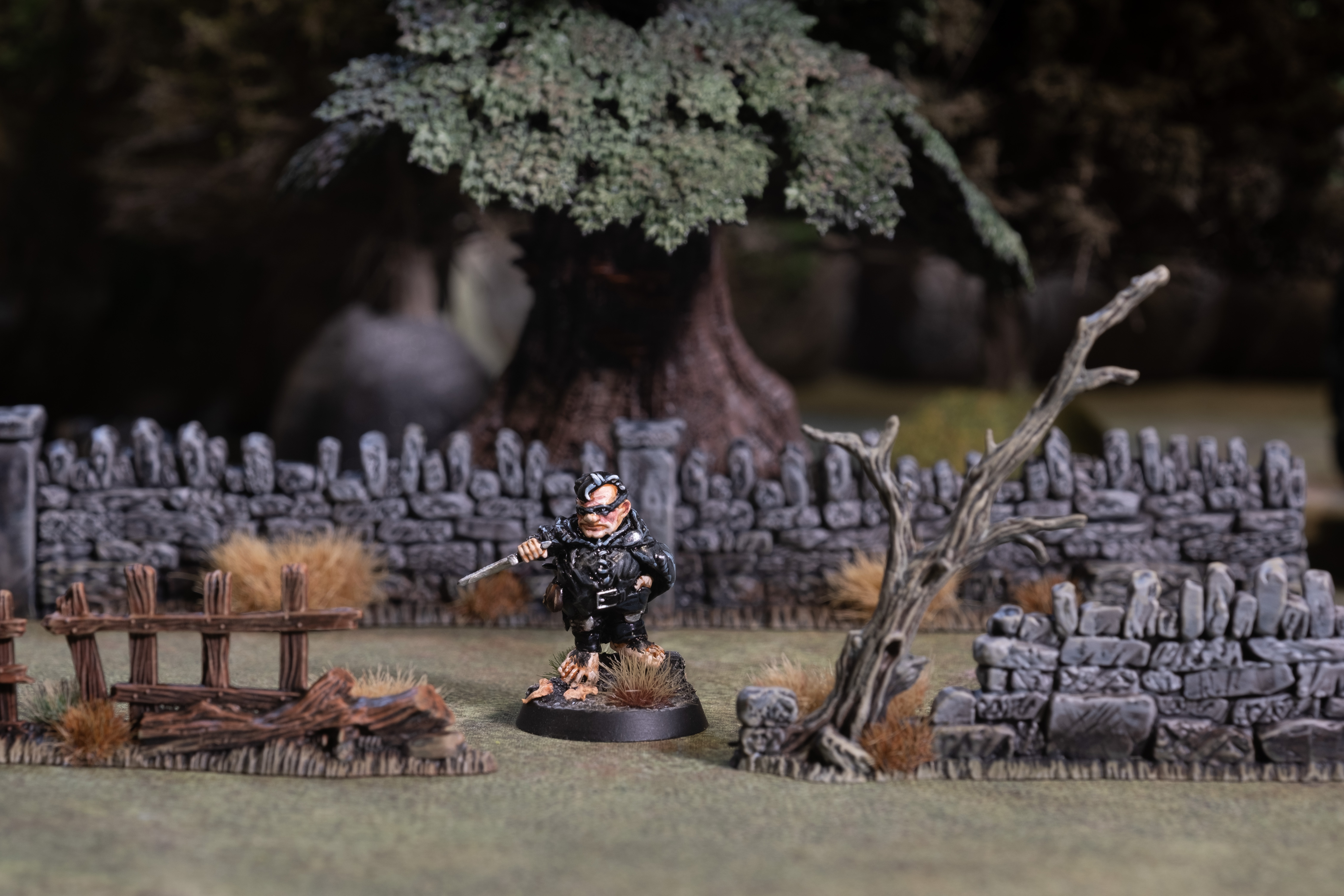
Solitary yet charismatic, these stealthy buccaneers exude a confidence born of experience. The Halfloaf Thieves are the doyens of gnomad society, and once returned from this swashbuckling adventure or that, they take their place at the right hand of the Trail Master – to graciously absorb adoring glances or bask in the elaborate toasts to their honour. Most are of a laconic nature, preferring to allow others to embellish their deeds in fantastic tales. When they do speak at length it is normally within a hushed conclave of caravan elders, over many mealtimes, naturally.
Halfloaf Thieves are drawn from the ranks of scouts – those fortunate enough to be touched by the guiding hand of Nuffle himself. They are equally able to operate within the deepest of shadows or amongst the thickest of crowds. One mission may demand that they remain as stationary as a rock awaiting their quarry; the next may see their silver tongues coaxing secrets from the lips of blushing courtiers. An assignment is never turned down, whether the reconnaissance of a nearby enemy, the poisoning of their supplies, the drawing of their blades along a particular throat, or the acquisition of an extraordinary ingredient. A Halfloaf Thief’s silent footsteps tread lightly in foreign lands, taking them to the reeking cities of Sigmar and worlds beyond the reach of Ghyran.
When the reverie is over and Gryph-pups are licking clean the plates of the feast, when feast-goers’ contented bellies rise and fall in slumber, and when the waxing moon is at its zenith, the Halfloaf Thief is cruelly denied sleep’s embrace. When the mead’s soothing edge is dulled, a Halfloaf Thief’s façade falls into grim desolation; their fingers tremble and desperation frays the threads of their courage. For these gnomads have witnessed the true horrors of these shattered realms – how long can such nightmares remain confined to dreams?
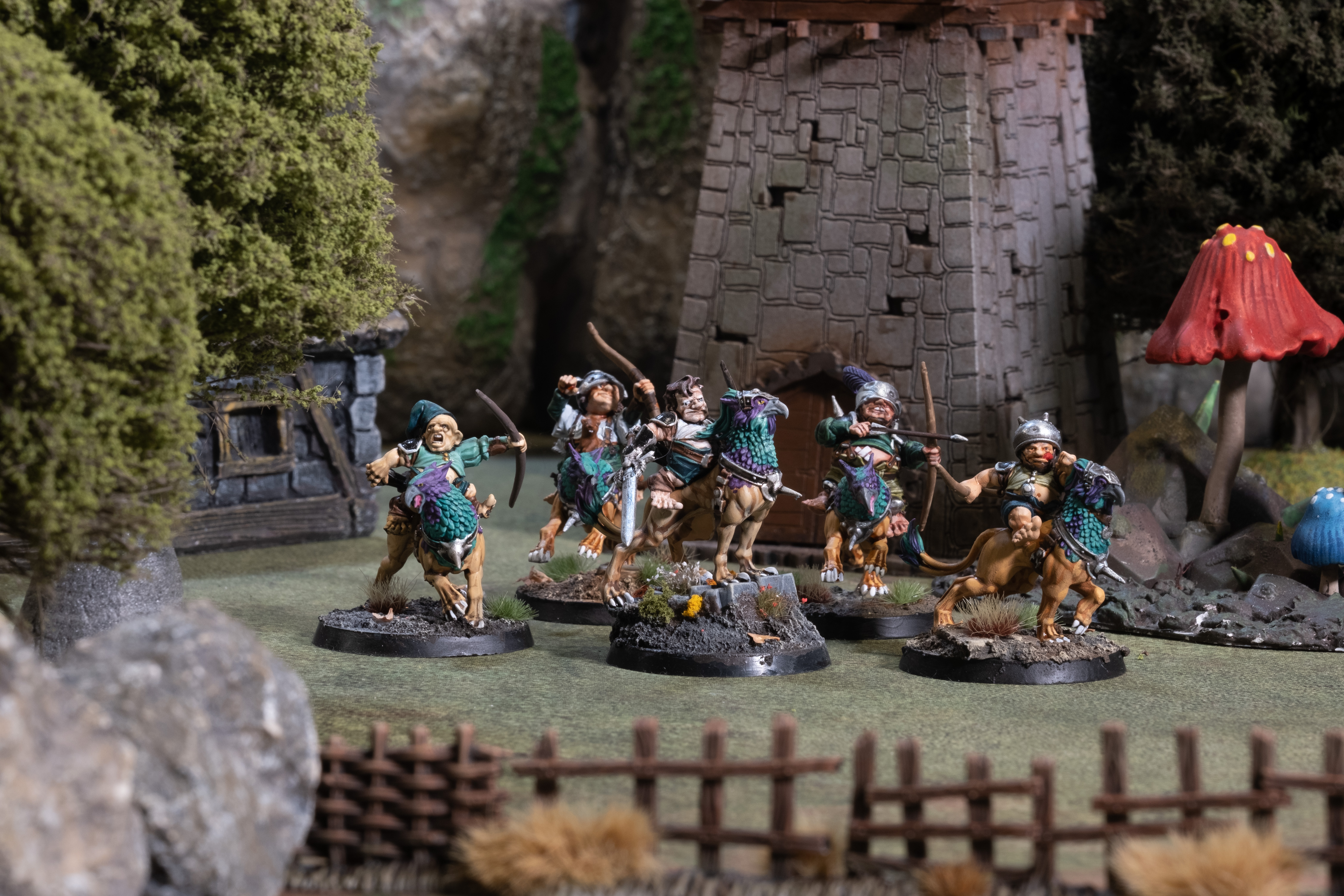
Nothing can surprise a Gnomadic caravan whilst the ever-vigilant, eternally faithful Gryph-hound maintains watch. The noble and indefatigable beasts live as one with their two-legged brethren, coexisting on equal terms. New litters are celebrated, and any runts are nursed with the choicest marrow. Bonds form unguided, with pups innately drawn to the bolder amongst adolescent gnomads. In time, these multi-disciplined duos will become pre-eminent in hunting, reconnaissance and vanguard counterattacks. They work in tandem with Abstemious Scouts and Crownwing Eagles, communicating in an indecipherable array of whistles, howls and screeches. Gryph-hounds allow their charges to ride atop them, the gnomads showering their enemies with a storm of short-bow fire, whilst in close quarters hapless foes are assailed by a flurry of claws and horrifying beak attacks.
Whilst largely denizens of untrodden pathways, Gryph-hounds are not uncommonly found accompanying a Head Chef. Not only are such guardians adept at protecting stores from temptation, they are also handy to have on hand to blame for any accidental miasmatic eruptions after a hard day’s feasting!
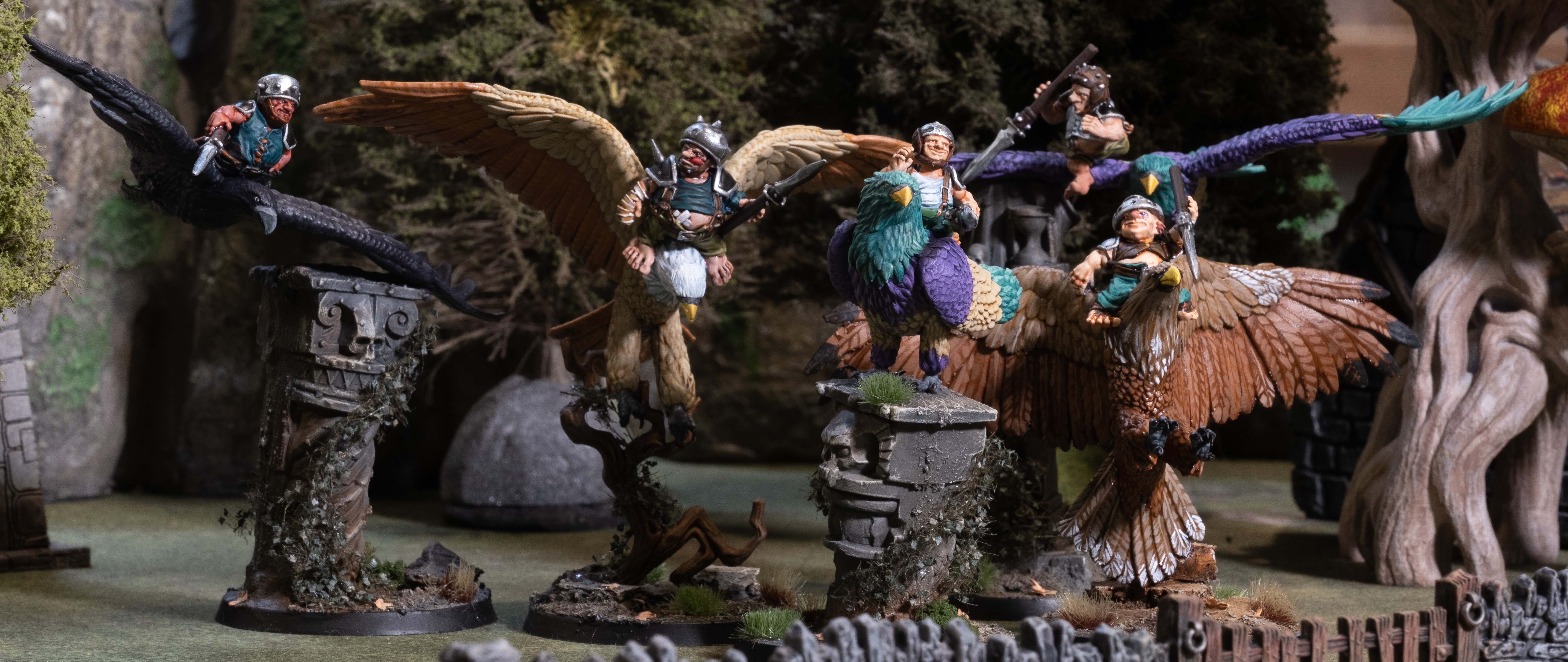
Scouting is a precarious pursuit that sets such bold pioneers apart from their brethren. Where bravery touches folly, at the very apex of lunacy, are the wide-eyed riders of the majestic Crownwing Eagles. A gnomad and their mount have a symbiotic relationship of mutual trust and form bonds broken only by death. That fate can come quickly and suddenly, and so both are grateful for sharing wondrous days soaring on Ghyran’s thermals. Gnomad children marvel at these idols, eyes shielded from the sun to watch them diving and swooping at the head of the caravan. Though immensely popular with their grateful and slightly awestruck kin, Canopy Riders can be paradoxically awkward and detached. Touched by the same madness, they can appear out of step when engaged in conversation, laughing at the wrong moment or else staring off into the middle distance. Rarely betrothed due to their hazardous callings, these heroes of the wing plough a somewhat lonely furrow. The latticework of scars borne on their weather-beaten faces tells stories of fierce battles and dicing with death. The shafts of their spears are cut with many notches and their obsidian, flint or bone tips are keenly sharpened. Though destined forever to be prematurely extinguished, the fire in the heart of a Canopy Rider burns bright.
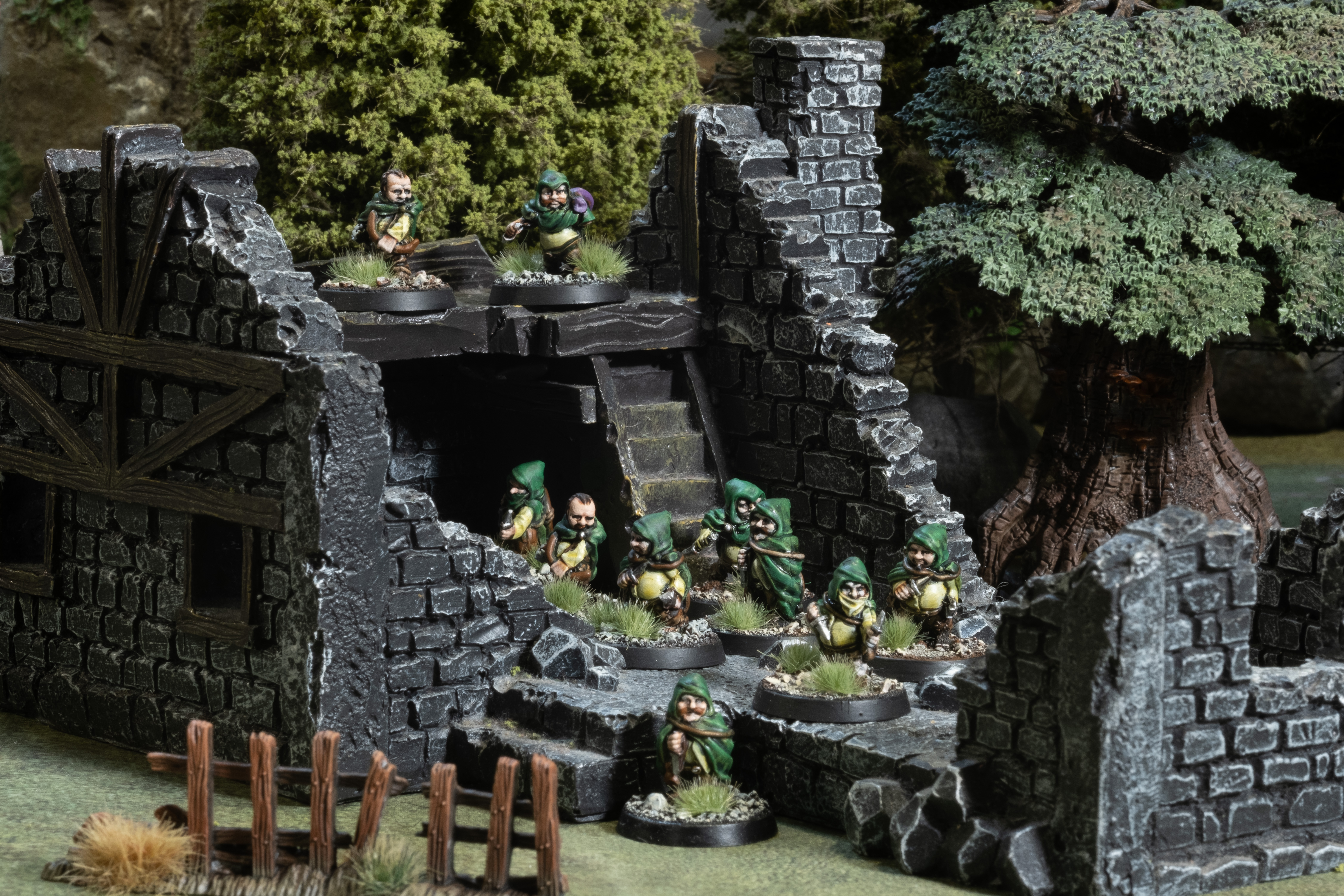
The boldest of gnomads, those who blend an indomitable constitution with an uncanny knack for good fortune, may develop into Abstemious Scouts. All ways ahead are sown with dangers which must be silently scrutinised, averted or nullified. Operating on stygian nights, these stoic loners tread softly through undisturbed shadows, and only the moon witnesses the ribbon of cold light that catches their long flensing knives as they slit the throats of foul foes. Many carry short bows of blackthorn and horn, to stalk and silently slay their quarry from deep cover; an archer’s thick wrists bear testament to their lethality.
By necessity, Abstemious Scouts don garb that blends with their surroundings, or the mysterious hoods and capes fashioned by Boscage Hermits. These emulate the landscape ahead of the caravans, whether cloaks of dense foliage, the woven skin of dried lizards or a suit of fish scales and tentacles.
The plucky individuals sacrifice comfort, driven by duty to their kin and by the obligations of their natural and supernatural gifts. To outsiders they appear cold, aloof and sullen, for it is many a hardship they suffer, foreigners to the warm hearth.
Abstemious Scouts are said to eat things that would turn a common gnomad’s stomach: stale bread, stinky cheese and even warm ale are among the victuals these tight-lipped pioneers endure with stubborn pride.
They are regarded as some of the hardiest and most disciplined members of gnomad society, ranging far beyond the hidden Trails and the comfort of their communities, sometimes alone in hostile territory for weeks. For most gnomads, hunger is exceedingly difficult to tolerate; food lies at the heart of community, memory, celebration and spiritual life. Yet a Scout must ration provisions and endure long separation from the abundant tables. That restraint is considered extraordinary, and their willingness to accept hunger as the price of protecting those who travel behind them earns particular respect.
“The skies, they were darkened with our thousand lofted arrows, Regent. Boughs, trunks and hollows were keenly found… but of the half-men, they vanished in a conspiracy of undergrowth. My head is bowed before you, O lord.”
IN-BETWEEN PLACES

Sedentary gnomads may step away from the path, choosing instead a life in close communion with unseen confederates. In collaboration with Ghyran’s children, they exist to lessen the burdens of a Gnomad Feastmaster, filling their bellies with nature’s lavish bounty and brightening their lives with thaumaturgic wonderment.
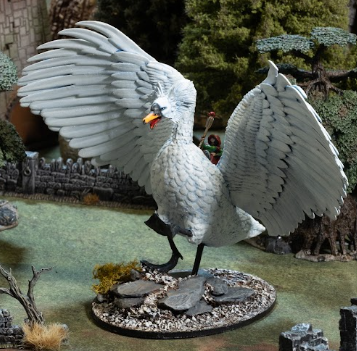
A precursor to early Halfloaf Thieves, Yonella Lightfoot was the boldest of her caravan, never shying away from any perilous task that satisfied the mutual protection of herd and kin. It was thus fated that she was tracking a predatory pack of feral Chaos Warhounds, far along the Amber Littoral coast, when she first glimpsed her caravan ablaze. The evil torchlight of Khorne’s Marauders danced upon the blood-slicked sands, and their profane howls penetrated the silence of nightfall. Her community was defiled and slaughtered, and of her true love, Markku Sklavinautor… not a trace.
Bitter madness gripped her then, and she resolved to consign herself to the deep, whereupon she first encountered the Pen of Auspice. The beating wings of a great swan – a scion of the World-That-Was – welcomed her, as is said to be the fate of all gnomads who surrender unto death, but they led her not to Shyish. Instead, the Pen of Auspice adopted a corporeal form and led her from the brine.
In the Age of the Greater Betrayer, Yonella Lightfoot is a sibylline wanderess communing directly with Ghyran. Together, Yonella and Blossomwing – the Pen of Auspice – traverse incredible distances, darning the holes in the Trails’ protective fabric and vengefully slaying followers of the Dark Gods. The duo are infused with timeless, shamanic magicks granted by a grateful realm. Fellow gnomads are awestruck and unsettled in Yonella’s presence. Though her dedication to rejuvenation is unquestioned, the taint of death eternally follows in her wake.
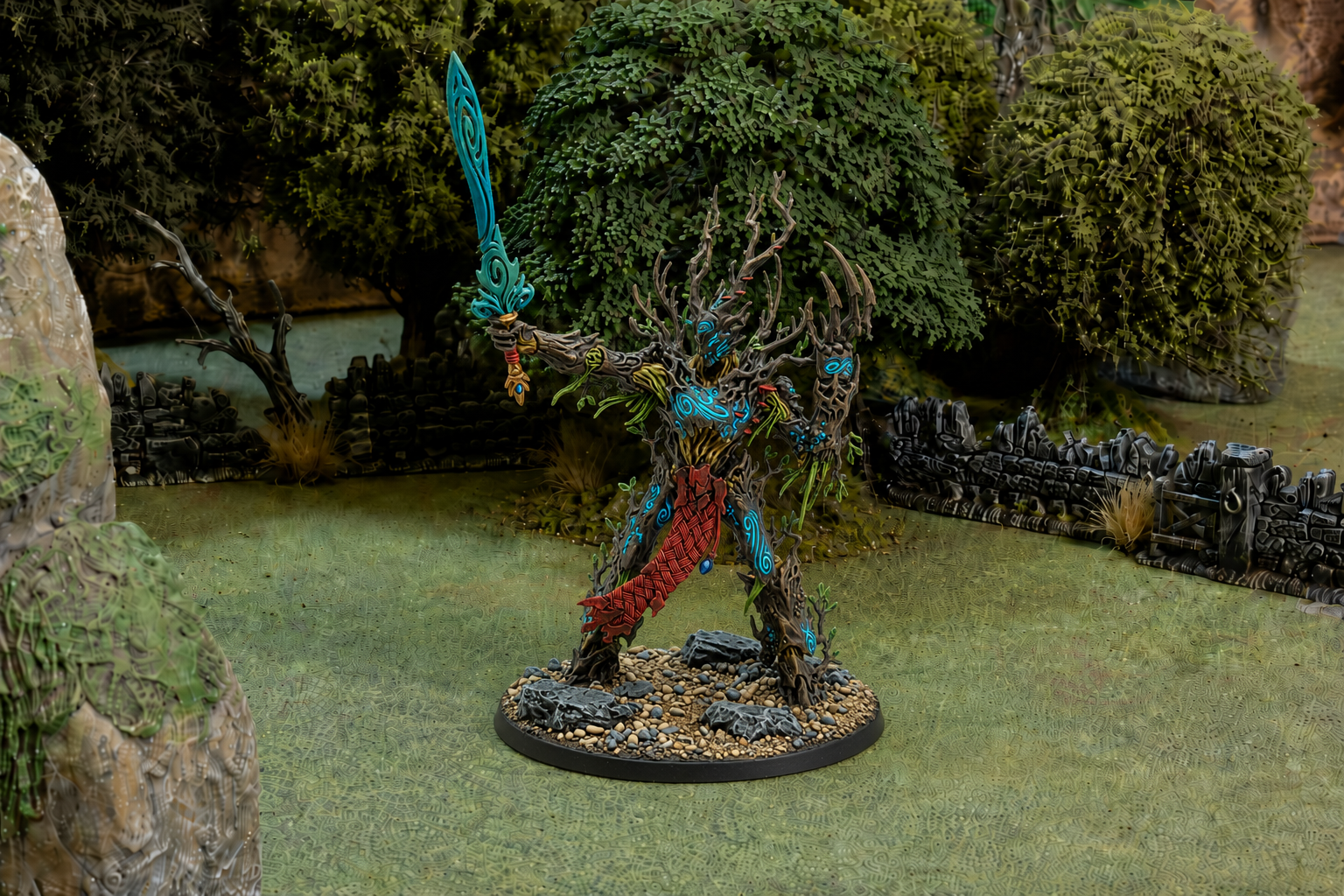
The splendour of Sigmar’s Age of Myth saw the Jade Forest annihilated by clearance fires and its orphaned roots pummelled by the brutal foundations of duardin engineers. Fleetingly resurgent saplings were cruelly disturbed by clattering pistons and choked in their infancy with the toxic ash of great-forges. The sun fell on that first burgeoning empire and did not rise for a millennium, as the Age of Chaos followed, saturating the gouged lands with filth and disease. Owain’jax, Son of the Jade Forest, is the first son of the new age, revered by the gnomads as a confidant and staunch ally.
A witness to a thousand winters, Owain’jax’s majesty displays traces of vast age. Patches of dried and curled bark, spots of diseased leaves and a perceptible lean speak of his antiquity. His lower branches droop in sorrow for all that he has witnessed and from the pain of withholding the gnomads’ secret from his kin.
This LeyLord was the first to be sown after the apocalypse, his seed pushed into the sterile ground by the nurturing fingers of a solitary Boscage Hermit. The cherished and protected name of the progenitor is known to few, but her empathy is carried by all who grow or live in the Jade Forest. The dedication of the Jade Forest’s architect endures, and so, in her memory, does Owain’jax, Son of the Jade Forest, endure as he strides purposefully into battle alongside his diminutive and beloved cousins.
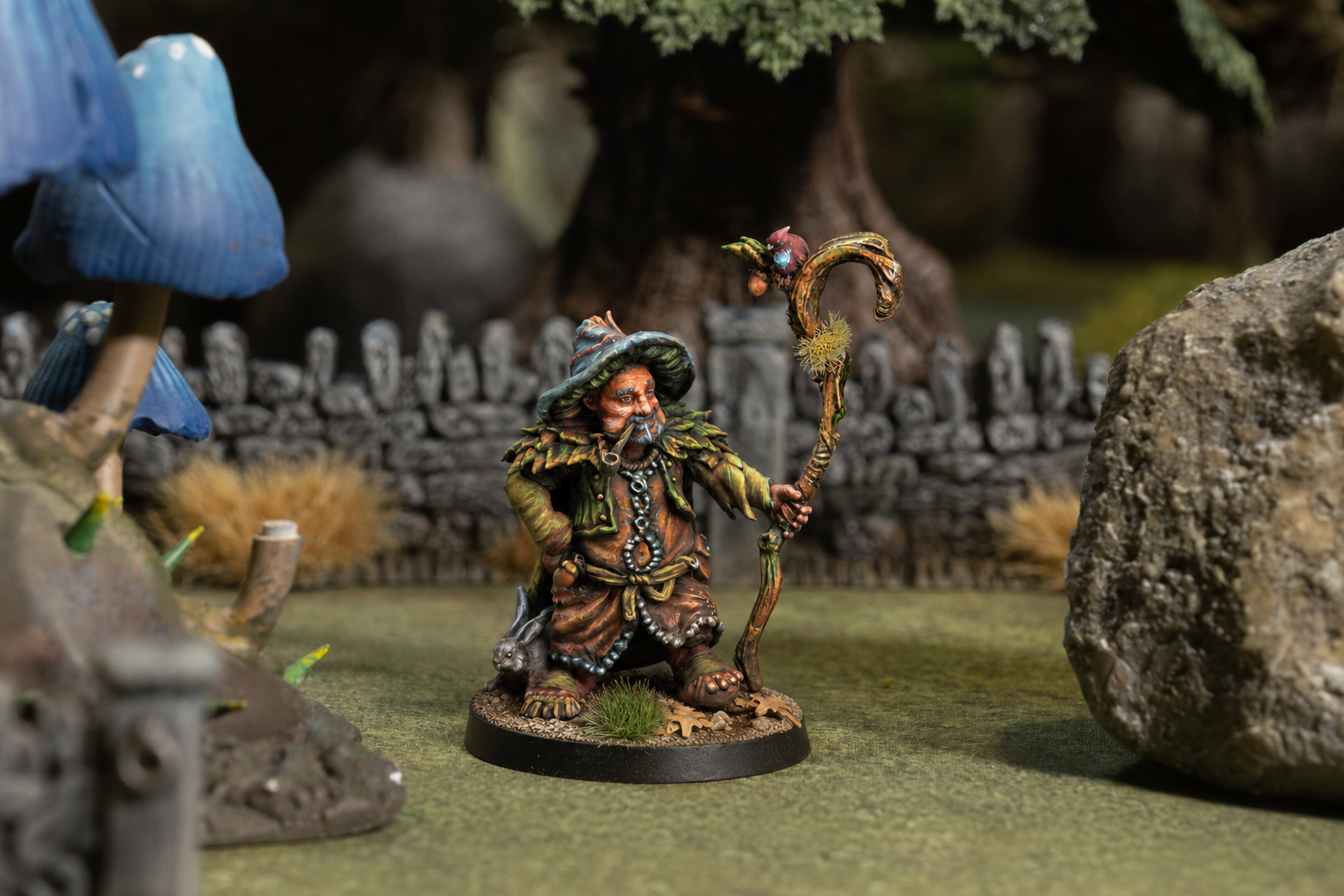
Some venerable Head Chefs insist it is the destiny of young ’uns born under the waxing midwinter milk-moon. Others tell of a seed lineage that gives rise to this predestination. No gnomad can simply become a Boscage Hermit. They alone are chosen by Ghyran, and once the song is heard, withdrawal from the Trails is certain. Ghyran’s favoured disciples become increasingly distant, forgoing mead and merriment until one day they simply melt away, led by a Seedlingkin LeyLord Ancient responding to the silent song.
Boscage Hermits are regarded as very odd amongst their droving peers. They lead solitary lives attending to the Habbinkerr, tending crops and communing with nature. Ghyran’s whispers have imbued Boscage Hermits with the capricious gift of magic and revealed the secrets of the mycelial networks. Boscage Hermits are able to transmit messages along these fibrous arteries, to tell of caravans departed or else to sing out the good news of a Great Feast (and what might be on the menu). They will act as intermediaries between the Trail Masters and legations of forest folk, interpreting the subtle sway of their boughs and communing in kind. Boscage Hermits are the gnomads’ farmers and their quartermasters. Their well-tended groves provide much of use to a gnomad caravan and as such occupy key locations at the intersection of major Trails. The grateful land works in sublime conjunction with them, at a stroke, enveloping signs of agriculture and surrounding all with towering walls of boscage.

Beneath the oldest boughs, ancient promises are remembered. The gnomads are not alone in their guardianship of Ghyran’s meek progeny, for amongst the deep forests dwell mighty confederates who have kept their secret, shared their burden and, when necessity demands, answered violence with violence.
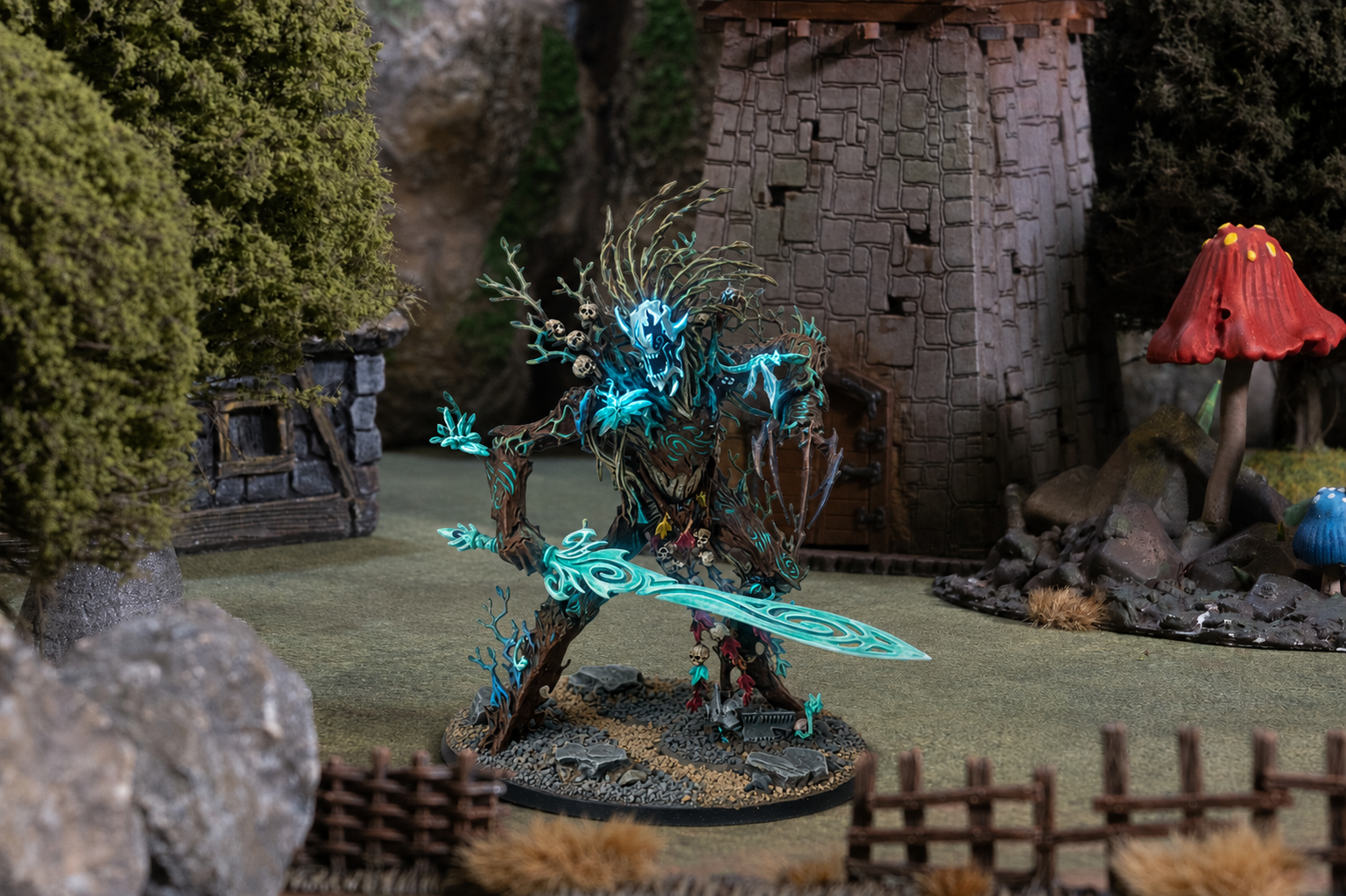
There are wounds against the living realm which cannot be forgiven with patience. Forests can be replanted, poisoned streams coaxed again to purity and even a wounded Trail lulled into healing slumber. Yet occasionally some act of desecration is so wanton, some slaughter of Ghyran’s innocent progeny so complete, that the land answers not with renewal, but with rage.
Then may stride forth a Spirit of Ghyran.
To the gnomads these colossal beings are objects of reverence and considerable apprehension. They are not summoned as one might call a faithful hound, nor commanded like soldiers beneath a Trail Master. Rather, their coming is presaged by strange disturbances in the living world. Roots burst through stony ground. Sap rises in trees long dead. Herd beasts fall suddenly silent and Boscage Hermits abandon their breakfasts mid-mouthful to press listening palms against the earth. Something vast has heard the injury.
Spirits of Ghyran are the murderous aspect of renewal made manifest. Their immense limbs are hardened by ages into living weapons, and blows capable of splintering fortress gates are delivered with the terrible certainty of falling timber. Those who have burned sacred groves, butchered protected migrations or driven corruption into the Trails may discover that the benign abundance of Ghyran possesses very sharp thorns indeed.
Gnomads do not celebrate such interventions with the customary revelry. When the slaughter is ended, they approach quietly, tending broken roots and leaving offerings of seed, spring water and simple food amongst the churned earth. For the appearance of a Spirit of Ghyran is salvation, certainly, but it is also an admonition.
The Realm has noticed.
And something has made it angry.
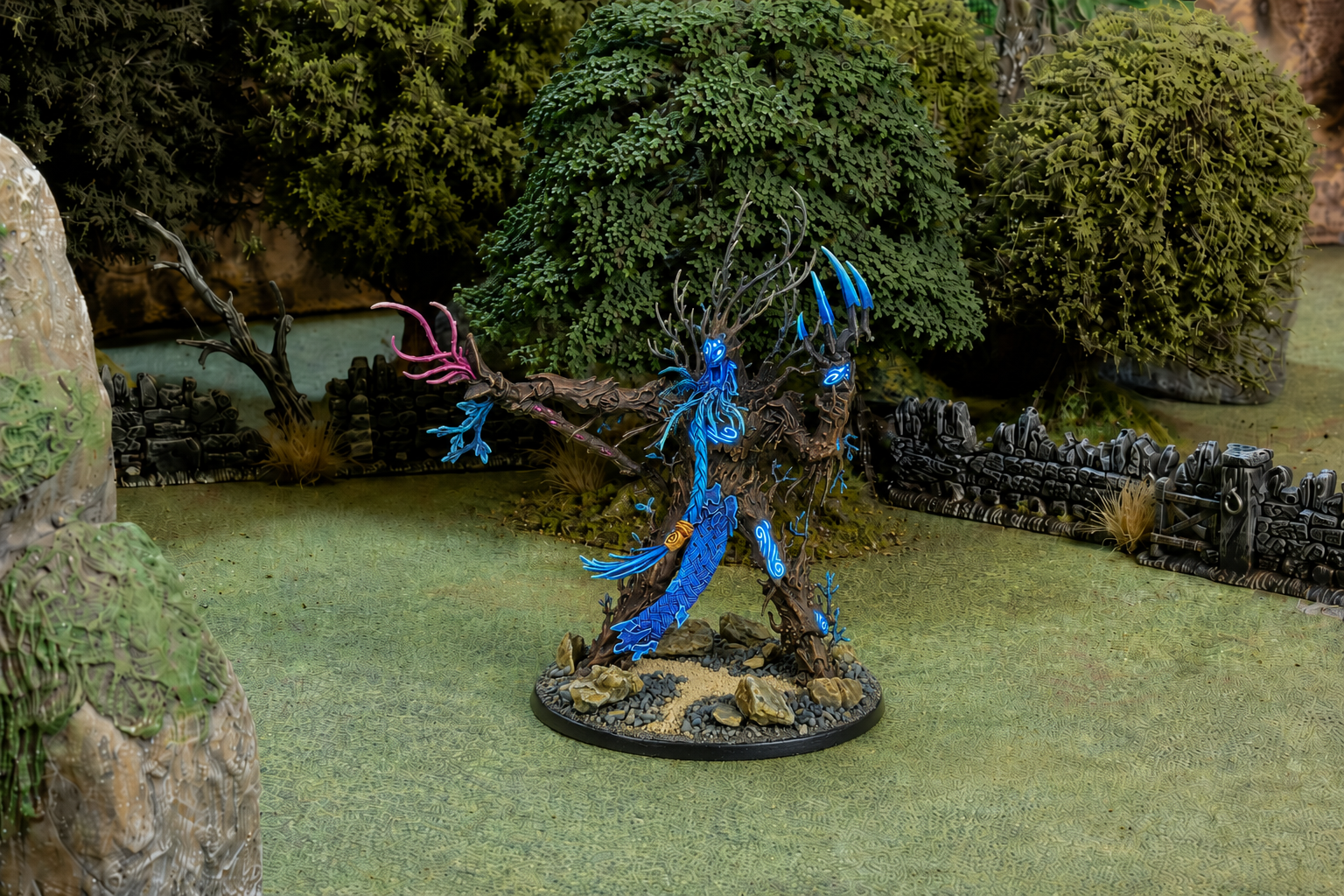
Few amongst the gnomads can claim true understanding of the slow discourse of the forest. Fewer still have heard the ponderous counsel of a LeyLord Ancient. To them the passing of a gnomad generation is little more than the turning of a leaf, yet the small folk have earned a place in their vast memories quite disproportionate to their stature.
It was amongst the overlooked Seedlingkin that the secret of the gnomads was first kept, and certain LeyLord Ancients continue that oldest of conspiracies. They speak rarely and never hurriedly, communicating as readily through the groaning of roots as with words. Boscage Hermits may spend several days in earnest conversation with an Ancient before discovering that the opening exchange of pleasantries has only just concluded.
When the Trails are wounded, these sagacious forest lords stir from their long meditations. In battle they are towering fonts of Ghyranite sorcery, calling forth the forest’s wrath against those who would despoil the migrations.
Their secret has been kept through ages of fire, pestilence and death, and an Ancient is not inclined to surrender a confidence merely because the rest of the world has become inconveniently noisy.
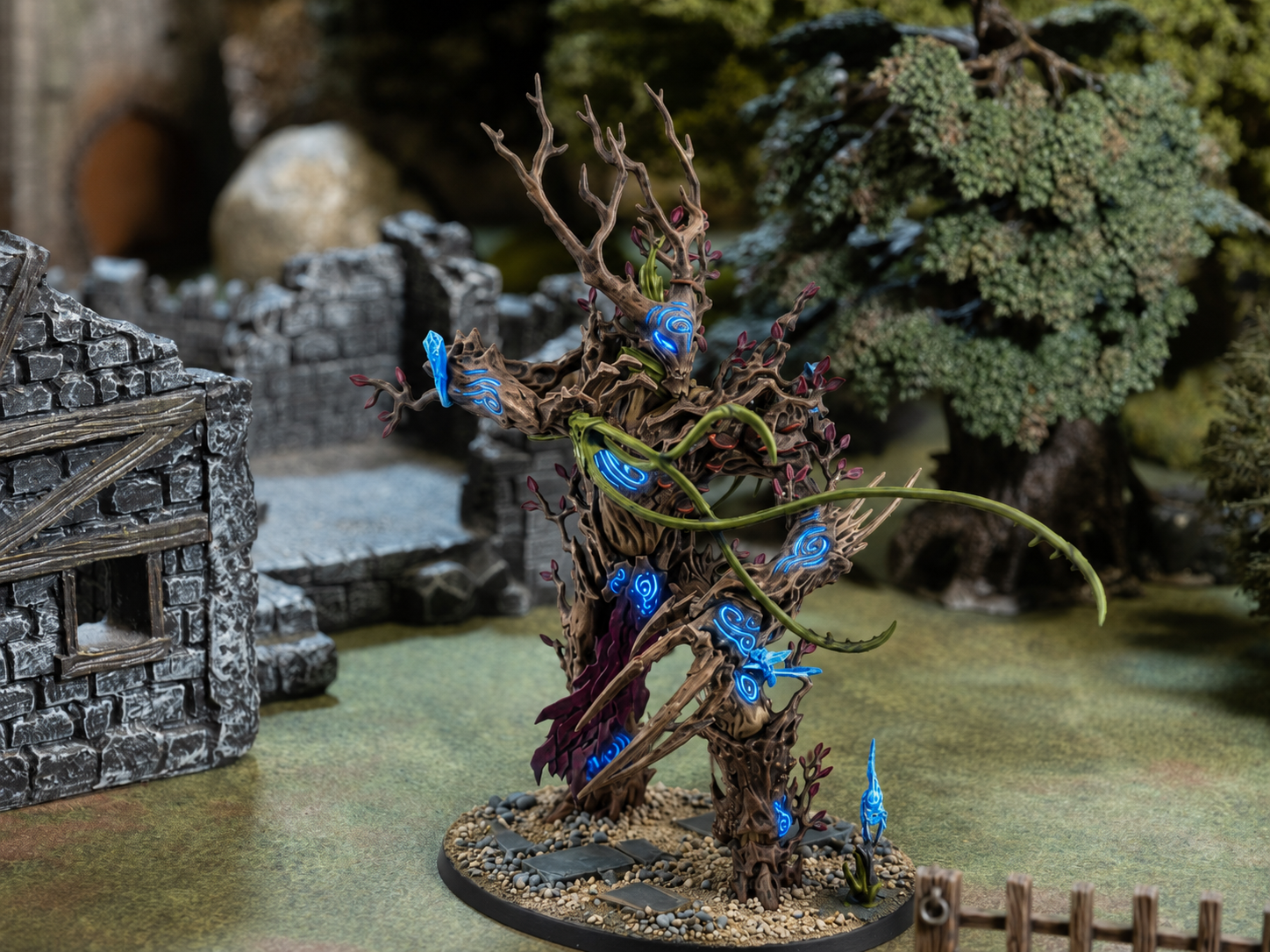
Where a LeyLord Ancient embodies the forest’s immeasurable patience, a LeyLord demonstrates what occurs when that patience is finally exhausted. These hulking custodians haunt the deepest reaches neighbouring the Gnomiad Trail, standing so motionless amongst bole and boscage that generations of birds may nest upon them before a single branch betrays awakening.
The gnomads hold these taciturn giants in enormous affection, knowing a particular LeyLord as they might an eccentric and extremely large uncle. Gifts are sometimes left amongst their roots: a small keg of excellent porter or a particularly admirable pie. Whether such offerings are appreciated is impossible to determine, although the disappearance of the porter has inspired considerable speculation.
When ravenous interlopers breach the Trails, all genial conjecture ends. LeyLords stride from the woodland with the implacable violence of an avalanche.
A LeyLord understands the importance of silence. Yet when a gnomad horn sounds desperately beneath the trees, these phlegmatic guardians seldom remain rooted for long.

The magic of the Gnomad Feastmasters is rarely one of domination. A Trail cannot truly be commanded, nor can the living things which dwell within it be expected to obey merely because some robed fool waves a staff and bellows at them. Such behaviour is considered both extraordinarily rude and an excellent means by which to be bitten. Outsiders who observe a Boscage Hermit murmuring to a thornbrake depart convinced they have witnessed nothing of consequence. They are quite correct, until the thornbrake takes an interest in them.
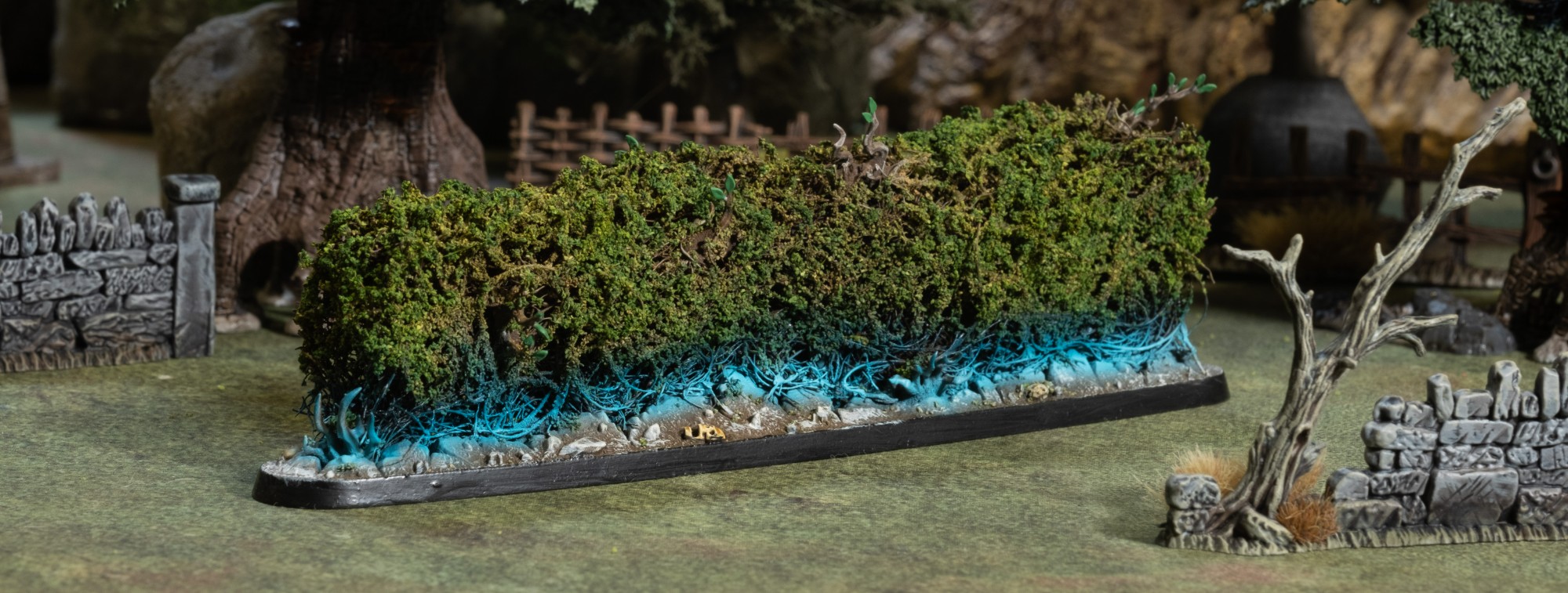
Gnomad spellcraft rests instead upon familiarity, obligation and reciprocity: the gnomads tend the hidden places of Ghyran, and when danger presses close the Trail remembers its keepers. Hedges twist themselves into fortifications, groves awaken to terrible purpose, and the smallest custodians of rot and renewal stir in their thousands beneath the soil. To a gnomad these are not magic, but neighbours answering a call.
Along the oldest Trails, dense walls of hawthorn and briar have absorbed so much ambient magic that the distinction between plant and protective spirit has become decidedly uncertain. Called upon, a Spectral Briar Hedge erupts from barren ground where moments before there was none.
These hedges know their friends. Branches bend aside for gnomads; an enemy receives no such courtesy, and hacking at the thicket only invites whipping branches and barbs.
A well-kept hedge looks after its own.
“I have slept beneath stars, beneath canvas, and once beneath an ogor. Give me a hedge. A hedge asks nothing, judges nothing, and has never once attempted to eat me. It will take your cloak if you are careless, and keep your secrets whether you wish it or not – but stand behind one at dusk, with something unpleasant coming down the Trail, and tell me honestly you would rather have a wall.”
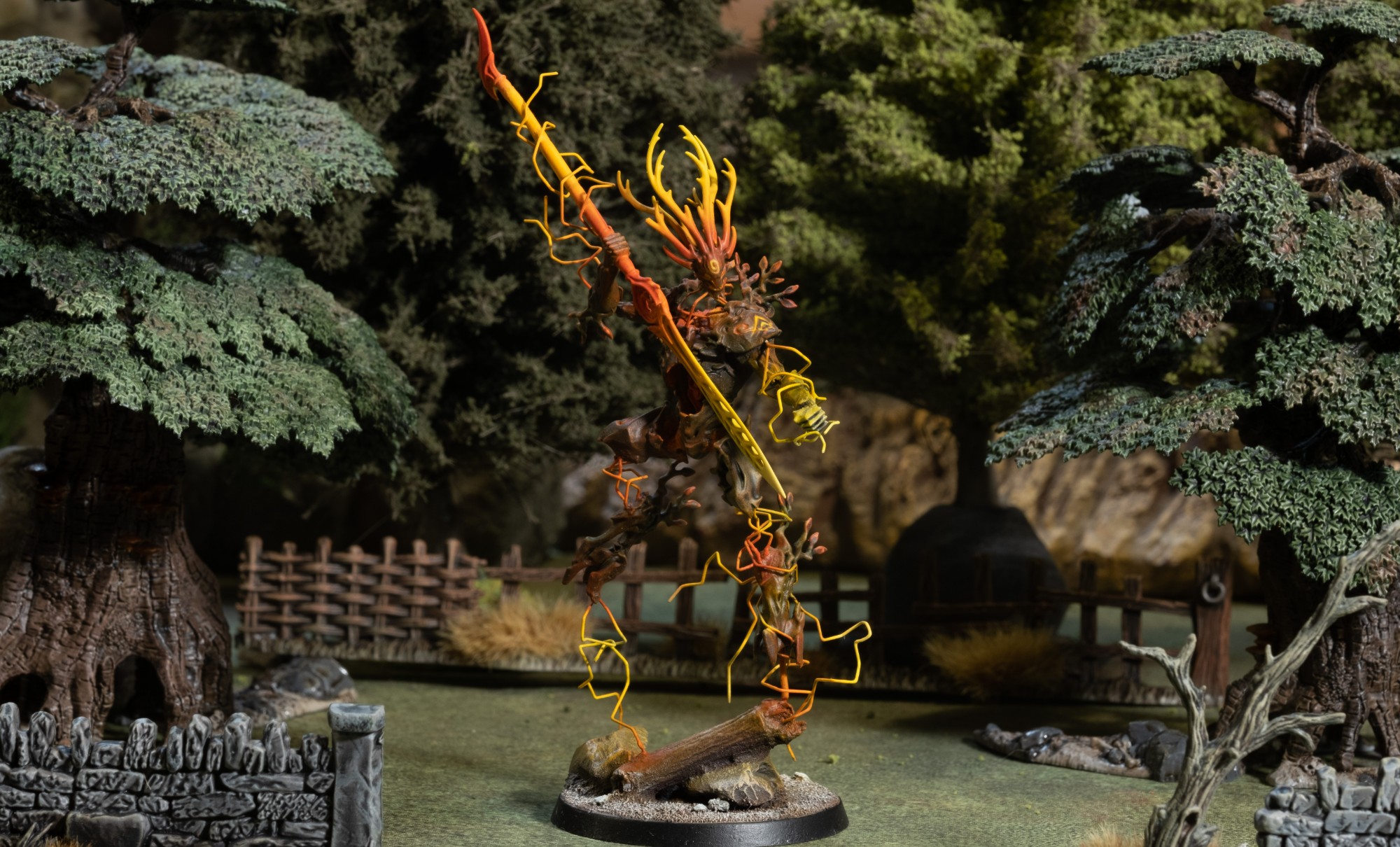
Where the oldest Trails cross, there stand the Habbinkerr Groves. For centuries Boscage Hermits and passing caravans have tended these places, and beneath such groves lies an accumulation of obligation older than many mortal kingdoms. When the gnomads are threatened, that debt may be called upon. Roots tear free and coil together as bark, vine and timber gather about a blazing knot of Ghyranite power until the Sentry pulls itself upright.
No craftsman fashioned such a creature. It is the grove remembering that it has been loved. Its fury spares gnomads and the creatures under their protection, and the better the surrounding land has been tended, the more violently the Sentry answers.
Gnomads know that when the Trail is in peril, sometimes the land gets up and does something about it.
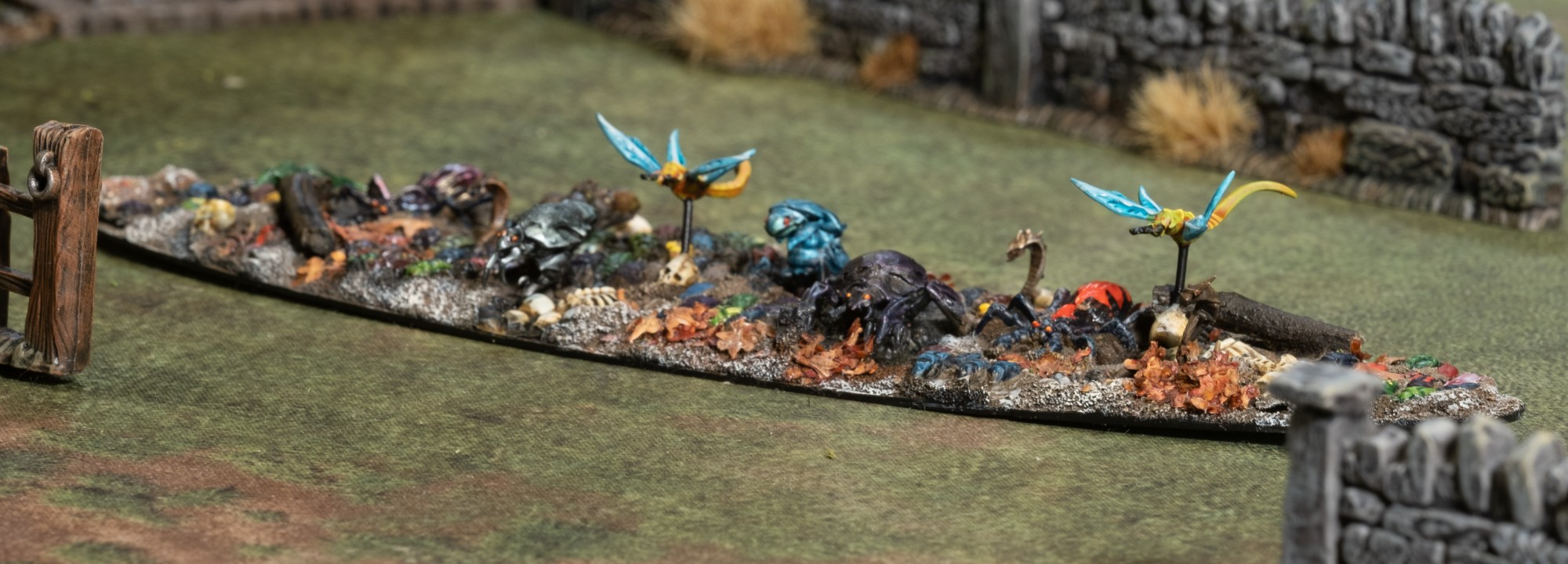
No gnomad Head Chef requires instruction in the value of leftovers. Everything returns. Everything feeds something. Beneath every Trail seethes an unseen multitude whose endless labour turns yesterday’s death into tomorrow’s abundance. These are the Detritus Denizens. When awakened by gnomad magic they come in numbers sufficient to make even the stoutest warrior reconsider the advantages of wearing trousers.
The ground appears to move. A living carpet of tiny bodies boils from the loam. Where the swarm meets an enemy, it simply finds the gaps: under greaves, through buckles, beneath plates, into boots. No armour is so finely made that a determined creature cannot find somewhere unpleasant to enter.
To the gnomads there is nothing macabre in this. Admittedly, the Denizens normally perform such work after something has died; the gnomads are quite content to reverse the order.

For all their ceaseless wandering, gnomads are no strangers to the comforts of home. Home simply happens to be wherever the kettle boils, the bread rises and enough familiar faces can be gathered around a fire.
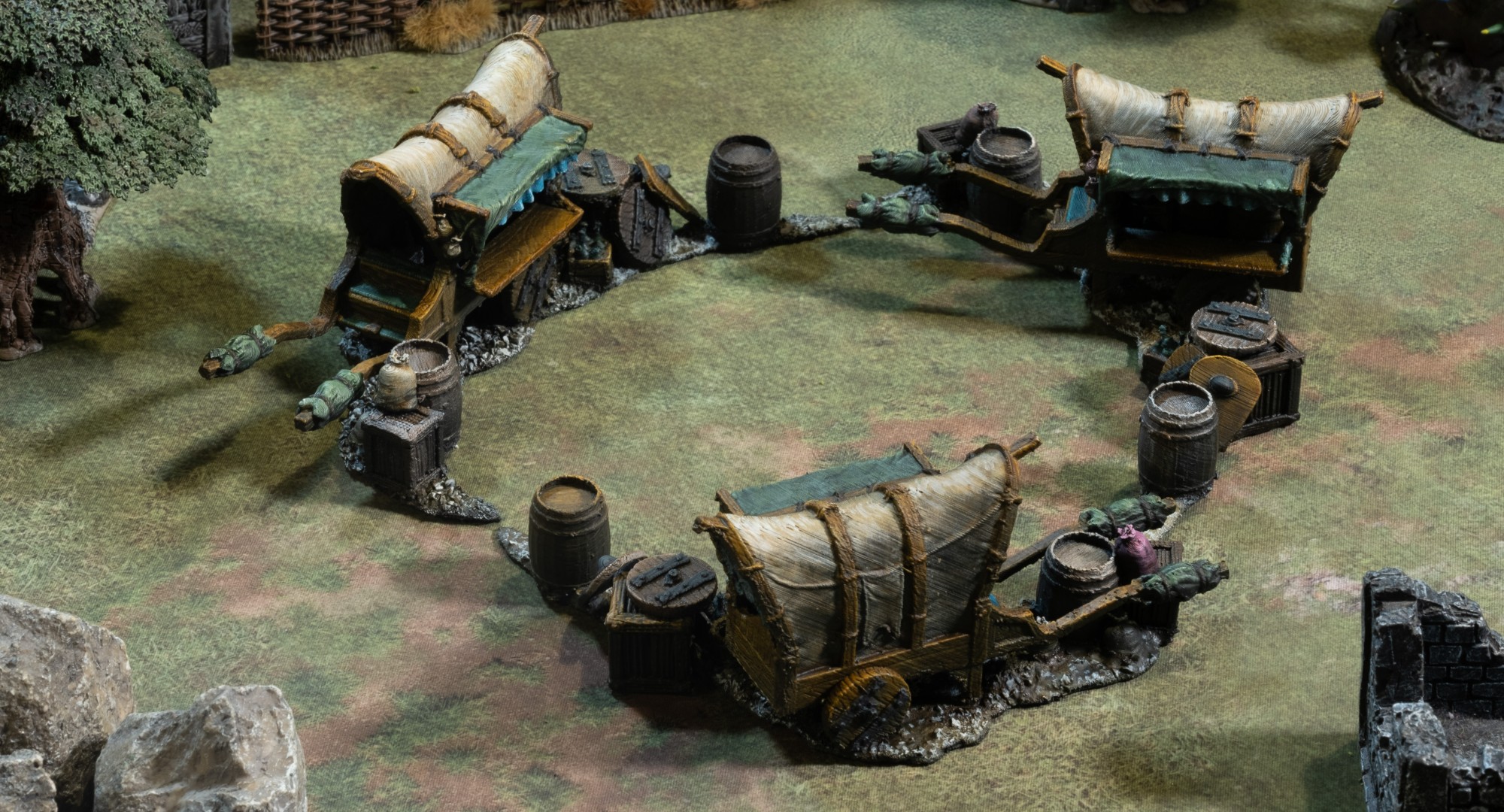
When a caravan halts for more than the briefest respite, its ordered procession blooms into a Gastrognome Encampment. Great bundles are unlashed from the backs of patient beasts, wagons are drawn into protective arcs and stout yurts rise from the earth with practised speed. Cooking fires are kindled almost before the last wheel has ceased turning. Soon the air is rich with woodsmoke, roasting roots and simmering stock, while washing flaps between poles and younglings tumble noisily beneath the feet of exasperated elders.
These temporary settlements are the beating hearts of gnomad life upon the Trails. Here worn boots are patched, bows restrung and cracked crockery mourned with an enthusiasm usually reserved for fallen kin. Drovers barter gossip over steaming bowls, Scouts surrender hard-won intelligence in exchange for second helpings, and Head Chefs preside over bubbling cauldrons with all the solemnity of monarchs holding court. What to an outsider might resemble a disorderly clutter of tents, carts, livestock and cookpots is, to a gnomad, a place of profound order and familiarity.
Yet even at rest the wandering folk are never truly still. A Gastrognome Encampment is constructed with departure already in mind. Every rope has its place, every awning may be struck within moments and every treasured possession must ultimately earn the burden of its own weight. At the first warning cry, cheerful domesticity can vanish beneath martial purpose. Wagons are hauled tight, stores dragged behind cover and narrow approaches clogged with barrels, baskets and whatever furniture proves sufficiently stout. Those who had moments before argued over dumplings take up bows and carving knives without complaint.
The Trails themselves seem reluctant to surrender such places. Grass rises quickly where tent pegs are withdrawn, wheel-ruts soften beneath creeping moss and the scent of cooking smoke is swallowed by leaf and loam. Within hours little may remain to show that scores of gnomads had slept, feasted and quarrelled there. By the following dawn even those traces are often gone.
Only a few stubborn crumbs might betray them.
And no gnomad worth their salt would leave those behind.

Osanja curled her little fists into tight balls as she tried to keep her voice from trembling. But fear had already electrified her and the pale hairs on her arms kissed the warm night air.
‘We must go, Brinna,’ she said, as earnestly as she dared. Her anxious eyes darted back down from the bluff to the marshlights of the fledgling path.
‘Brinna, please!’ she hissed, tugging on her true-love’s sleeve.
Brinna’s gaze was locked, though, on the unholy spectacle played out in the valley below and with eyes transfixed, the gnomad maiden’s jaw slowly fell into a hungry gape. Words seemed to roll around her full lips as thoughts attempted to articulate the profound display of depravity on show.
‘What… where… is she putting that… thing?’ Brinna enthused.
Osanja peeked over the lip of the crag and gasped.
‘Brinna!’ she scolded, horrified and flushed in equal measure, but she could conjure no reaction from her dearest.
‘Brinna!’ The next cry was accompanied by a slap of hopelessness and desperately tender words followed. ‘Duck-foot, my poppin, my love, come now, this place reeks of danger and…’ Osanja trailed off and swallowed a sob. Tears wove an unhappy delta down her dimpled cheeks as she looked into the dark brown eyes of her love. The flames of the fire danced in them and her pupils were dark pools of promises already sealed.
‘Please!’ Osanja sobbed, but Brinna was enraptured. Osanja screamed and stumbled backwards into a knot of reeking blossom as the She-daemon climbed lizard-like to the redoubt. Its wet lips dripped tales of ecstasy but its cruelly barbed whip snapped the breeze with its sharp crack. Its slender, vein-clotted finger lifted Brinna’s chin and it breathed a slow, sensual breath into the gnomad’s vital lungs.
‘Get away from her!’ Osanja roared, hurling rock and stick; even the best egg-pan was unhooked and launched at the creature of undoubted Chaos. More of these fiends climbed the edifice and moved towards her, their limbs distended and their movements at odds with the natural passage of time.
Fighting desperate sobs and wracked with a furious shame, Osanja turned her back and ran for the safe embrace of the twisted Trails, vowing forever to seek out and avenge her one true love.
It is whispered that these ever-unrequited lovers were thereafter conjoined in opposition. Some say Brinna succumbed to the embers of her desire that always burned within, and that she serves now as cup-bearer to a great blubbering mass atop a foul and sophomoric palanquin. A tragic caravan, in its own way. For Osanja the Mirthless, the lithest of gnomads, a laconic existence in the darkest shadows of the most overgrown and thorn-knotted Trails. A reliever of sin, Osanja’s boning blade of blackest steel has silently ended life’s pleasures for many a vile despoiler.


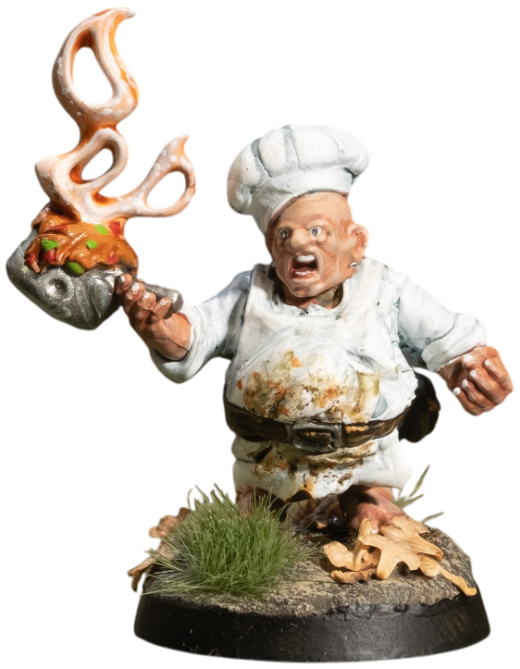
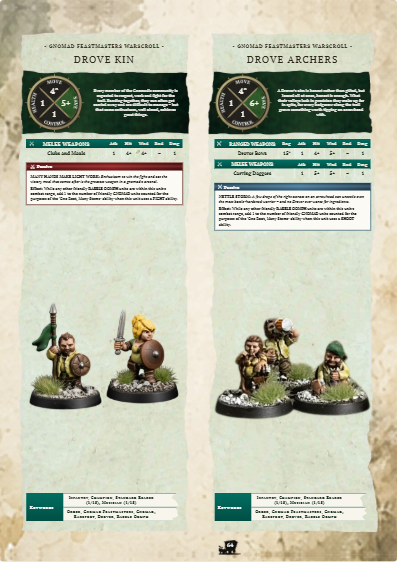
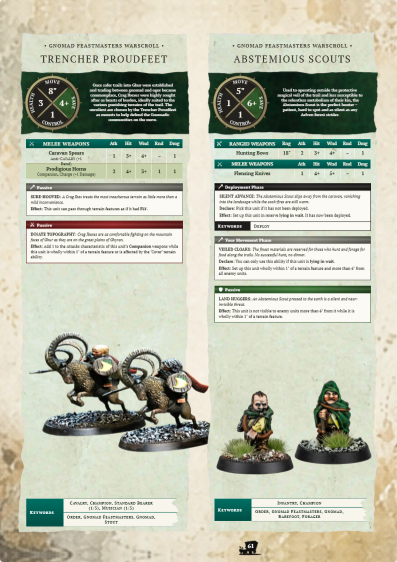
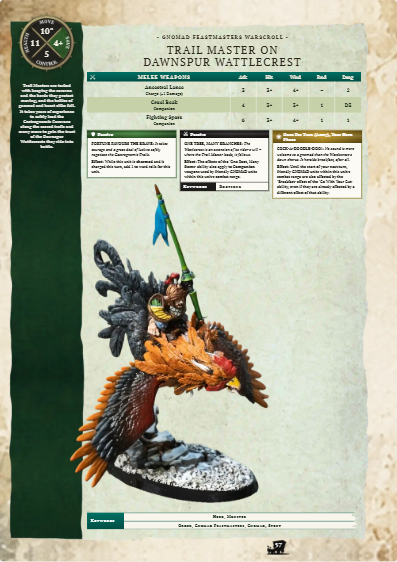
“The shroud has split. We close it together, as one. Nobody is coming to help us – nobody ever was. Take the ground beside your neighbour and hold it: the Trail has fed us all our lives, and today we pay for the meal.”

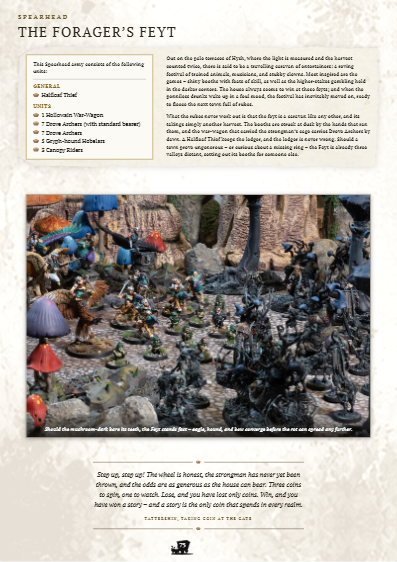
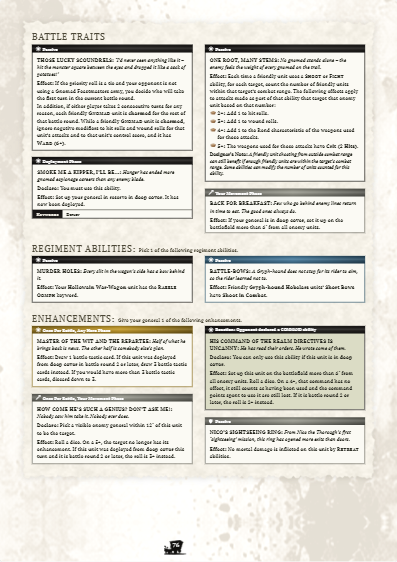
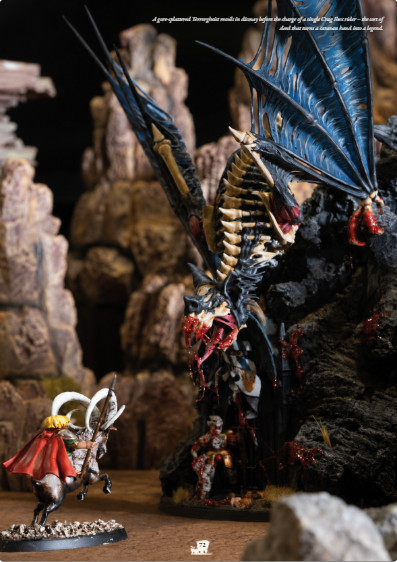
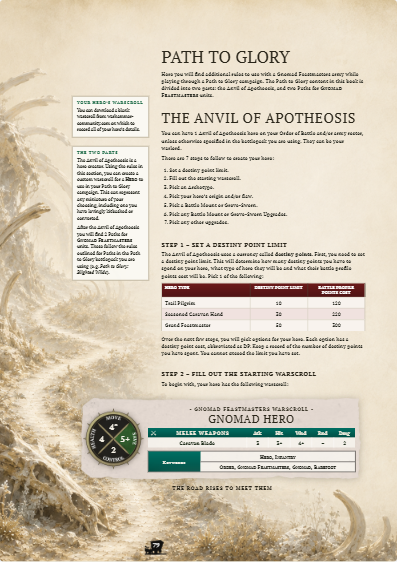
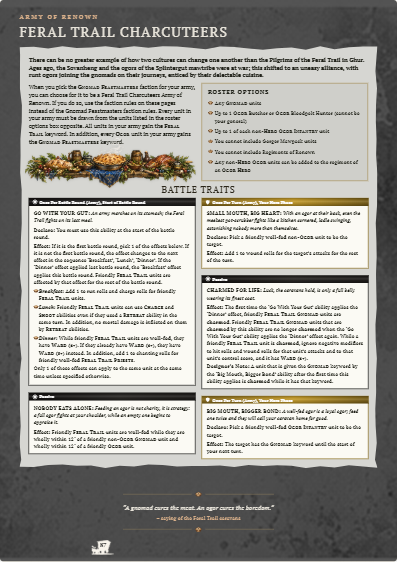
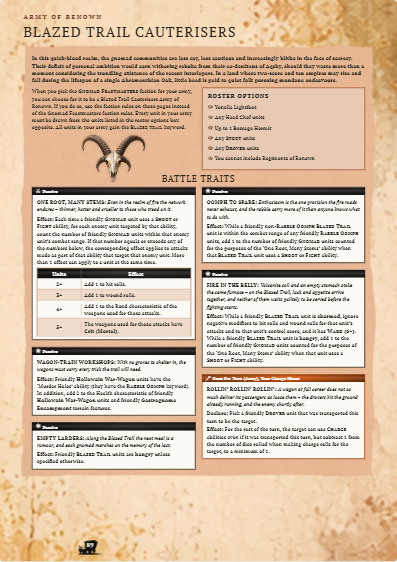
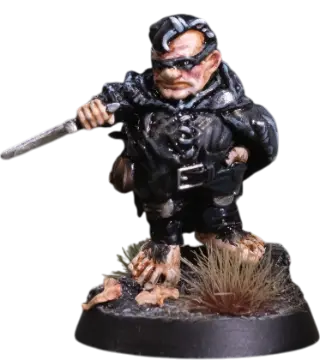
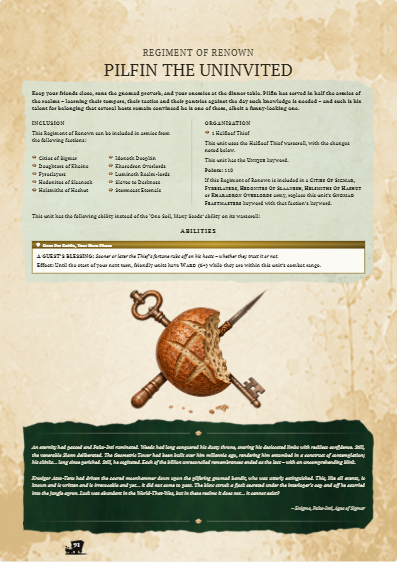
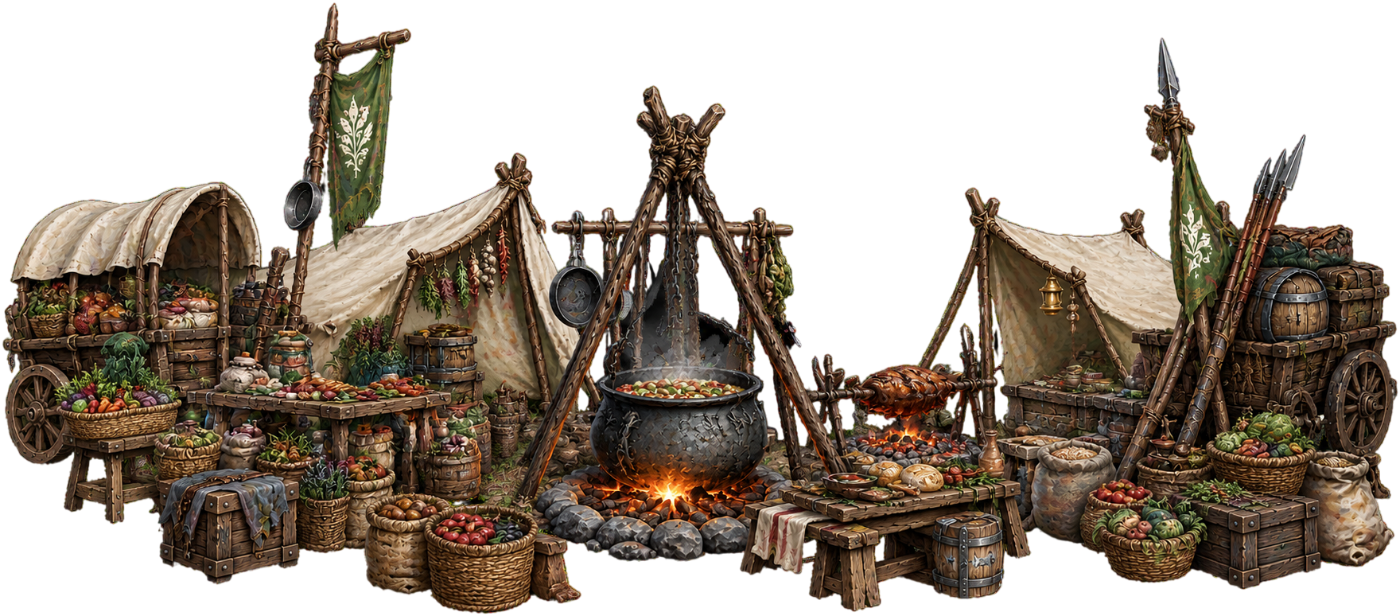




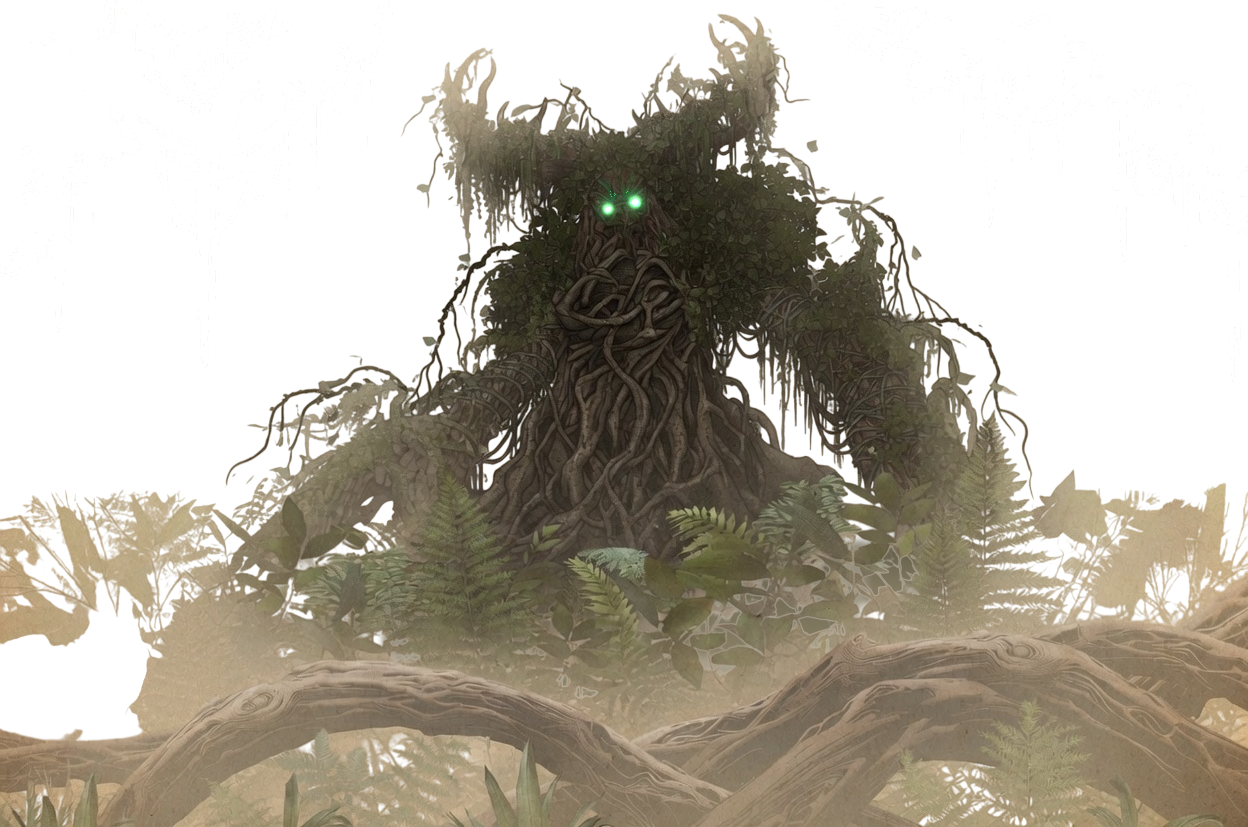




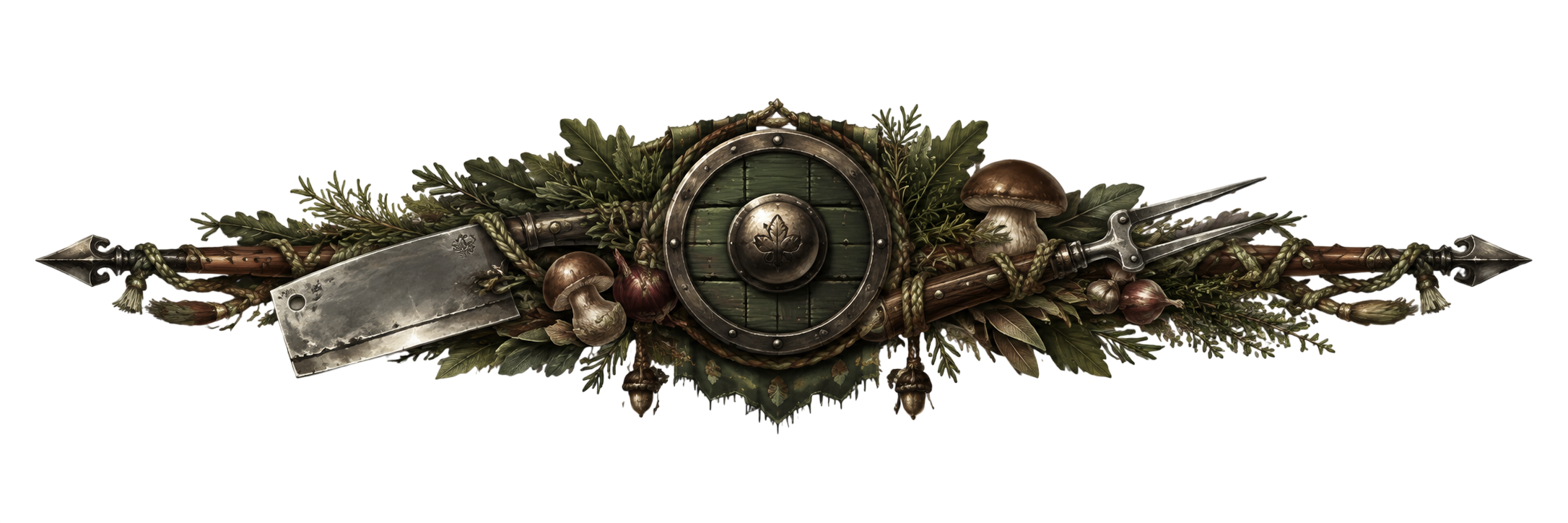




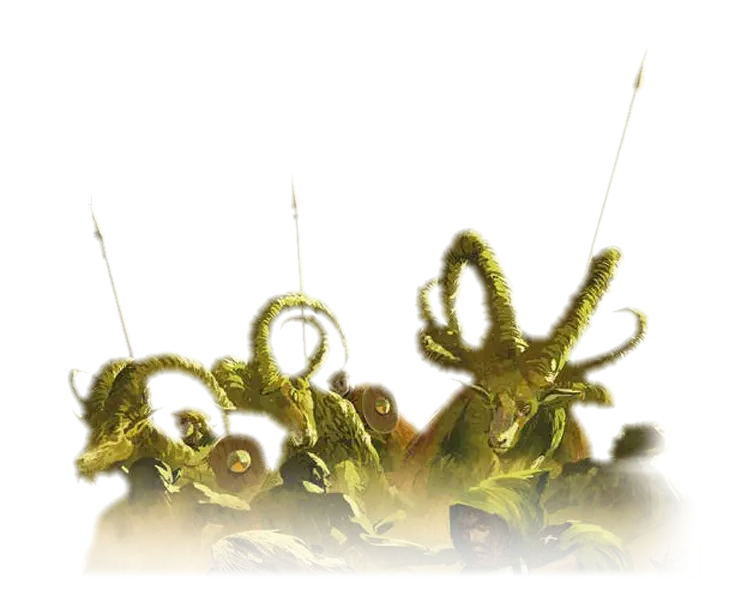



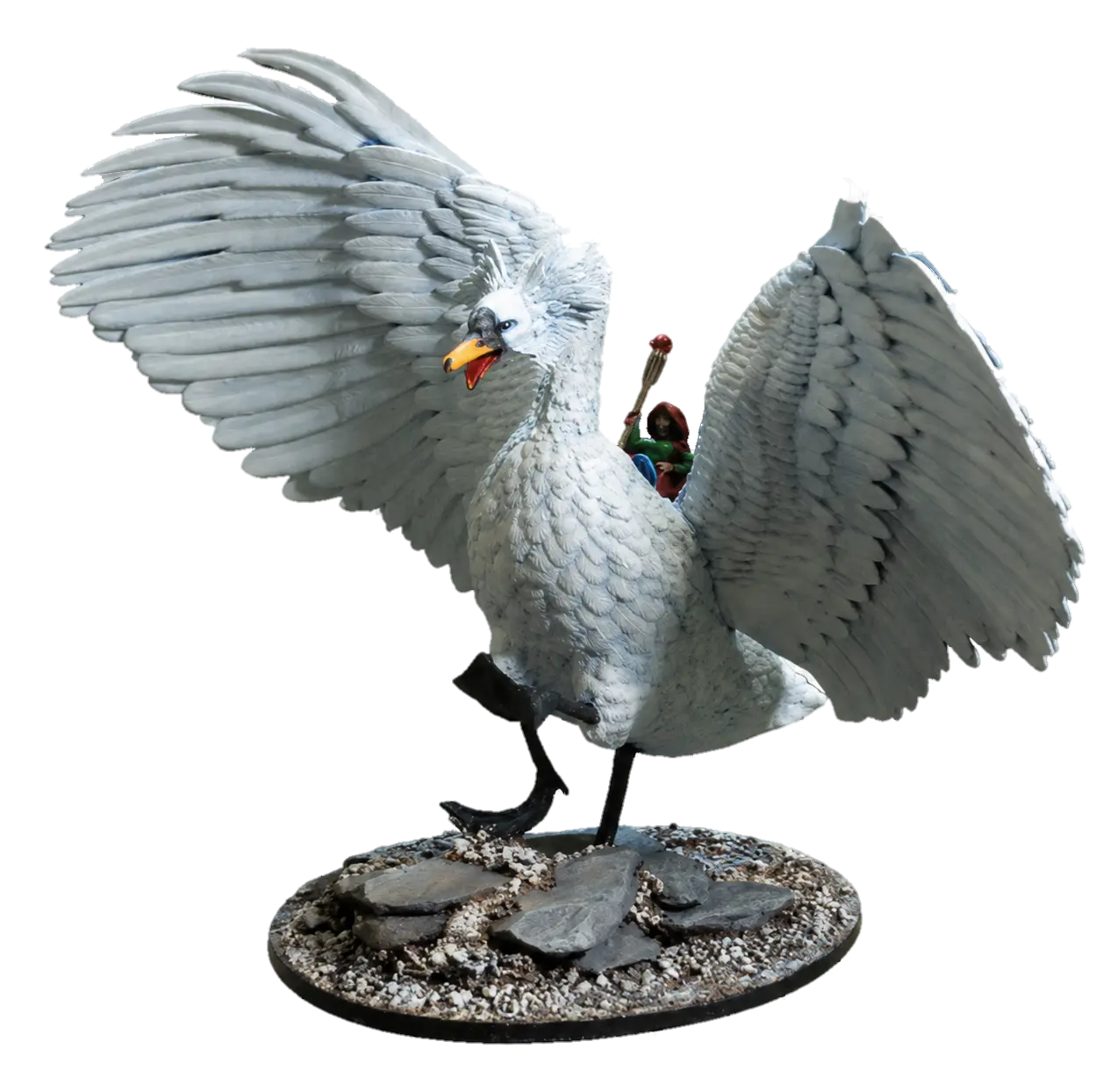


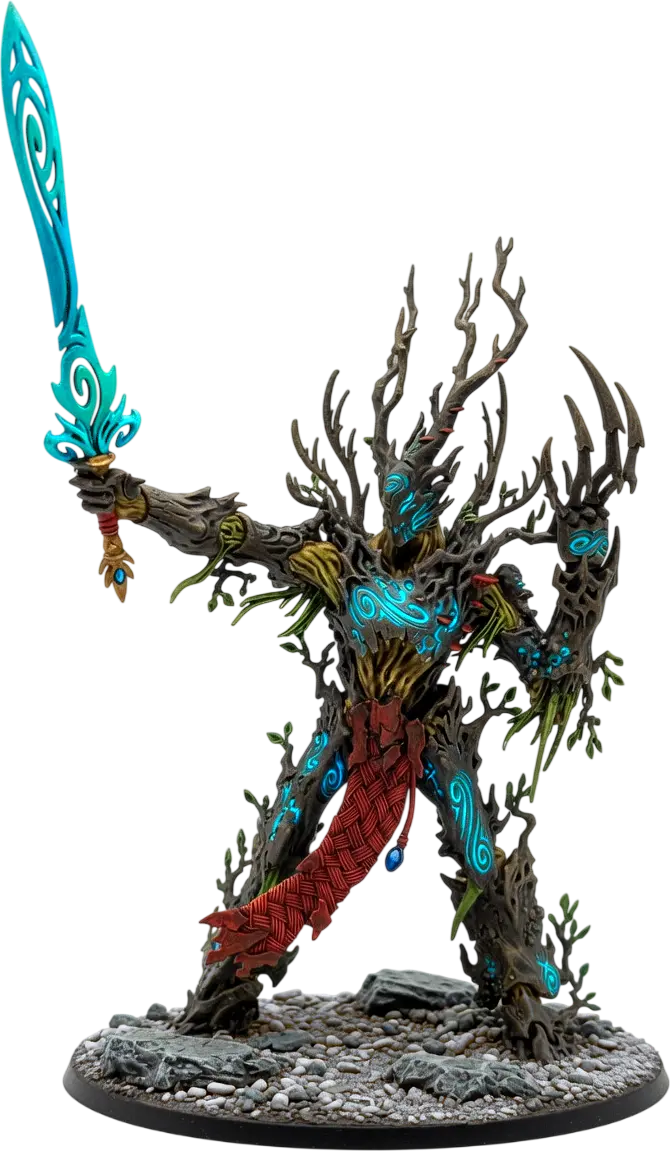

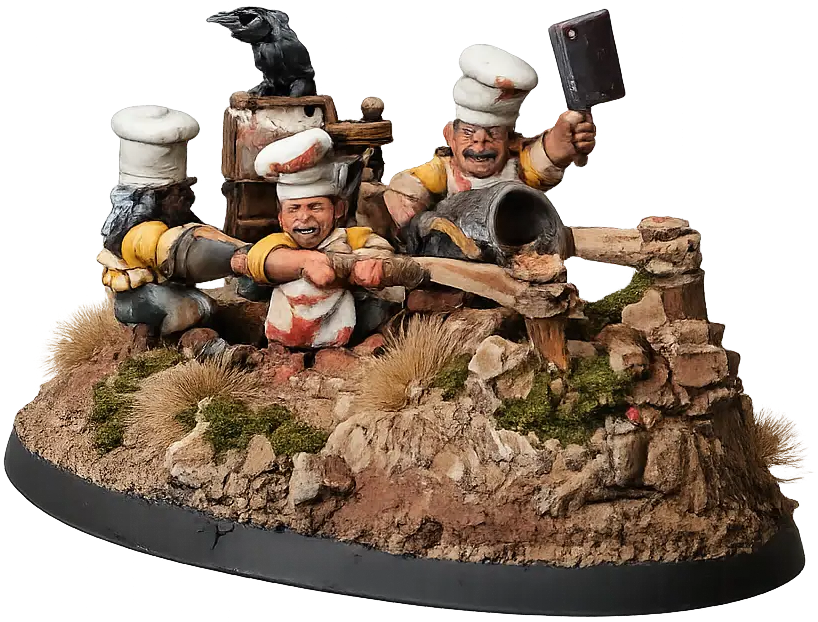


DAWNSPUR WATTLECREST
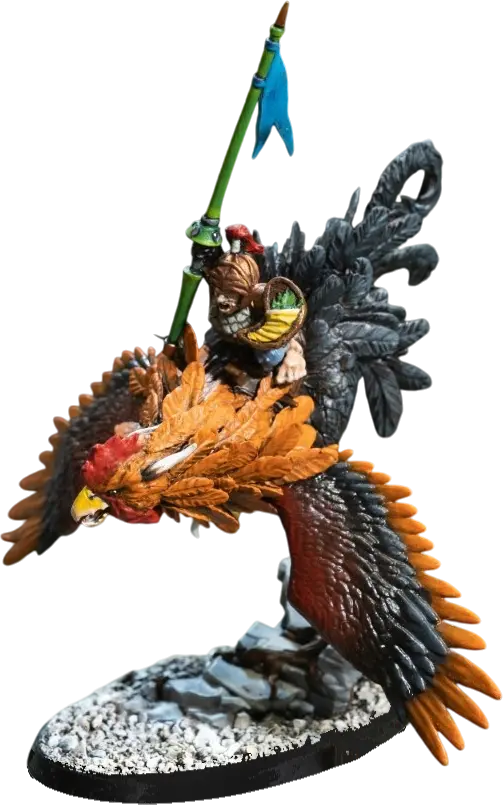

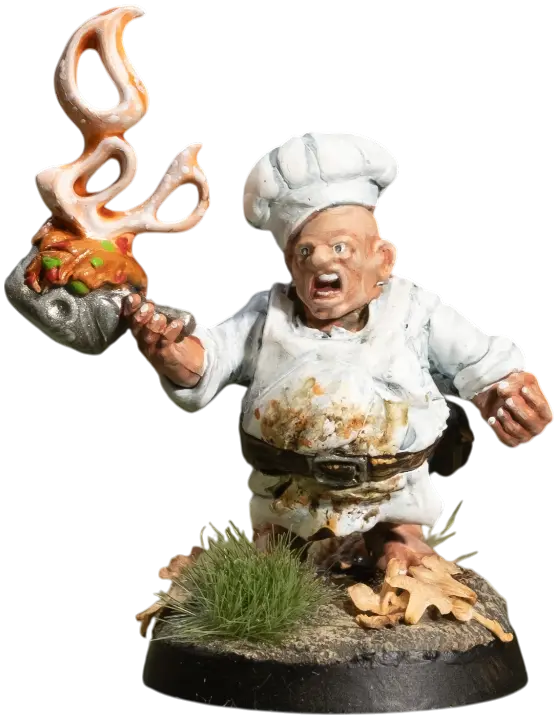
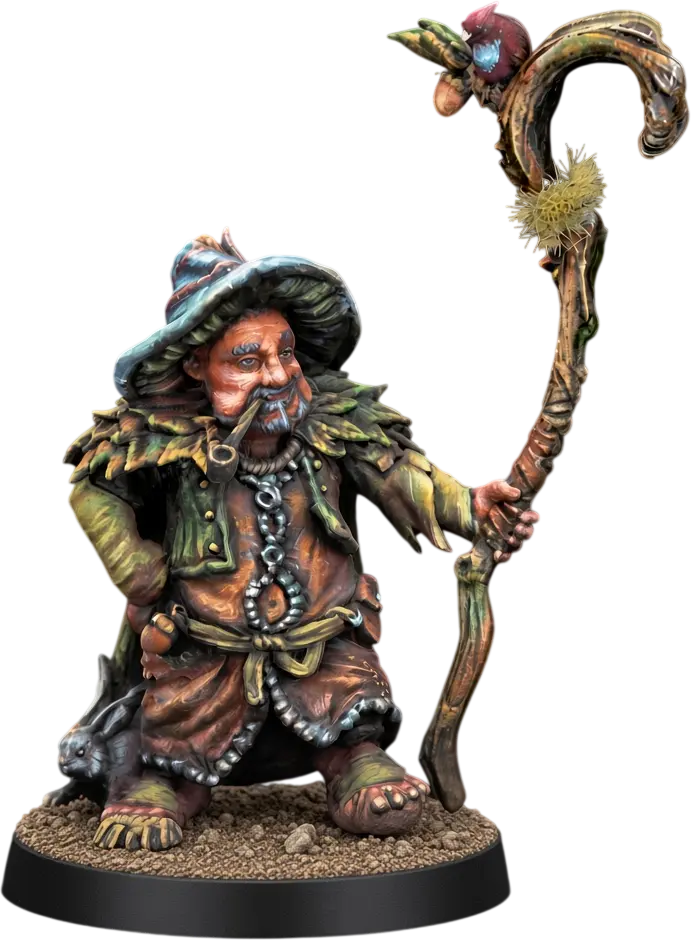




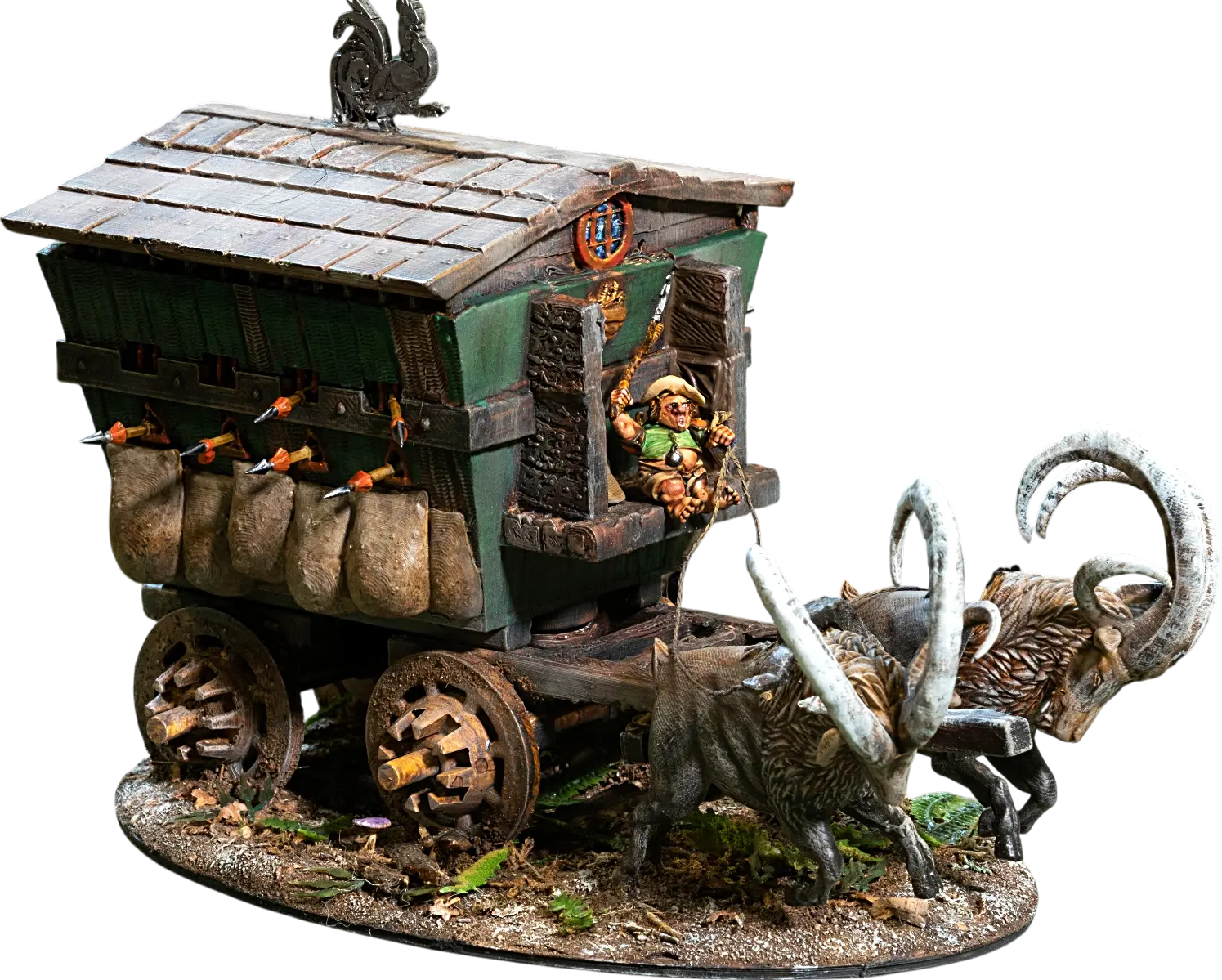

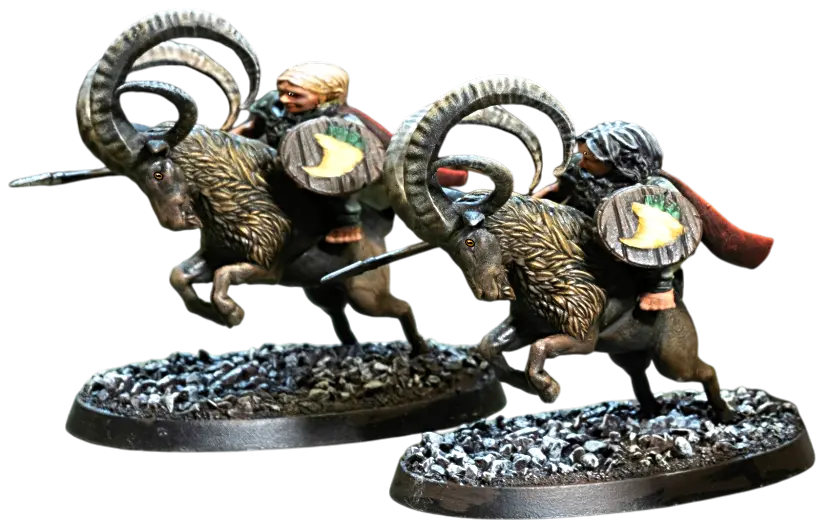

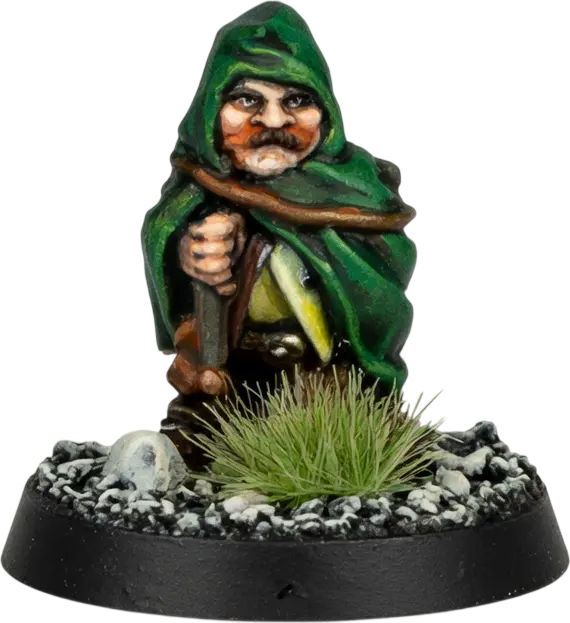
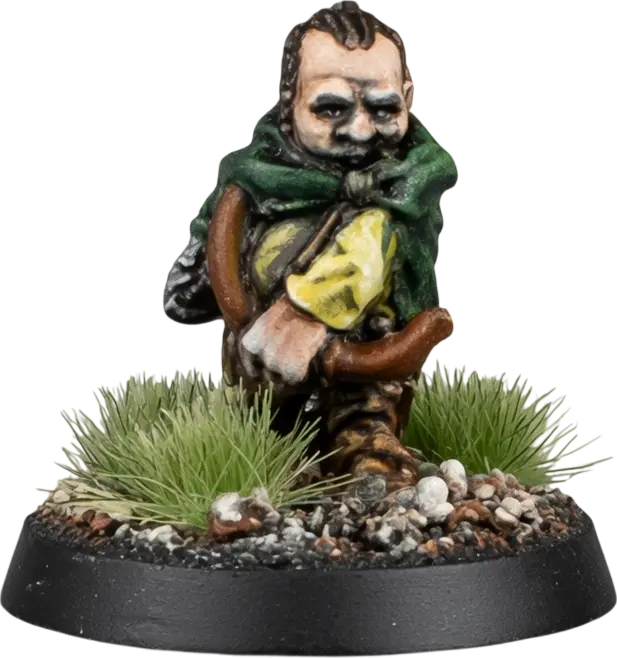

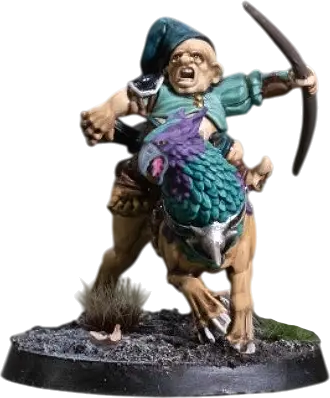

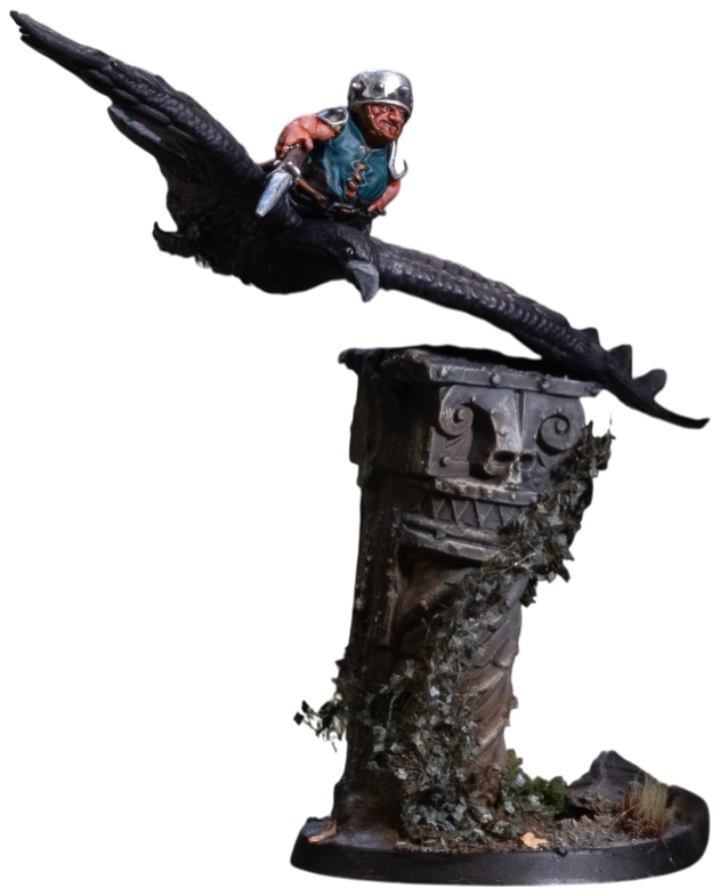
 Never put salt in a marinade – it draws the moisture out of whatever you are marinating, leaving you with more hat than cattle.Remember: unless you have a Halfloaf Thief at the Chef’s table, the most dangerous knives in the kitchen are the blunt ones.Plop a couple of crushed cloves of garlic, a glug of olive oil and a generous pinch of salt into your water before you cook pasta.And if you are making a sauce to go with it, always loosen it with the pasta water – the starch will help the sauce stick.If you want the skin on your Akhelians to be crispy, first get the pan nice and hot, then do not move it once you have introduced it to the heat.Nothing goes to waste. Bones, skin, claws, horns, cores, stalks, peels and stems – it all goes in the Mother Pot for next week’s broth.Cooking is an art; baking is arithmetic.Season at the start of cooking. If you salt too late, you will taste nothing but…As a general rule, add hard spices, like those of Ghur and Aqshy, at the beginning to let the flavours out. Add soft herbs, like those of Lady Ghyran, at the end to keep the flavours in.If you want your sauce to shine like Hysh – that is to say from within as well as without – try finishing it with a knob of butter.A splash of vinegar will liven up most things.Rest in peace. A beast has died for the meat on your plate; the very least you can do is let it rest before you serve it.When it comes to the dining table, the more the merrier. When it comes to the pots and pans, less is more – do not overcrowd them.

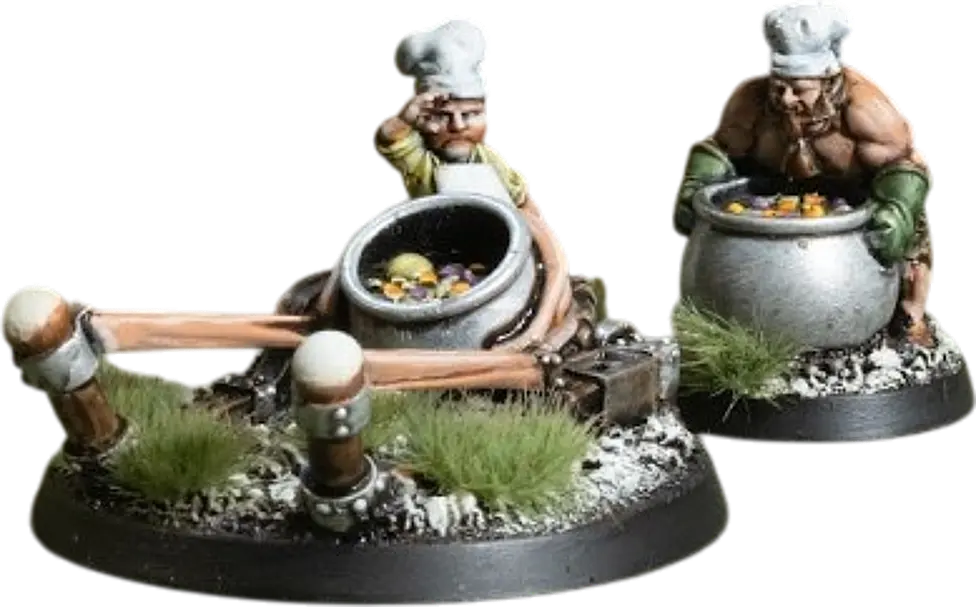
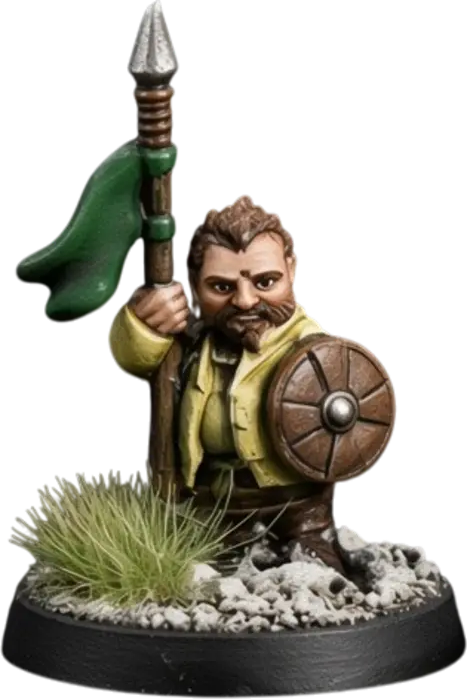
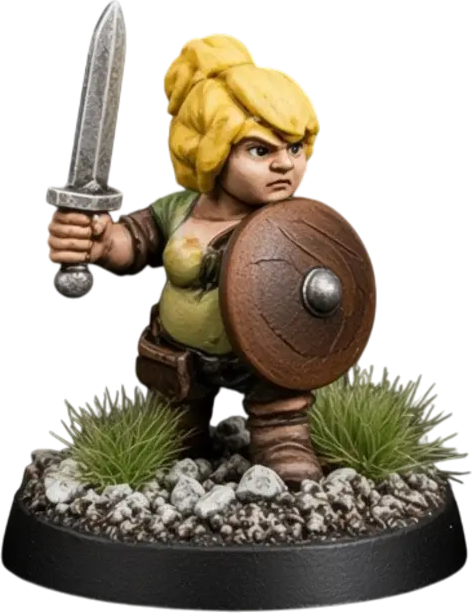
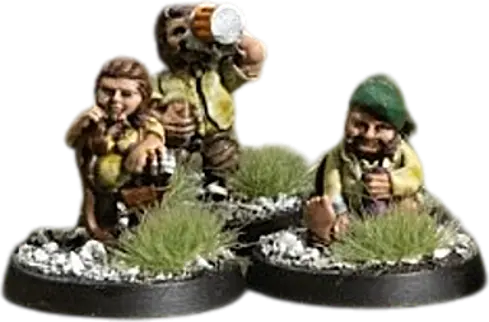


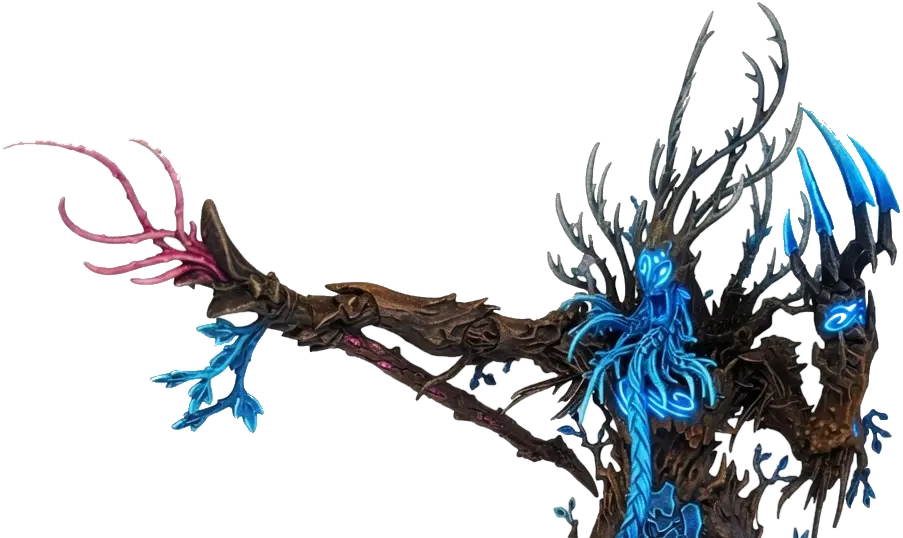
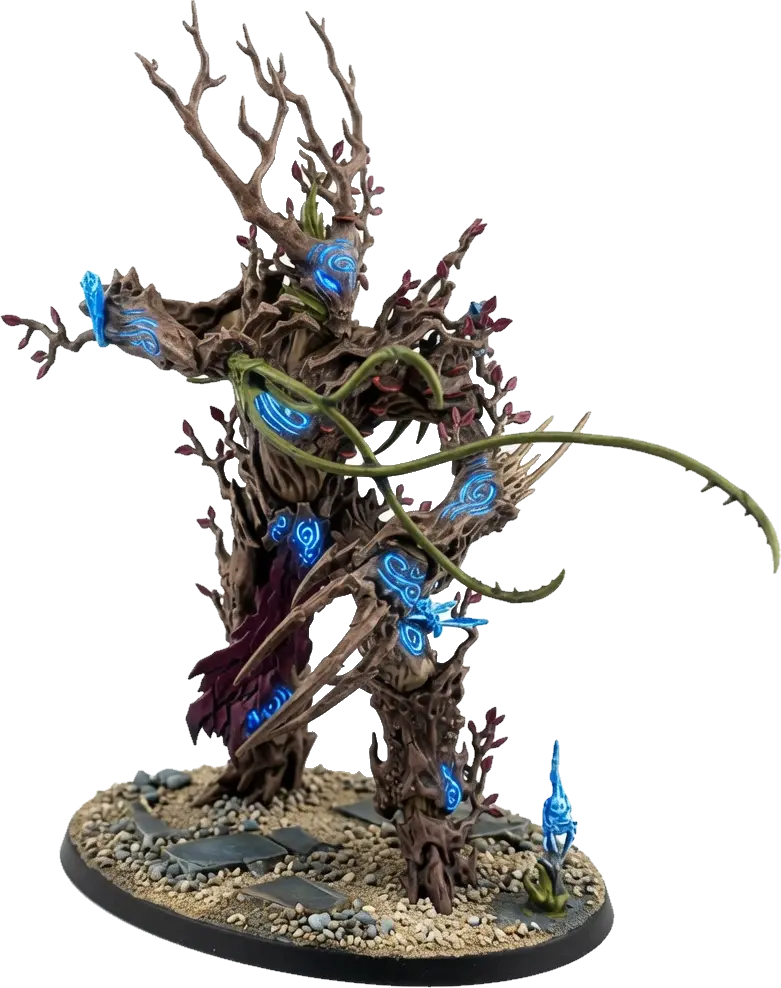
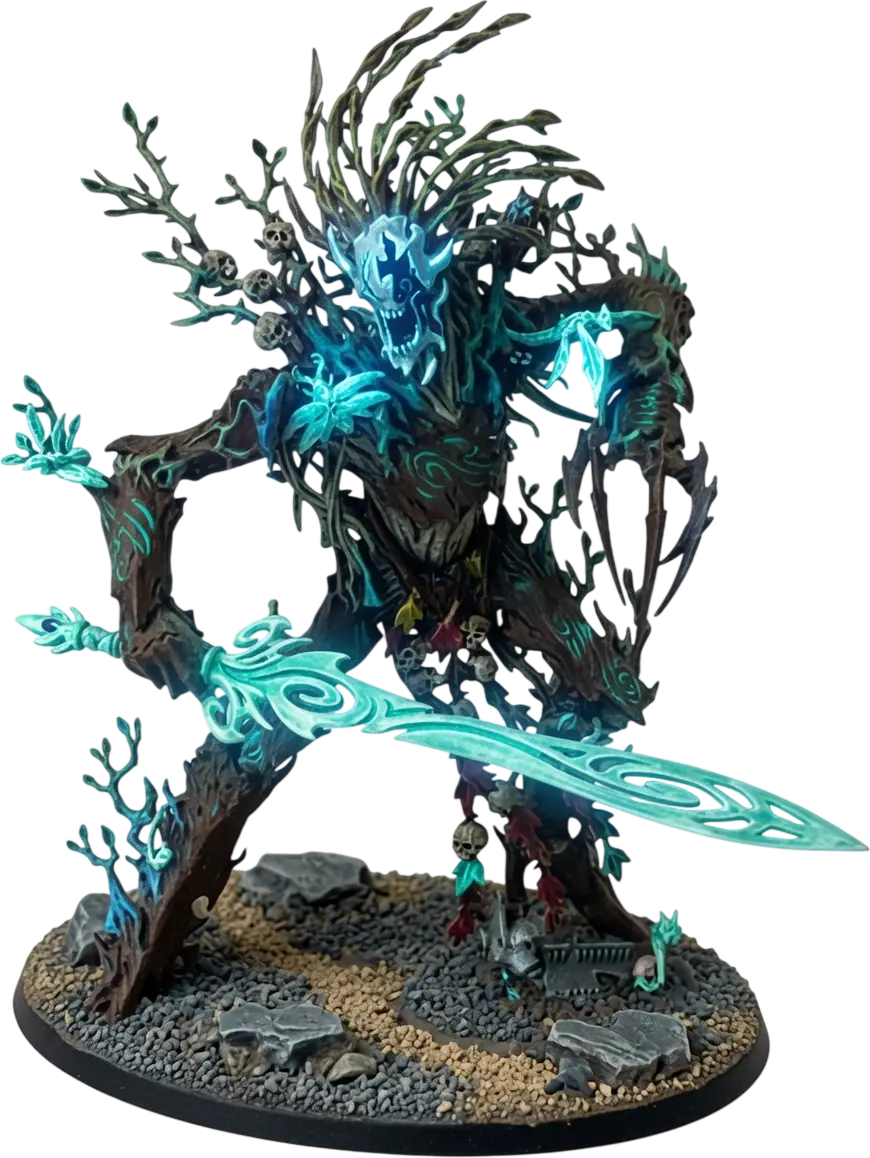


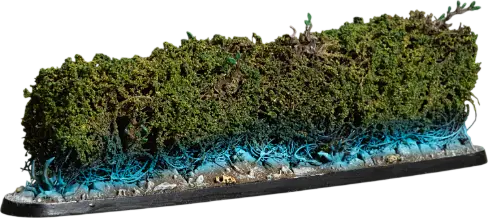


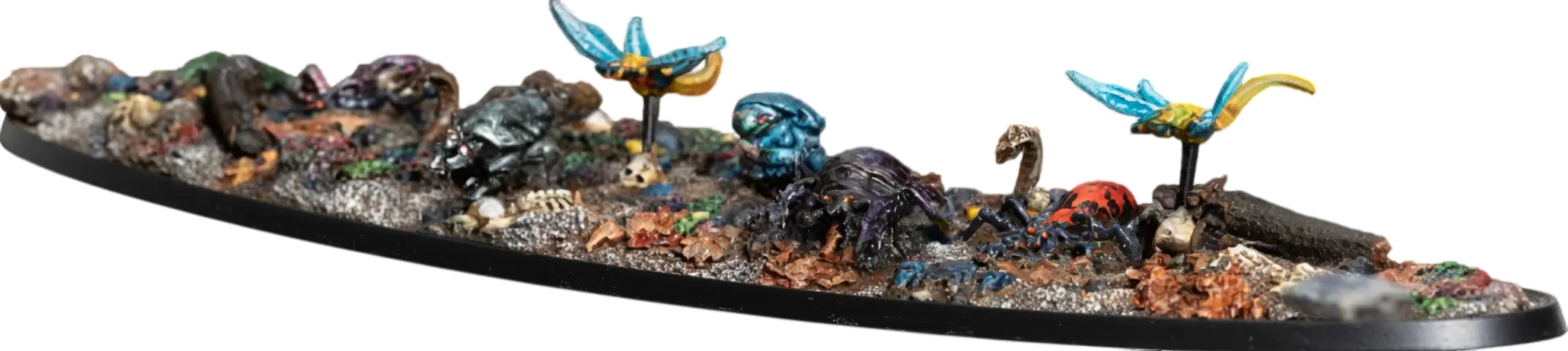
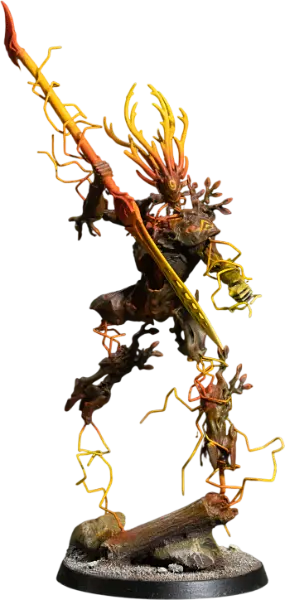


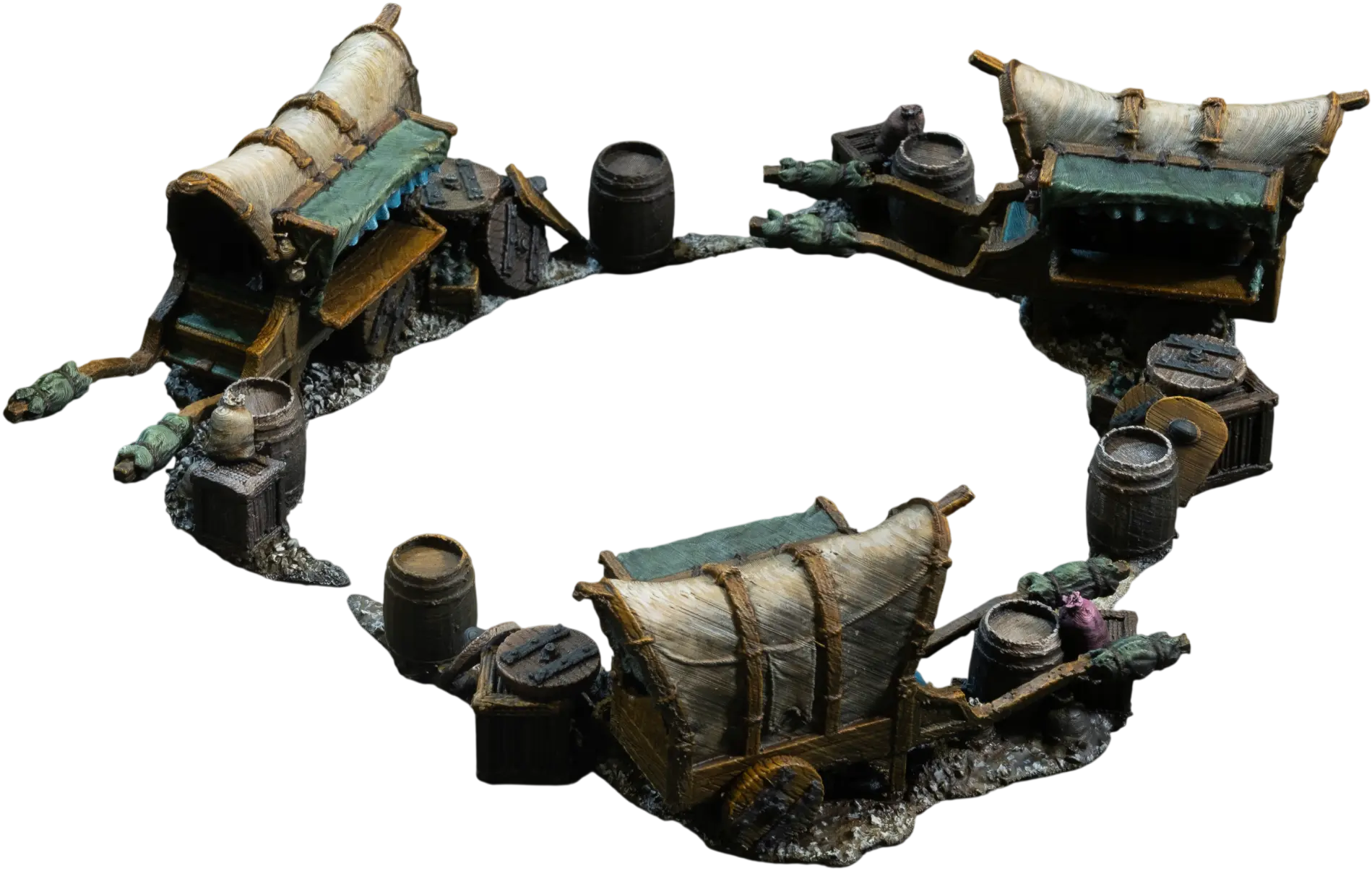
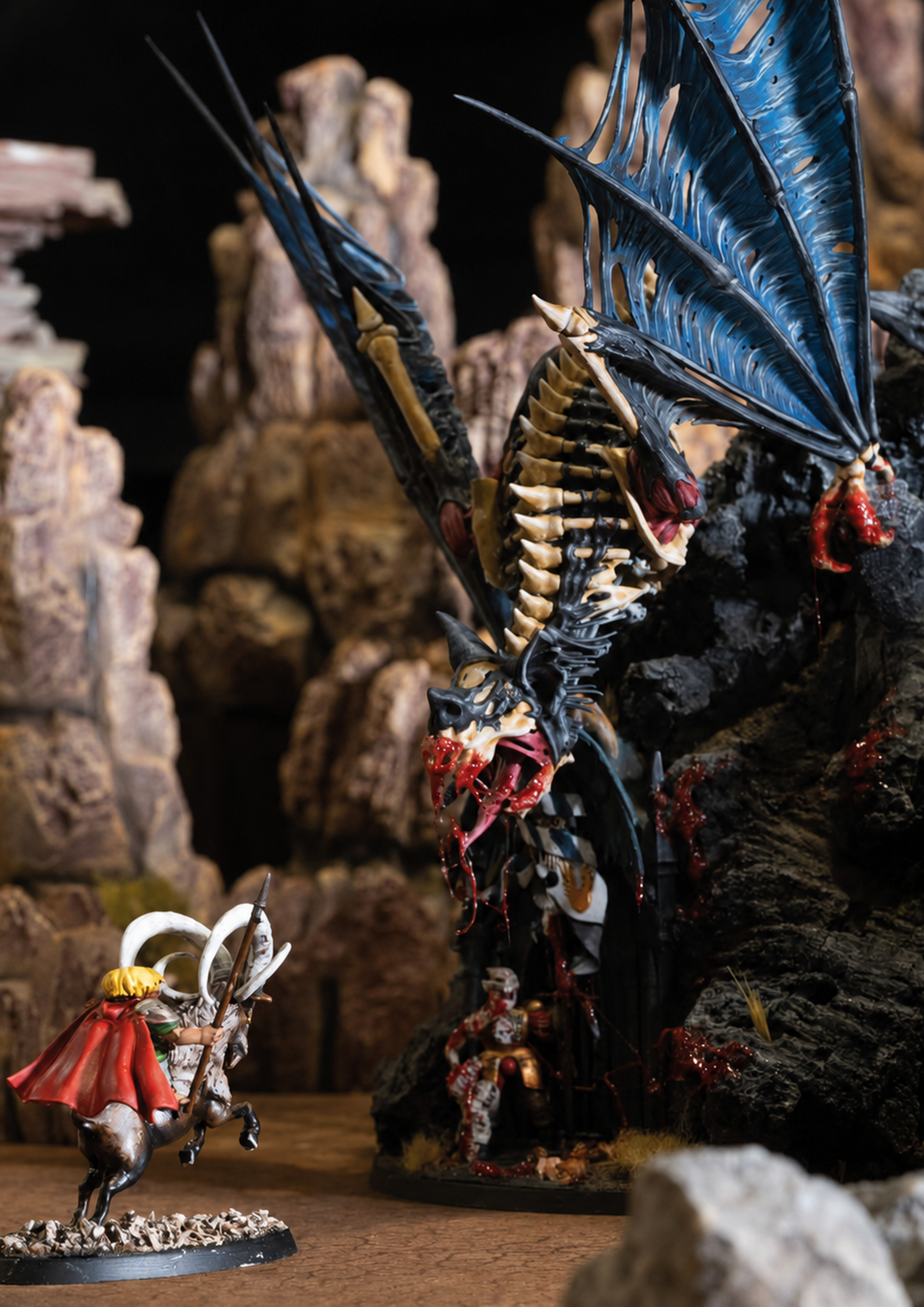
A gore-splattered Terrorgheist recoils in dismay before the charge of a single Crag Ibex rider – the sort of deed that turns a caravan hand into a legend.

Collecting the Gnomad Feastmasters is a little different from mustering most armies of the Mortal Realms. There is no single range of Gnomad miniatures waiting on the shelf. Instead, the army has always been built from a mixture of purpose-made digital sculpts, existing halfling miniatures, conversions, woodland spirits, great beasts and travelling wagons.
That freedom has been part of the Feastmasters since their first battletome, and means that two Gnomad armies can contain very different miniatures while remaining unmistakably part of the same wandering people.
The Spearhead presented alongside these pages makes an ideal first destination: a compact force that can be assembled and taken to the battlefield before the Great Feast begins to grow.
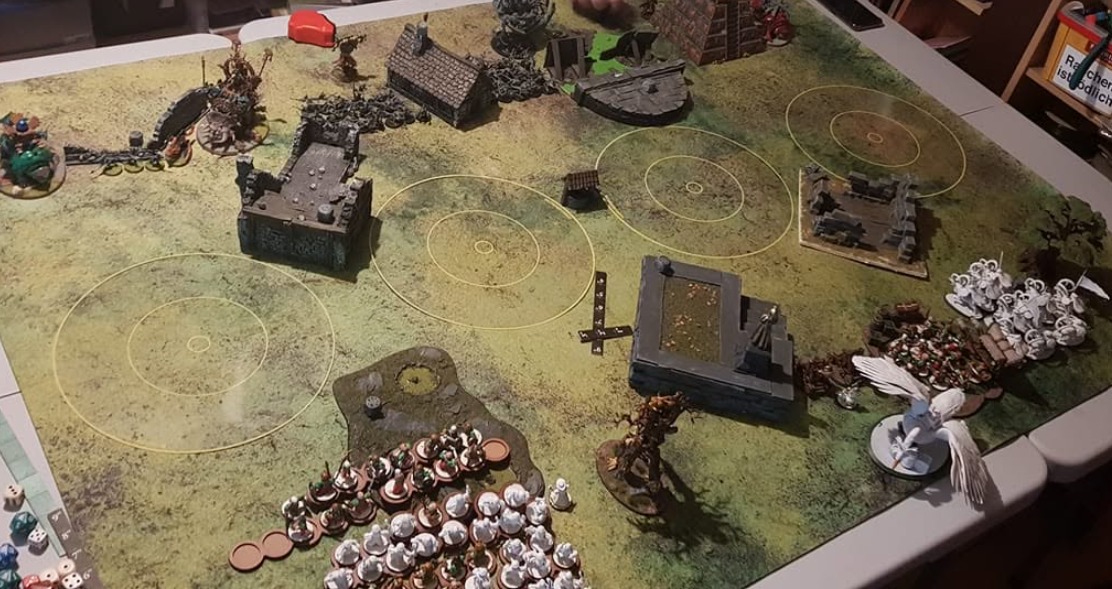
Games Workshop’s Halfling Blood Bowl team, the Greenfield Grasshuggers, was one of the original recommendations. Their expressive faces, varied poses and distinctly well-fed appearance suit characters and rank-and-file Gnomads alike. Swap sporting equipment for bows, blades, shields, packs or tools and they begin new lives amongst the Drove Kin, Drove Archers and other inhabitants of the Trails.
The original guide also recommended Mantic Games’ Halflings, whose range has grown considerably since 2022 and now includes infantry, cavalry, heroes and stranger contraptions. TTCombat’s Fantasy Heroes Halflings offer another source of individual warriors and characters, and printer owners have Duncan Shadow’s Halflings.
Mix them freely. A Great Feast is a travelling community, not a parade-ground regiment.
Part of the character of a Feastmasters army comes from placing its smallest warriors beside some of the largest creatures on the battlefield. Games Workshop Treelords were recommended as foundations for towering woodland spirits, while Awakened Wyldwoods bring the verdant Trails onto the tabletop. Ogors add truly massive companions, as do the more gluttonous Ogres from Scibor Miniatures.
Embrace the difference in scale. A creature that looks merely large beside a human becomes enormous when surrounded by Gnomads.
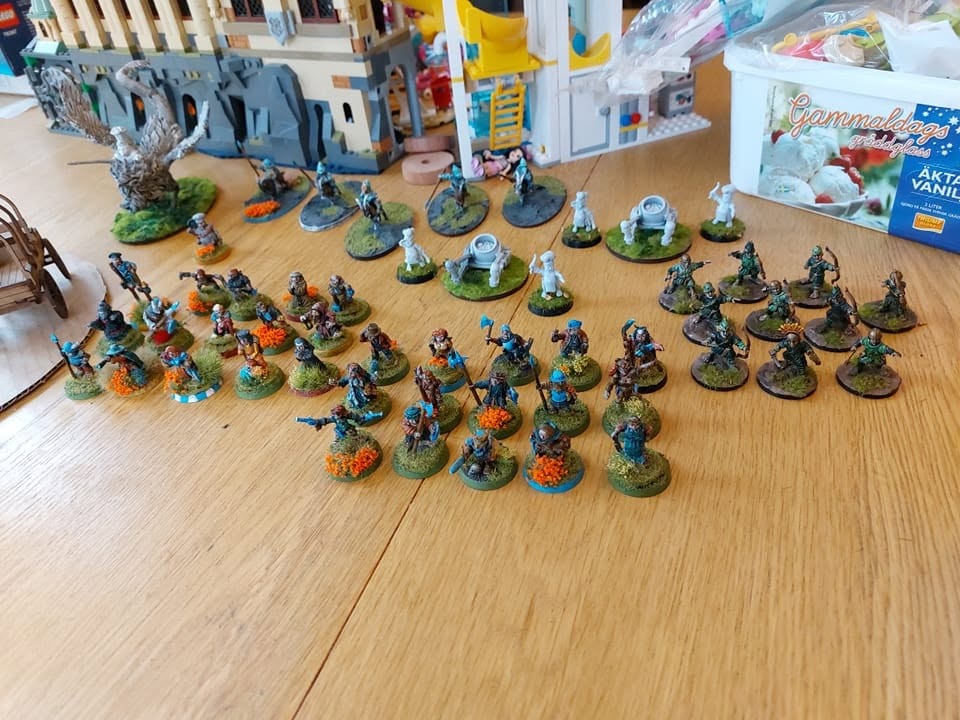
Gnomads rarely travel light. Barrels, crates, sacks and stores make an ordinary cart or miniature feel at home upon the Trails; add cooking pots, baskets, bottles, bedrolls and mushrooms. A spare barrel can do more to make a model feel Gnomad than an elaborate conversion.
The original guide paired printable Wild Wood Base Templates with a Merchant Wagon model as the start of a Gastrognome Encampment. From there, the camp is yours: a wagon circle, an open-air kitchen beneath ancient boughs, or half a Habbinkerr Grove stopped for lunch.
An army from many ranges need not look disjointed. Use the same basing throughout, repeat a handful of colours, and carry packs, barrels, feathers, foliage and food from unit to unit. Keep each unit’s role obvious, and check the base sizes in this battletome before mounting converted or third-party miniatures.
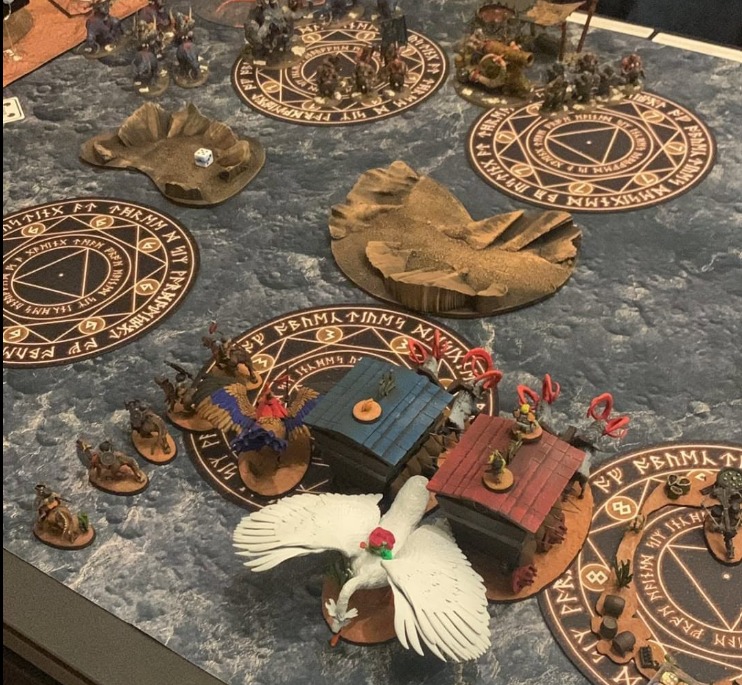
THERE IS ONLY YOUR GREAT FEAST.

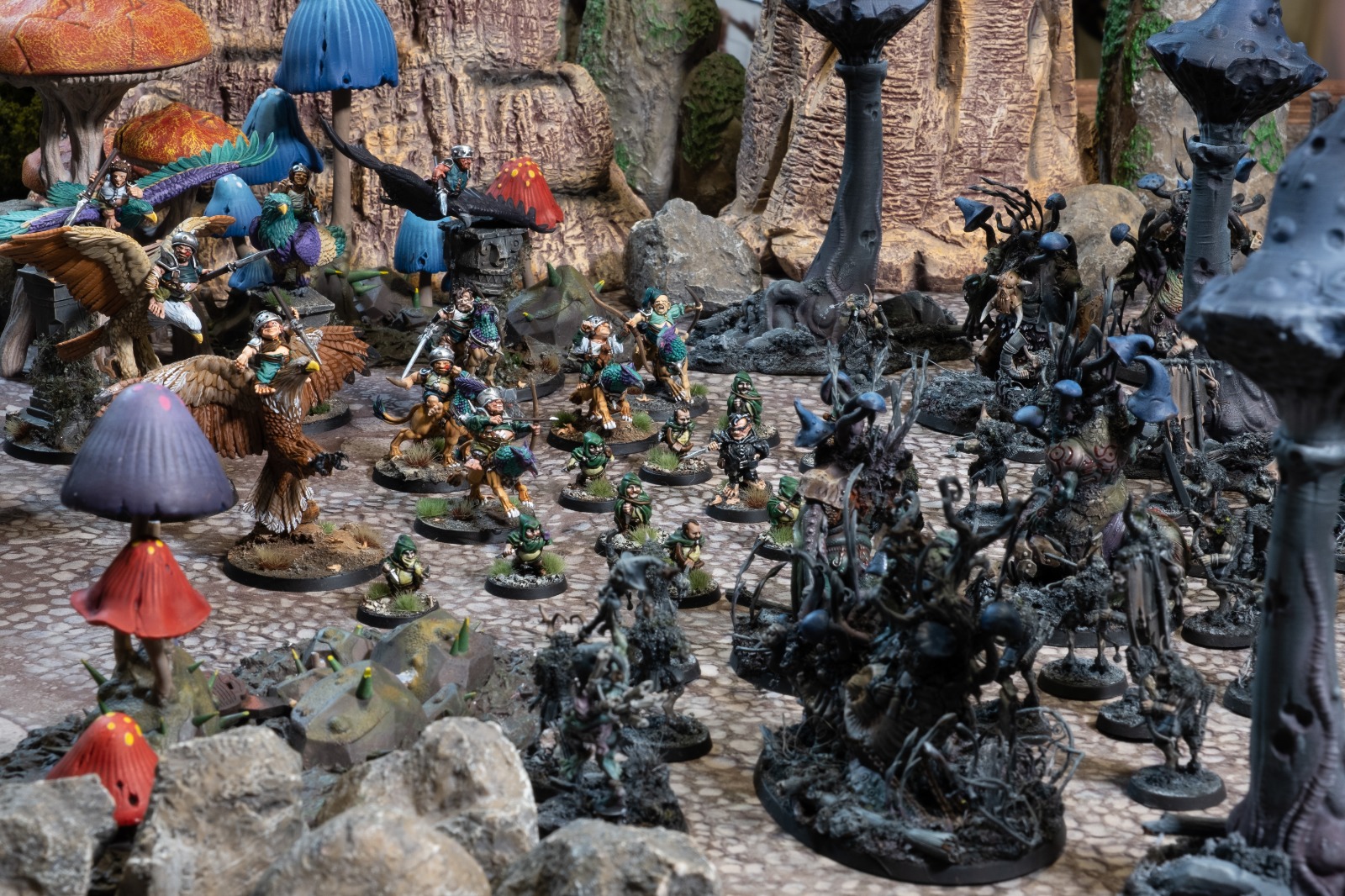

 2+: Add 1 to hit rolls.3+: Add 1 to wound rolls.4+: Add 1 to the Rend characteristic of the weapons used for those attacks.5+: The weapons used for those attacks have Crit (2 Hits).





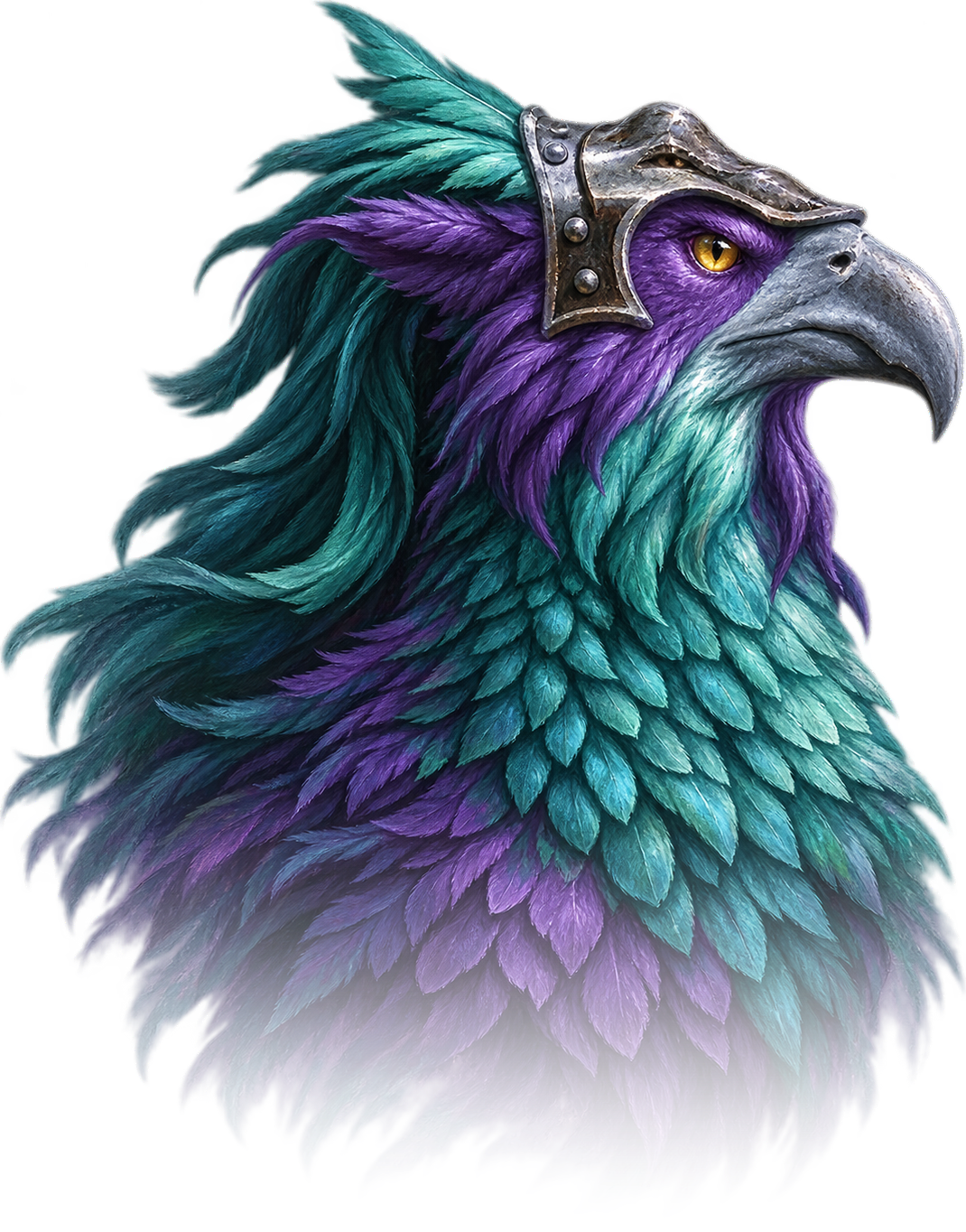
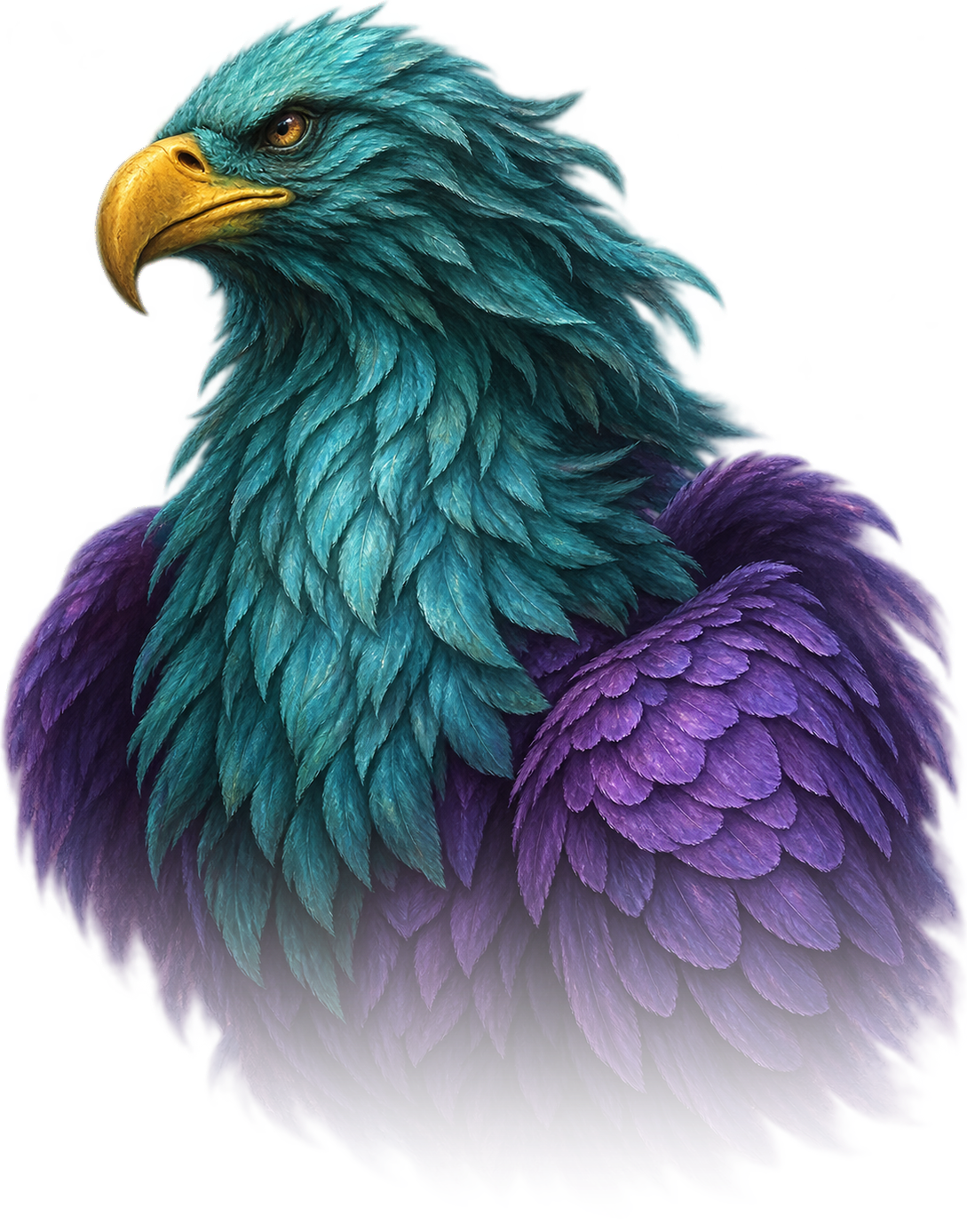


- Set a destiny point limit.
- Fill out the starting warscroll.
- Pick an Archetype.
- Pick your hero’s origin and/or flaw.
- Pick a Battle Mount or Grove-Sworn.
- Pick any Battle Mount or Grove-Sworn Upgrades.
- Pick any other upgrades.




- Change the Move characteristic to 8".
- Change the Health characteristic to 6.
- Change the Save characteristic to 4+.
- Replace the INFANTRY keyword with the CAVALRY keyword.
- Change the Move characteristic to 10".
- Change the Health characteristic to 11.
- Change the Save characteristic to 4+.
- Replace the INFANTRY keyword with the MONSTER keyword.
- Change the Move characteristic to 6".
- Change the Health characteristic to 14.
- Change the Save characteristic to 3+.
- Change the Control characteristic to 5.
- Replace the INFANTRY keyword with the MONSTER keyword.
- Add the OLDGROWTH keyword.

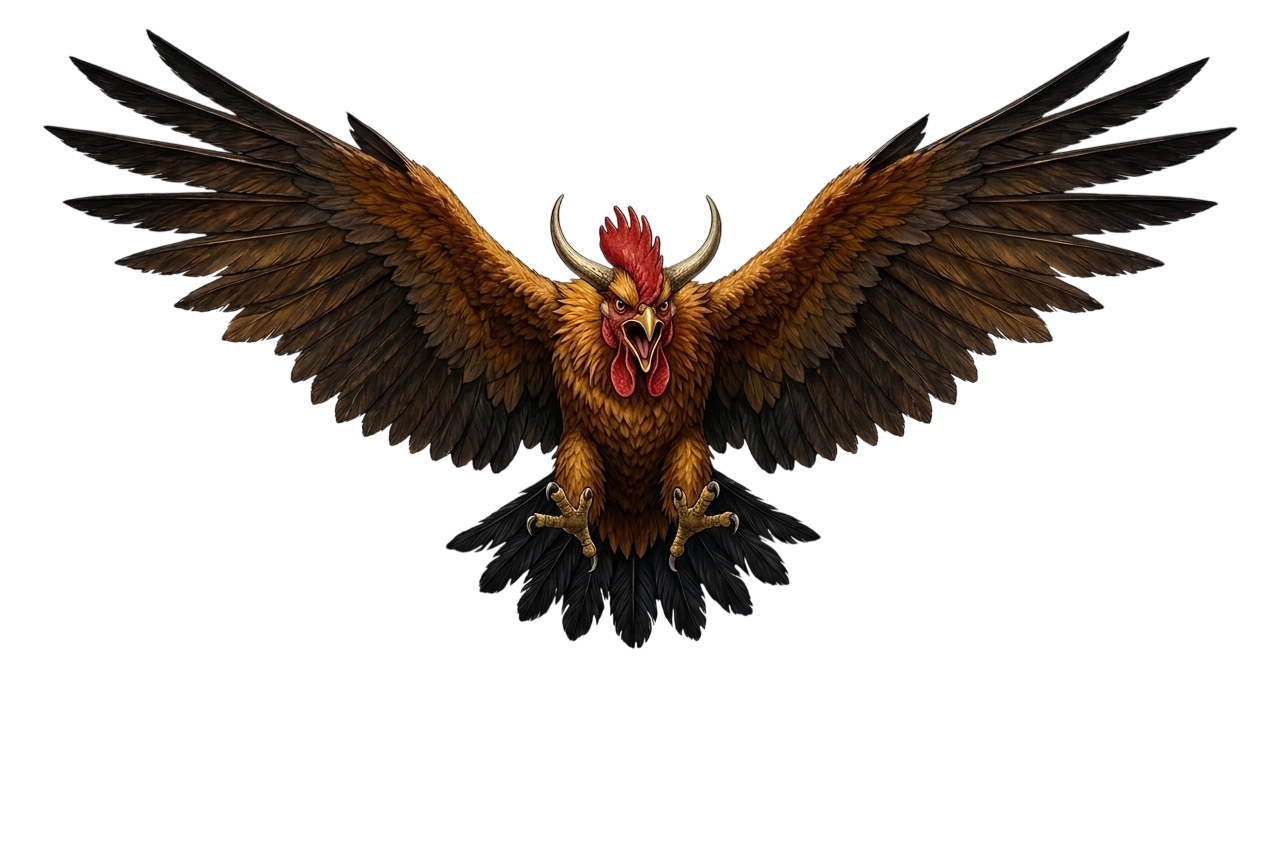


GRAND FEASTMASTER
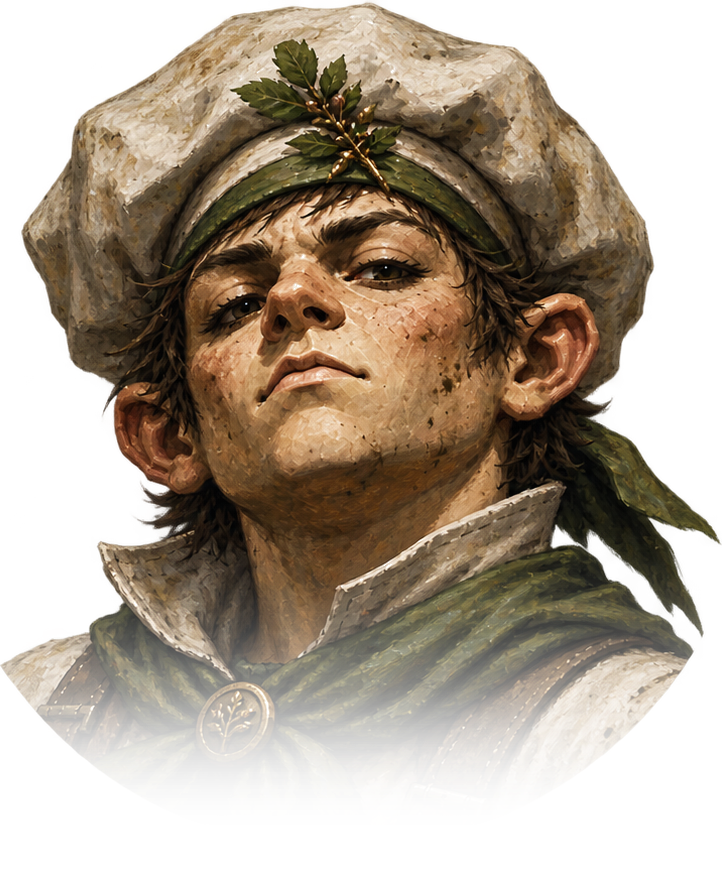

CARAVAN KIN
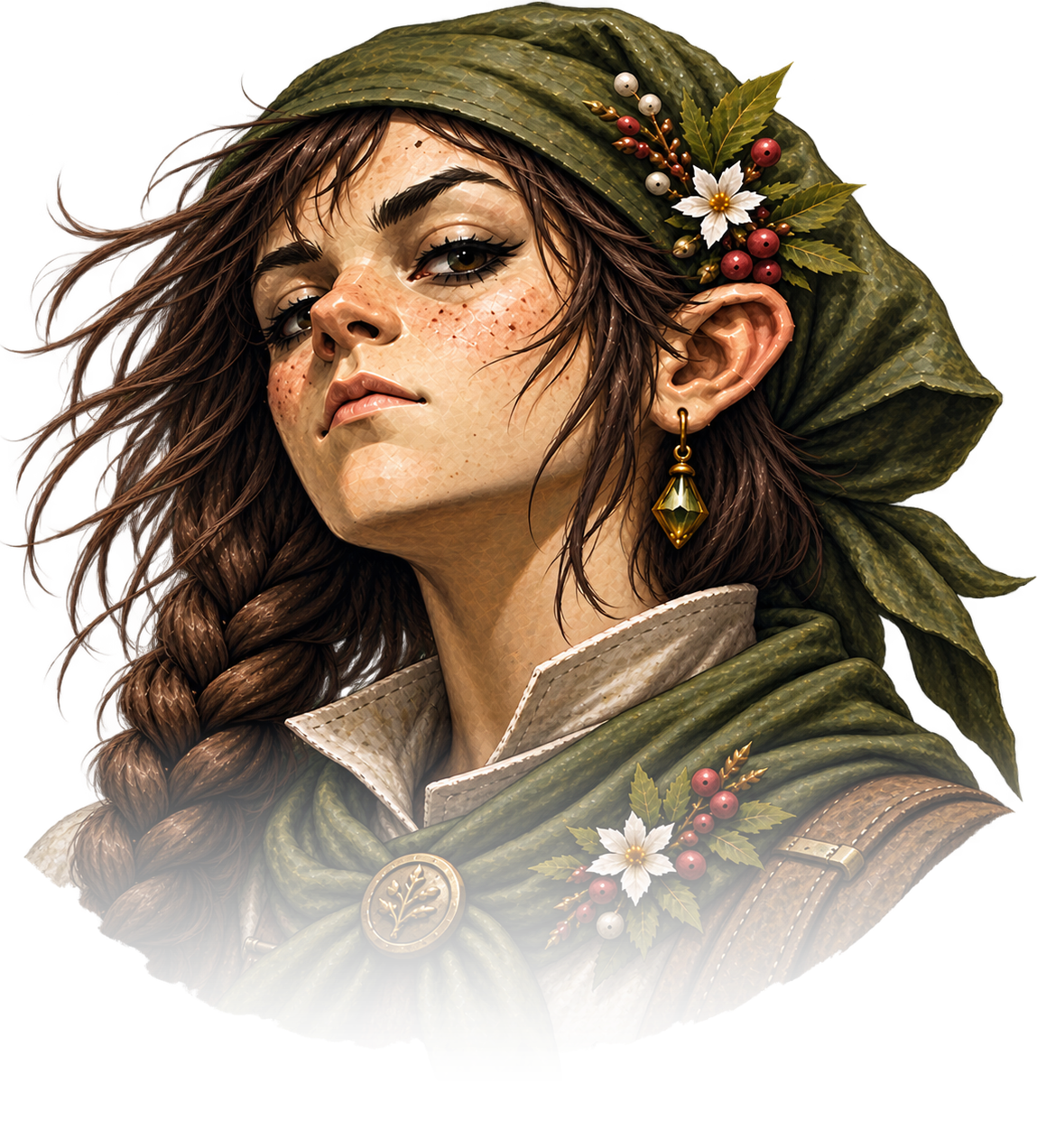

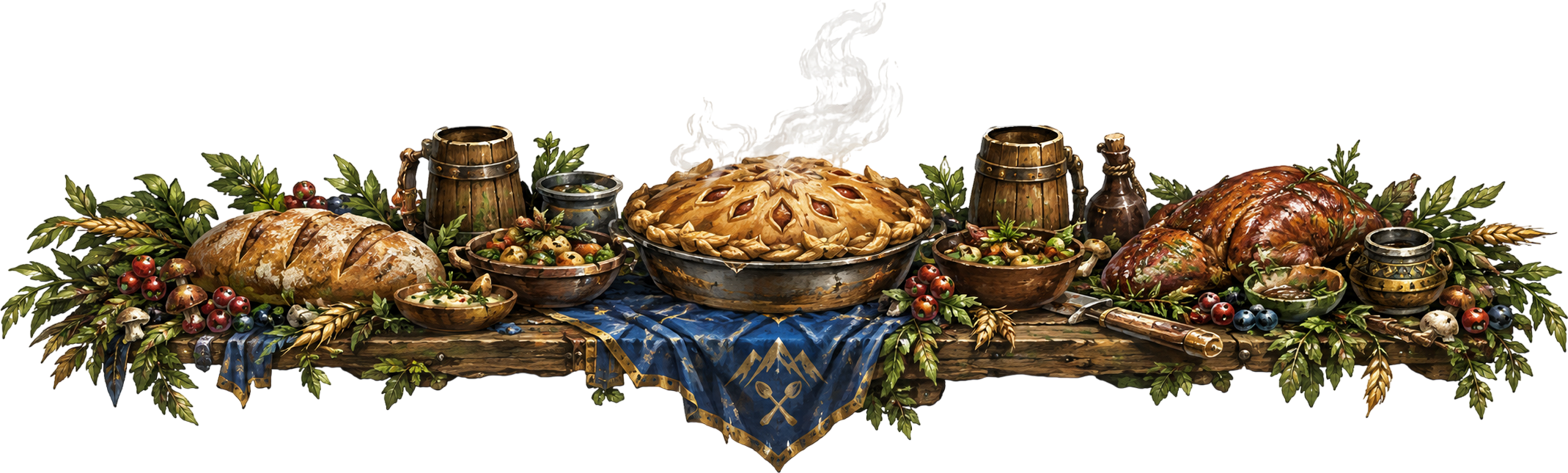
 Heal (D3) the target.Return a number of slain models to the target with a combined Health characteristic of up to 3.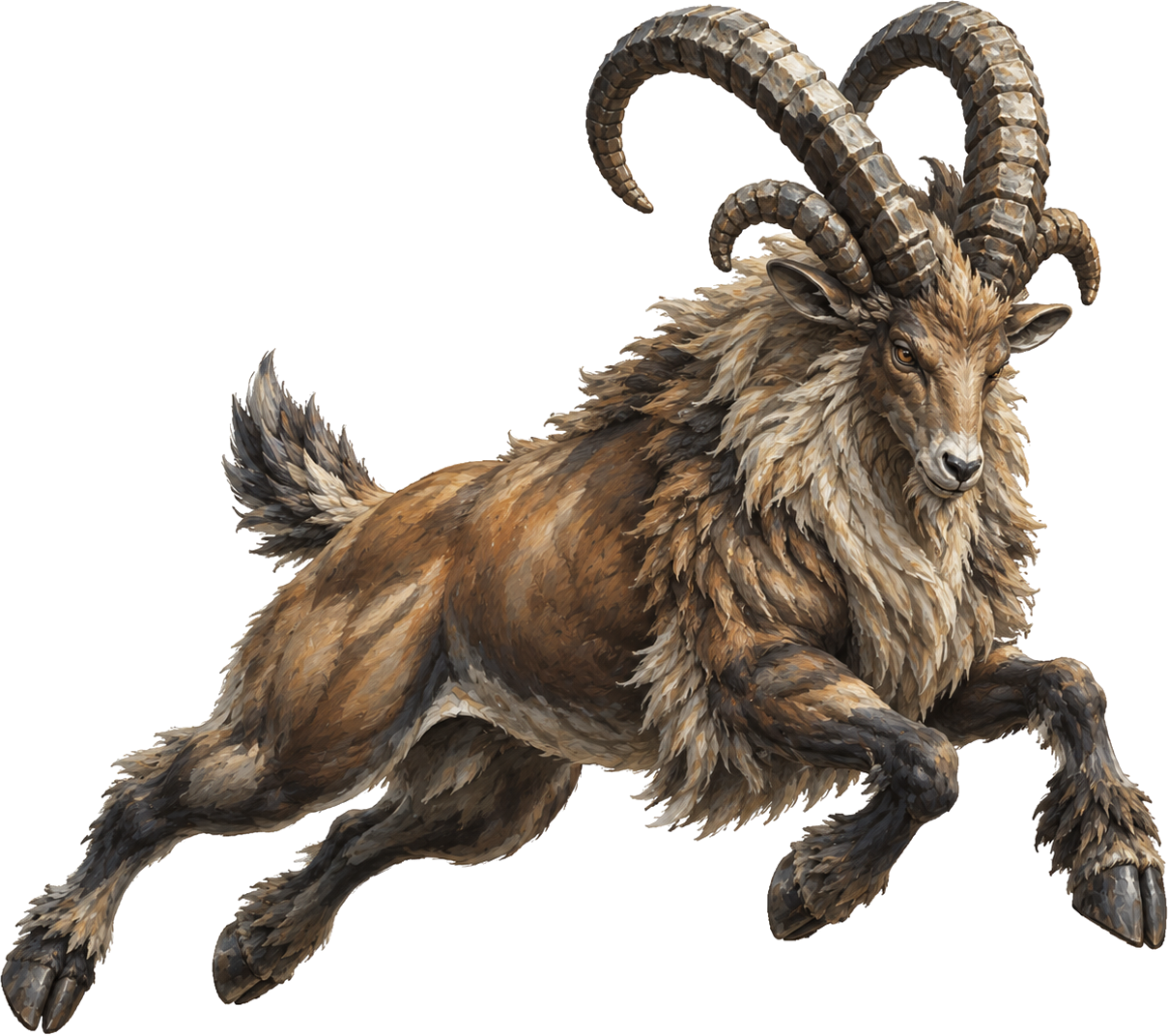

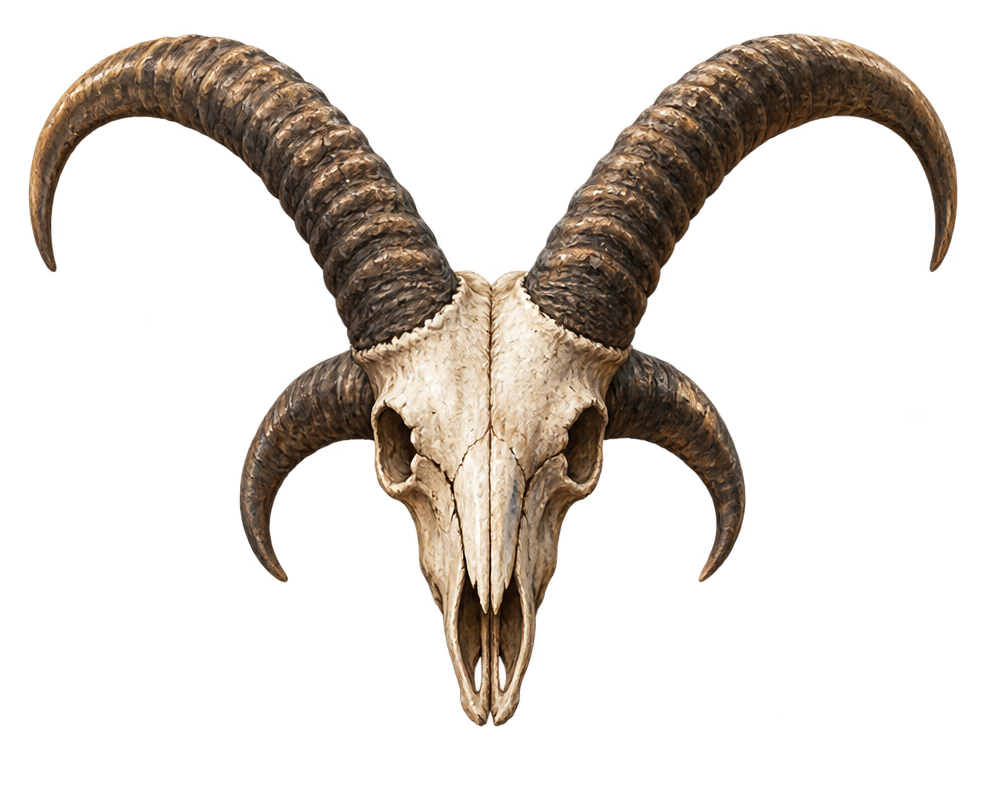
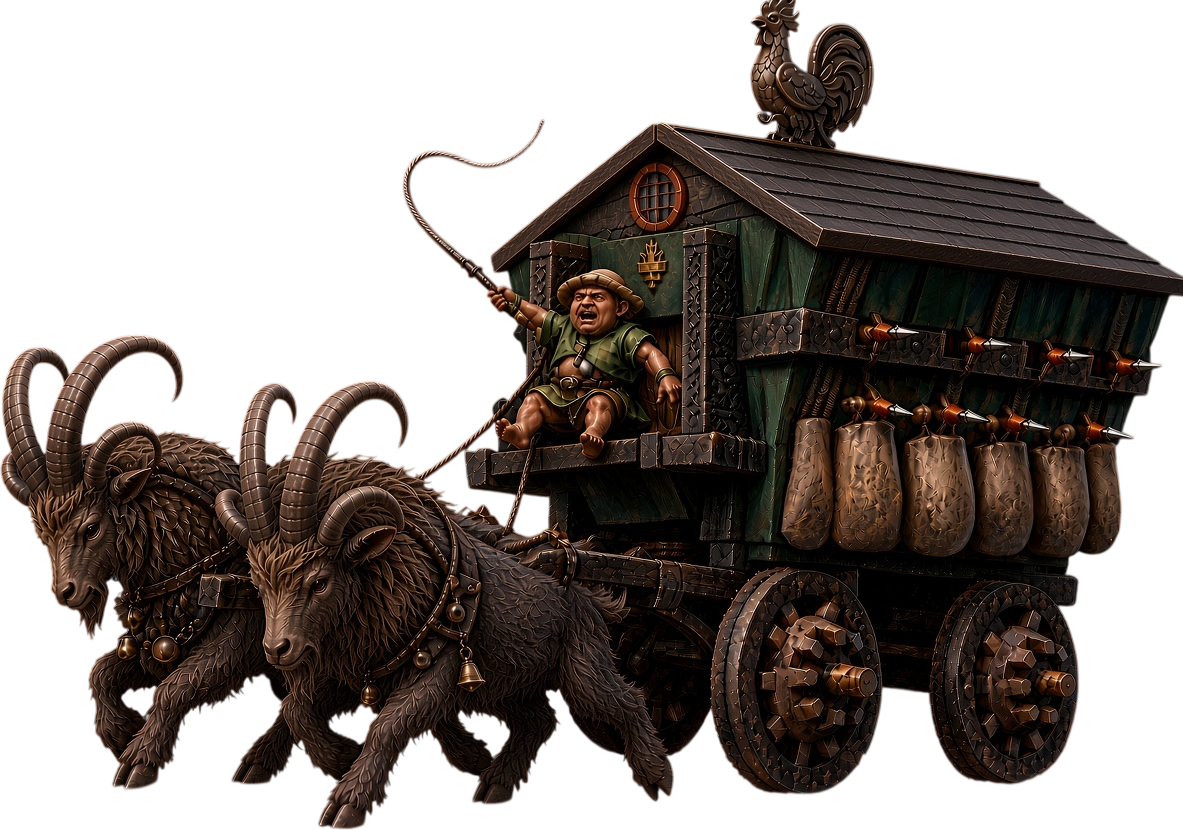


 Cities of SigmarDaughters of KhaineFyreslayersHedonites of SlaaneshHelsmiths of HashutIdoneth DeepkinKharadron OverlordsLumineth Realm-lordsSlaves to DarknessStormcast Eternals1 Halfloaf Thief



 1 Halfloaf Thief
Cities of Sigmar, Daughters of Khaine, Fyreslayers, Hedonites of Slaanesh, Helsmiths of Hashut, Idoneth Deepkin, Kharadron Overlords, Lumineth Realm-lords, Slaves to Darkness, Stormcast Eternals.

The Gnomad Feastmasters began, as many questionable hobby projects do, with me deciding that I should probably prove a point to myself.
I have played Age of Sigmar competitively for many years, and competitive players are rarely short of opinions about balance. Whenever a new battletome appears there are inevitably discussions about what is too strong, what is too weak and what on earth the designers were thinking. I have always tried to form my own opinions from a position of strength – or at least from somewhere slightly sturdier than the nearest soapbox – so I decided to find out how difficult it actually was to design and balance an army of my own.
The intention was never to create the strongest faction on the table. Quite the opposite. Because the gnomads were unofficial, I wanted them to sit towards the lower end of the power scale. If somebody kindly agreed to play against my homemade army and then spent three hours being flattened by rules I had written myself, neither of us would be rushing to arrange a rematch. The exercise was supposed to teach me something about balance, not prove that I could give halflings a 2+ ward and call it “flavour”.
Just as important was making the lore feel as though the gnomads genuinely belonged in the Mortal Realms. The halflings of the World-That-Was were wonderfully unserious, but Age of Sigmar is a harsher and more mature setting. Simply dropping them into Ghyran with a pie and a frying pan did not feel right. I wanted to carry their warmth, appetite and humour forward while giving them a genuine purpose and a plausible reason to have survived in such a hostile universe.
The answer? Why, magical hidden Trails, of course.
The basic direction and world-building behind the gnomads was mine, but the original tome was very much a collaborative effort. Much of its lore was written by others working from the ideas, themes and direction I provided, while the narrative stories were also contributed by other writers. Their words gave the gnomads considerably more character than I could ever have managed alone, and I am enormously grateful to everyone who helped turn a strange little army idea into something that hopefully feels like a people with a history.
For this fourth-edition version, I wanted to bring the gnomads fully up to date in both lore and rules, without leaning quite so heavily on the folk who had already given so much of their time and talent to the original project. The continued development of the Trails, and the new journeys into Shyish and Hysh, grew out of that process.
Perhaps the biggest surprise of the entire project was how much I enjoyed that part.
Before the gnomads, narrative play held very little interest for me. I approached Age of Sigmar primarily as a competitive game, and originally the lore existed mainly because an army book was supposed to have some. Somewhere along the way that completely changed. Rules began suggesting stories, but just as importantly the stories began suggesting rules. A unit’s battlefield role could tell me something about how gnomads lived, while a piece of lore about how they survived or travelled could suddenly suggest an ability that felt obvious once it existed.
I came to realise that without the lore, artwork and models, rules are ultimately just text on a page. A +1 here or a re-roll there means very little by itself. It becomes meaningful when you understand why that little gnomad is helping the one beside them, what they are protecting and why they are prepared to stand in front of something five times their size. The rules give the lore something to do on the tabletop, and the lore gives the rules a reason to exist. I had been underestimating the importance of this for many a year.
Mechanically, the army was inspired by Slivers from Magic: The Gathering. Slivers are individually unimpressive creatures that become increasingly dangerous as more of them arrive, each strengthening the others. That felt perfect for the gnomads. In a setting full of enormous monsters, immortal warriors and things carrying enough skulls to constitute a structural hazard, a gnomad should not be particularly terrifying alone. Their strength comes from
community. They survive because they cooperate, support one another and make the whole caravan greater than the sum of its rather short parts.
The hidden Trails also solved an important lore problem: if these people had supposedly existed all along, why had nobody ever mentioned them? The answer was simple – almost nobody could see them. Their magical pathways allowed the gnomads to exist alongside the wider Age of Sigmar setting without requiring established lore to suddenly acknowledge an entire civilisation that had apparently been standing just off-camera for several centuries.
Aesthetically, I wanted the tome itself to feel like a journey. As you travel through the lore, the decoration follows the different Trails and environments of the Mortal Realms. The scenic borders alternate from one side of the page to the other so that the Trail appears to wind onwards around the text, hopefully giving the impression that you are travelling alongside the gnomads rather than simply reading about them.
This book is the fourth-edition rewrite of the Gnomad Feastmasters. The original was created for third edition around four years ago and can still be found with a quick Google if you fancy seeing where all this nonsense began. I probably would have left it there, but a few people who remembered the original started asking what the future held for the gnomads.
Apparently that was all the encouragement I needed to make the same mistake twice.
Three months and well over two hundred hours later, here we are.
I am quite the Napoleon Dynamite: I have no formal art skills, no writing skills and no particular computer or graphic-design skills either. Consequently, almost every part of assembling this tome took me considerably longer than it had any right to. There has been an inordinate amount of trial, error, resizing, rewriting, editing and staring at layouts wondering why something had mysteriously moved three millimetres to the left. I have learned a great deal along the way, although some lessons were simply new and exciting ways to swear at a computer screen and myself.
The greatest lesson, however, was the one I originally set out to learn: balancing a battletome is no easy task at all. Every rule interacts with another rule, every change pleases one player and irritates another, and sometimes the difference between “interesting” and “obnoxious” is a single number.
I genuinely have no idea whether I achieved my original goal of keeping the gnomads comfortably towards the lower end of the power curve. What I do know is that, together with the people who contributed to this strange project over the years, I have helped create far more than I thought I was capable of and learned far more than I expected along the way.
I had originally planned to follow the gnomads along every Trail, including journeys through Chamon, Ulgu and Azyr. With fifth edition looming and apparently preparing to blow sizeable portions of the Mortal Realms to pieces, I may never get the opportunity to explore them all. Still, if I can summon the energy – and perhaps a sufficiently large pot of tea – I would very much like to update the gnomads for whatever befalls the realms next.
Bravo, too, to Games Workshop’s rules writers. They probably receive far more criticism than praise, and having now wrestled with an unofficial battletome of my own, I have at least a tiny glimpse of how difficult their job must be. Balancing dozens of units, abilities and interactions while also making an army distinctive, thematic and enjoyable for players on both sides of the table is an extraordinarily difficult task.
I started this project partly because I wanted my own opinions about game balance to come from a better-informed place; I finish it with considerably more appreciation for the people who have to make those decisions for real. Whatever disagreements I may occasionally have with a rule or a points value, I am genuinely grateful for their work and for all the ways it has helped me enjoy this hobby over the years.
The last word, though, belongs to everyone who helped write, shape, encourage, playtest or simply tolerate the original Gnomad Feastmasters project. This tome may carry my name as its designer, but the gnomads have never been the work of one person.
Which, considering their entire philosophy is that they are stronger together, seems rather appropriate.
Enjoy yourself – Dazza x
 Background, art and fiction exploring the hidden folk, their five Trails and the perennial banquetA description of each of their units, along with photography and artworkFaction rules including battle traits, battle formations, heroic traits, artefacts of power, monstrous traits, Gnomadic Tinkers, and spell, prayer and manifestation lores22 warscrolls, covering every unit, manifestation and faction terrainA Spearhead guide for the Forager’s Feyt, with its own warscrolls and army abilitiesNarrative Path to Glory rules, including the Anvil of ApotheosisBattle profiles, a handy rules reference and the designer’s commentaryRules for 2 thematic Armies of Renown, and a Regiment of Renown that can be added to other armiesA lot of love
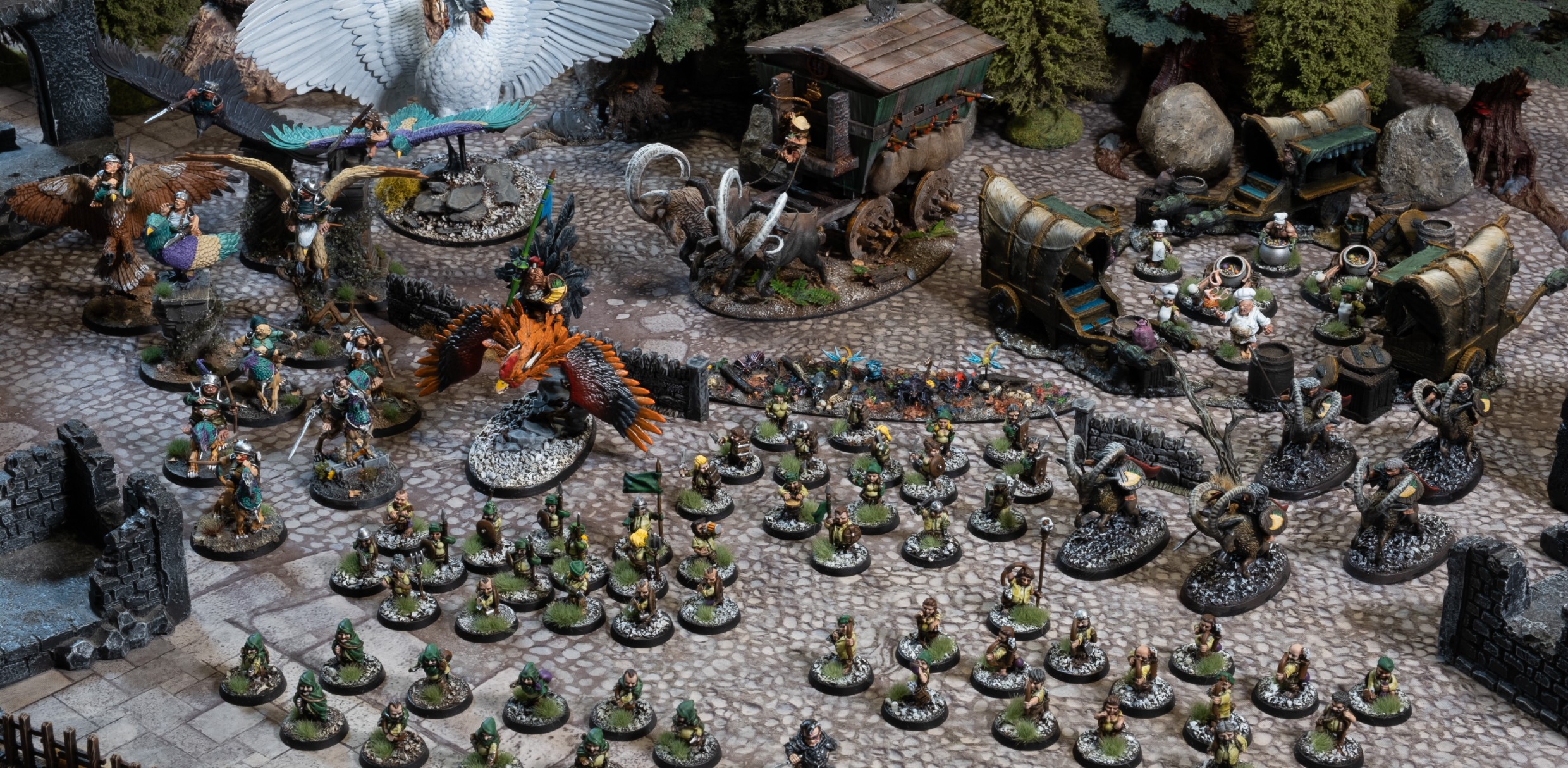
This is an unofficial, non-commercial work made by hobbyists for hobbyists. It is not produced by, endorsed by or affiliated with Games Workshop Limited. Warhammer, Warhammer Age of Sigmar, Battletome and all associated marks are ® or ™ and/or © Games Workshop Limited. Used without permission; no challenge to their status is intended.